

Friday, July 10, 2026
Science
No Result
View All Result
  • Login
  • HOME
  • SCIENCE NEWS
  • CONTACT US
  • HOME
  • SCIENCE NEWS
  • CONTACT US
No Result
View All Result
Scienmag
No Result
View All Result
Home Science News Medicine

Protein Stability Driven by Single-Site Bias, Not Pairwise Covariance

July 10, 2026
in Medicine
Reading Time: 2 mins read
0
Protein Stability Driven by Single-Site Bias, Not Pairwise Covariance

Protein Stability Driven by Single-Site Bias, Not Pairwise Covariance

65
SHARES
587
VIEWS
Share on FacebookShare on Twitter
ADVERTISEMENT

In a groundbreaking study published in Nature Chemical Biology, researchers reveal that protein stability hinges more on the effects of individual amino acid positions than on the intricate network of pairwise interactions traditionally thought to dominate. This paradigm-shifting work challenges long-held assumptions in protein biochemistry and may usher in innovative approaches to protein engineering and drug design.

Proteins, the molecular workhorses of life, must fold into precise three-dimensional structures to perform their biological functions effectively. For decades, scientists have sought to understand how the complex interplay between amino acids—both local and far-flung—governs folding stability. Classical models heavily emphasized the significance of pairwise covariance, where changes at one site are compensated or intensified by changes at another, creating a web of interdependent residues.

However, the recent study led by Sternke, Tripp, and Behera utilized advanced computational methods combined with high-resolution mutagenesis datasets to dissect the contributions of individual sites and pairwise interactions to overall protein stability. Their analysis reveals that stability is predominantly dictated by the intrinsic “single-site bias” of amino acids—that is, how the identity of an amino acid at a specific position influences folding energetics independently of other sites.

This insight was gleaned by systematically evaluating large protein sequence alignments and quantifying the energetic landscape associated with single-point mutations. The researchers demonstrated that models focusing on single-site effects outperformed those incorporating covariance terms in predicting mutational impacts on folding stability. Such findings disrupt the conventional wisdom that covariation patterns gleaned from sequence correlations necessarily reflect energetic coupling critical to protein architecture.

One implication of this discovery is that evolutionary pressures may operate more strongly at the level of individual residue preferences rather than finely tuned inter-residue compensations. This could simplify computational protein design strategies by prioritizing the scouting of favorable single-site mutations, reducing the complexity imposed by accounting for extensive pairwise epistasis.

Moreover, this study highlights the potential for single-site metrics to serve as more reliable predictors for protein engineering tasks, including stability optimization of therapeutic proteins. By focusing on residue-specific energetic biases rather than covariance patterns fraught with noise and confounding correlations, design algorithms might achieve better accuracy and efficiency.

The authors did not discount the role of pairwise interactions entirely but posited that such interactions may be secondary or context-dependent, often overshadowed by dominant single-site effects. This nuanced understanding invites a reassessment of how evolutionary sequence data are interpreted and utilized in structural bioinformatics.

As protein science advances, these findings promise to recalibrate efforts across molecular biology, biotechnology, and drug development, potentially streamlining the design of proteins with tailored stability profiles. Future work will likely explore how these single-site biases translate across diverse protein families and environmental conditions, deepening our comprehension of the fundamental principles governing protein folding.

In sum, this study propels the conception of protein stability from a web of entangled inter-residue interactions to a landscape primarily sculpted by individual amino acid propensities—a revelation poised to reverberate through multiple realms of molecular life sciences.


Subject of Research: Protein folding stability and mutational effects

Article Title: Protein stability is determined by single-site bias rather than pairwise covariance

Article References:
Sternke, M., Tripp, K.W., Behera, S.P. et al. Protein stability is determined by single-site bias rather than pairwise covariance. Nat Chem Biol (2026). https://doi.org/10.1038/s41589-026-02270-6

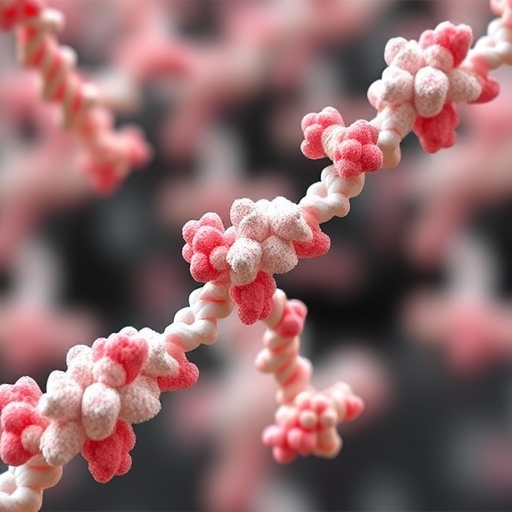
Image Credits: AI Generated

DOI: https://doi.org/10.1038/s41589-026-02270-6

Tags: amino acid position importancecomputational protein analysisdrug design implicationshigh-resolution mutagenesispairwise covariance in proteinsparadigm shift in protein biochemistryprotein engineering strategiesprotein folding energeticsprotein stabilityprotein stability determinantsprotein structure-function relationshipsingle-site amino acid effects
Share26Tweet16
Previous Post

Hydroclimate Drives Oxygen Output in Congo Peatlands for 10,600 Years

Next Post

Genetic Variants Linked to Cognitive Performance in British Birth Cohorts

Related Posts

Exercise-Induced Microbial Metabolites Protect Against Muscle Loss in Female Mice
Medicine

Exercise-Induced Microbial Metabolites Protect Against Muscle Loss in Female Mice

July 10, 2026
Supine Hypertension Identified in Parkinson’s Neurogenic Orthostatic Hypotension Patients
Medicine

Supine Hypertension Identified in Parkinson’s Neurogenic Orthostatic Hypotension Patients

July 10, 2026
Insilico Medicine to Present Longevity and AI Drug Innovations at BIO Asia-Taiwan 2026
Medicine

Insilico Medicine to Present Longevity and AI Drug Innovations at BIO Asia-Taiwan 2026

July 10, 2026
Efficient In Vivo Cytosine Base Editing via Virus-Like Particles and Uracil DNA Glycosylase Inhibition
Medicine

Efficient In Vivo Cytosine Base Editing via Virus-Like Particles and Uracil DNA Glycosylase Inhibition

July 10, 2026
Brain Circuit Between Dentate Gyrus and Cortex Controls Bone Healing in Mice
Medicine

Brain Circuit Between Dentate Gyrus and Cortex Controls Bone Healing in Mice

July 10, 2026
Newborns Missing Vitamin K Shots Linked to Bleeding Risks and Predictors
Medicine

Newborns Missing Vitamin K Shots Linked to Bleeding Risks and Predictors

July 10, 2026
Next Post
Genetic Variants Linked to Cognitive Performance in British Birth Cohorts

Genetic Variants Linked to Cognitive Performance in British Birth Cohorts

  • Mothers who receive childcare support from maternal grandparents show more

    Mothers who receive childcare support from maternal grandparents show more parental warmth, finds NTU Singapore study

    27656 shares
    Share 11059 Tweet 6912
  • University of Seville Breaks 120-Year-Old Mystery, Revises a Key Einstein Concept

    1061 shares
    Share 424 Tweet 265
  • Bee body mass, pathogens and local climate influence heat tolerance

    682 shares
    Share 273 Tweet 171
  • Researchers record first-ever images and data of a shark experiencing a boat strike

    546 shares
    Share 218 Tweet 137
  • Groundbreaking Clinical Trial Reveals Lubiprostone Enhances Kidney Function

    531 shares
    Share 212 Tweet 133
Science

Embark on a thrilling journey of discovery with Scienmag.com—your ultimate source for cutting-edge breakthroughs. Immerse yourself in a world where curiosity knows no limits and tomorrow’s possibilities become today’s reality!

RECENT NEWS

  • Ecological Limits and Functions in Microbiome-Based Integrative Medicine
  • Exercise-Induced Microbial Metabolites Protect Against Muscle Loss in Female Mice
  • New Integrated Device Synthesizes and Analyzes Photonic Polarization
  • Genetic Risk Links Suicide Attempts and Alcohol Use Disorder Outcomes

Categories

  • Agriculture
  • Anthropology
  • Archaeology
  • Athmospheric
  • Biology
  • Biotechnology
  • Blog
  • Bussines
  • Cancer
  • Chemistry
  • Climate
  • Earth Science
  • Editorial Policy
  • Marine
  • Mathematics
  • Medicine
  • Pediatry
  • Policy
  • Psychology & Psychiatry
  • Science Education
  • Social Science
  • Space
  • Technology and Engineering

Subscribe to Blog via Email

Enter your email address to subscribe to this blog and receive notifications of new posts by email.

Join 5,146 other subscribers

© 2025 Scienmag - Science Magazine

Welcome Back!

Login to your account below

Forgotten Password?

Retrieve your password

Please enter your username or email address to reset your password.

Log In
No Result
View All Result
  • HOME
  • SCIENCE NEWS
  • CONTACT US

© 2025 Scienmag - Science Magazine

Discover more from Science

Subscribe now to keep reading and get access to the full archive.

Continue reading
