

Friday, July 10, 2026
Science
No Result
View All Result
  • Login
  • HOME
  • SCIENCE NEWS
  • CONTACT US
  • HOME
  • SCIENCE NEWS
  • CONTACT US
No Result
View All Result
Scienmag
No Result
View All Result
Home Science News Earth Science

Ocean Biogeochemical Gradients Boost Seasonal Impacts of Marine Heatwaves

July 10, 2026
in Earth Science
Reading Time: 2 mins read
0
Ocean Biogeochemical Gradients Boost Seasonal Impacts of Marine Heatwaves

Ocean Biogeochemical Gradients Boost Seasonal Impacts of Marine Heatwaves

65
SHARES
587
VIEWS
Share on FacebookShare on Twitter
ADVERTISEMENT

Marine Heatwaves Intensify Seasonally Due to Ocean Biogeochemical Gradients

A groundbreaking study published in Communications Earth & Environment provides new insight into the behavior of marine heatwaves, revealing how ocean biogeochemical gradients act to seasonally amplify their impacts. This research uncovers complex interactions between physical ocean properties and chemical and biological processes that influence the severity and duration of these destructive thermal events.

Marine heatwaves, defined as prolonged periods of anomalously high ocean temperatures, have been escalating in frequency and intensity in recent decades, with severe consequences for marine ecosystems and global climate feedbacks. While much attention has focused on physical drivers such as atmospheric heatwaves and ocean currents, this study highlights the critical role played by spatial variations in ocean chemistry and biology—known collectively as biogeochemical gradients—in modulating heatwave effects.

The team led by Yang, Peng, and Shi conducted comprehensive analyses combining high-resolution oceanographic datasets and advanced climate modeling. Their results indicate that gradients of nutrients, oxygen concentration, and biological productivity interact with thermal structures to amplify temperature anomalies in certain regions during specific seasons. This means that the biological and chemical characteristics of seawater can either exacerbate or mitigate heatwave intensity, depending on the seasonal context.

Notably, the study identifies that during spring and summer months, when primary productivity peaks and oxygen levels fluctuate drastically, heatwave impacts are intensified along biogeochemical fronts—areas where distinct water masses with different chemical signatures converge. These fronts act as hotspots where marine organisms experience compounded stress from heat and altered nutrient or oxygen availability.

This seasonal amplification has profound implications for marine biodiversity and fisheries, potentially accelerating coral bleaching events, toxic algal blooms, and hypoxic zones that threaten commercial fish stocks. Understanding these mechanisms allows researchers to better predict when and where marine heatwaves will wreak the most damage, offering avenues for targeted conservation efforts.

The interdisciplinary nature of the work, bridging physical oceanography and marine biogeochemistry, paves the way for more nuanced climate models that incorporate biological feedbacks. It also underscores the importance of sustained ocean monitoring programs to capture the dynamic chemical and biological state of marine environments.

These findings arrive at a critical time as global efforts to mitigate climate change must increasingly address ocean health alongside atmospheric carbon emissions. Marine heatwaves are not merely temperature anomalies but complex systems influenced by life on Earth and its chemical cycles, demanding integrative scientific approaches.

As climate warming accelerates, the interplay of ocean heat and biogeochemical gradients could lead to more extreme and unpredictable marine heatwaves, posing an urgent challenge for scientists, policymakers, and stakeholders striving to protect the oceans and the communities dependent on them.

Subject of Research: Marine heatwaves, ocean biogeochemical gradients, seasonal impacts, marine ecosystems

Article Title: Marine heatwave impacts are seasonally amplified by ocean biogeochemical gradients

Article References: Yang, J., Peng, C., Shi, K. et al. Marine heatwave impacts are seasonally amplified by ocean biogeochemical gradients. Commun Earth Environ (2026). https://doi.org/10.1038/s43247-026-03792-6

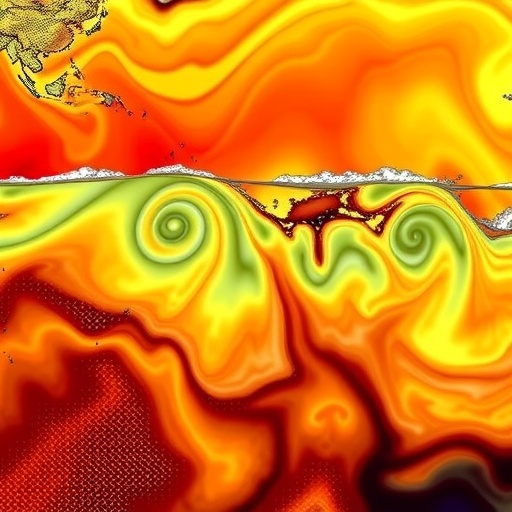
Image Credits: AI Generated

DOI: 10.1038/s43247-026-03792-6

Keywords: marine heatwaves, ocean biogeochemistry, seasonal amplification, climate impact, marine ecosystems

Tags: advanced climate modeling of heatwavesbiological modulation of heatwave severityclimate change impacts on marine ecosystemsfeedback mechanisms between ocean biogeochemistry and climatehigh-resolution oceanographic datasetsMarine heatwave seasonalitynutrient and oxygen variability in oceansocean biogeochemical gradientsocean chemistry and biological productivityocean temperature anomaliesphysical and chemical ocean interactionsseasonal amplification of marine heatwaves
Share26Tweet16
Previous Post

First Clinical Trial of Stem Cell Therapy for Huntington’s Disease Announced

Next Post

Unraveling How General Anesthesia Works at the Molecular Level

Related Posts

Climate Change Cannot Hide Human-Caused Water Crisis in Northern China
Earth Science

Climate Change Cannot Hide Human-Caused Water Crisis in Northern China

July 10, 2026
Review Finds Soil Carbon Gains from Alternative Grazing Vary by Study Quality
Earth Science

Review Finds Soil Carbon Gains from Alternative Grazing Vary by Study Quality

July 10, 2026
Indonesian Throughflow Heat Boost Fuels Southern Hemisphere Circulation Gyres
Earth Science

Indonesian Throughflow Heat Boost Fuels Southern Hemisphere Circulation Gyres

July 10, 2026
Scientists Reveal New Insights Into Mud Volcano Flow Dynamics
Earth Science

Scientists Reveal New Insights Into Mud Volcano Flow Dynamics

July 9, 2026
Green Manure and Biochar Reduce Nitrogen Use, Enhance Soil Health
Earth Science

Green Manure and Biochar Reduce Nitrogen Use, Enhance Soil Health

July 9, 2026
AI uncovers concealed movements along the San Andreas Fault
Earth Science

AI uncovers concealed movements along the San Andreas Fault

July 9, 2026
Next Post
Unraveling How General Anesthesia Works at the Molecular Level

Unraveling How General Anesthesia Works at the Molecular Level

  • Mothers who receive childcare support from maternal grandparents show more

    Mothers who receive childcare support from maternal grandparents show more parental warmth, finds NTU Singapore study

    27656 shares
    Share 11059 Tweet 6912
  • University of Seville Breaks 120-Year-Old Mystery, Revises a Key Einstein Concept

    1061 shares
    Share 424 Tweet 265
  • Bee body mass, pathogens and local climate influence heat tolerance

    682 shares
    Share 273 Tweet 171
  • Researchers record first-ever images and data of a shark experiencing a boat strike

    546 shares
    Share 218 Tweet 137
  • Groundbreaking Clinical Trial Reveals Lubiprostone Enhances Kidney Function

    531 shares
    Share 212 Tweet 133
Science

Embark on a thrilling journey of discovery with Scienmag.com—your ultimate source for cutting-edge breakthroughs. Immerse yourself in a world where curiosity knows no limits and tomorrow’s possibilities become today’s reality!

RECENT NEWS

  • Delirium Rates in German Nursing Homes Revealed in New Study
  • Climate Change Cannot Hide Human-Caused Water Crisis in Northern China
  • Review Finds Soil Carbon Gains from Alternative Grazing Vary by Study Quality
  • Unraveling How General Anesthesia Works at the Molecular Level

Categories

  • Agriculture
  • Anthropology
  • Archaeology
  • Athmospheric
  • Biology
  • Biotechnology
  • Blog
  • Bussines
  • Cancer
  • Chemistry
  • Climate
  • Earth Science
  • Editorial Policy
  • Marine
  • Mathematics
  • Medicine
  • Pediatry
  • Policy
  • Psychology & Psychiatry
  • Science Education
  • Social Science
  • Space
  • Technology and Engineering

Subscribe to Blog via Email

Enter your email address to subscribe to this blog and receive notifications of new posts by email.

Join 5,146 other subscribers

© 2025 Scienmag - Science Magazine

Welcome Back!

Login to your account below

Forgotten Password?

Retrieve your password

Please enter your username or email address to reset your password.

Log In
No Result
View All Result
  • HOME
  • SCIENCE NEWS
  • CONTACT US

© 2025 Scienmag - Science Magazine

Discover more from Science

Subscribe now to keep reading and get access to the full archive.

Continue reading
