

Thursday, July 9, 2026
Science
No Result
View All Result
  • Login
  • HOME
  • SCIENCE NEWS
  • CONTACT US
  • HOME
  • SCIENCE NEWS
  • CONTACT US
No Result
View All Result
Scienmag
No Result
View All Result
Home Science News Medicine

New NIR fluorotag CETIF6a enhances tumor labeling and protein profiling

July 9, 2026
in Medicine
Reading Time: 2 mins read
0
New NIR fluorotag CETIF6a enhances tumor labeling and protein profiling

New NIR fluorotag CETIF6a enhances tumor labeling and protein profiling

65
SHARES
587
VIEWS
Share on FacebookShare on Twitter
ADVERTISEMENT

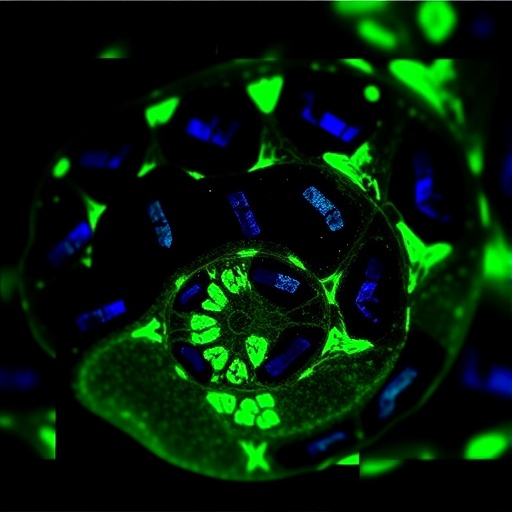
In a significant breakthrough for cancer research and proteomic analysis, scientists have developed a novel near-infrared (NIR) fluorotag reporter named CETIF6a. This innovative molecular tool promises to revolutionize tumor visualization and functional proteomic profiling, offering unprecedented brightness and specificity for pan-tumor labeling.

Traditional fluorescent probes have long been instrumental in biomedical imaging, yet their efficacy is often limited by tissue autofluorescence, photobleaching, and suboptimal penetration depth. CETIF6a leverages the advantages of near-infrared wavelengths, which minimize background interference and allow deeper tissue imaging. This development enables researchers to vividly illuminate tumors across diverse cancer types with exceptional clarity.

CETIF6a is engineered to bind selectively to tumor-associated proteins, acting as a bright beacon for malignant tissues. Unlike previous probes, its design facilitates simultaneous functional proteomic profiling, thereby providing not just visual confirmation but also detailed insights into protein activity within the tumor microenvironment. This dual capability has the potential to enhance understanding of tumor biology and heterogeneity.

In preclinical models, CETIF6a demonstrated remarkable sensitivity, effectively delineating tumor margins and enabling real-time monitoring of tumor progression and response to therapies. The fluorotag’s stability and brightness under physiological conditions mark a substantial improvement over existing fluorescent markers, which often suffer from rapid photobleaching.

Moreover, the application of CETIF6a extends beyond imaging. By enabling functional proteomic profiling in situ, scientists can identify key protein interactions and pathways driving tumor growth. This functional readout could inform personalized therapeutic strategies by revealing potential molecular targets.

The technology hinges on an optimized molecular scaffold that balances photostability, biocompatibility, and target affinity. The utilization of a NIR wavelength range (approximately 700-900 nm) enhances tissue penetration, while the fluorescence quantum yield has been tuned for maximal emission intensity. This bespoke fluorotag design ensures robust performance in complex biological environments.

Looking forward, CETIF6a holds promise for clinical translation, particularly in image-guided surgery and non-invasive diagnostics. By providing surgeons with real-time tumor visualization, the fluorotag could improve resection accuracy, sparing healthy tissue and reducing recurrence rates. Additionally, functional proteomic profiling may pave the way for companion diagnostic assays.

This pioneering work aligns with the broader trend of integrating imaging with molecular characterization, fostering a more holistic approach to cancer diagnostics and treatment. The capacity to illuminate tumors with high specificity while simultaneously probing their proteomic landscape represents a new frontier in oncological research.

As this technology advances toward clinical applications, it underscores the value of interdisciplinary innovation combining chemistry, molecular biology, and optical engineering. CETIF6a exemplifies how tailored fluorescent reporters can unlock deeper insights into disease mechanisms and support the development of precision medicine.


Subject of Research: Near-infrared fluorotag reporter for tumor imaging and functional proteomic profiling

Article Title: A NIR fluorotag reporter CETIF6a enables bright pan-tumor labeling and functional proteomic profiling

Article References:
Li, J., Zhang, F., Cheng, J. et al. A NIR fluorotag reporter CETIF6a enables bright pan-tumor labeling and functional proteomic profiling. Nat Commun (2026). https://doi.org/10.1038/s41467-026-75356-3

Image Credits: AI Generated

Tags: biomedical imaging advancementsdeep tissue imaging with NIR fluorotagsfluorescent cancer biomarkersfluorescent probes for cancer detectionmolecular imaging of malignant tissuesnear-infrared tumor imagingphotostable near-infrared fluorophoresproteomic analysis in cancer researchreal-time tumor monitoringtargeted tumor visualization techniquestumor heterogeneity analysistumor-specific protein profiling
Share26Tweet16
Previous Post

New framework explains depth and scaling of slow earthquakes

Next Post

Brain’s Role in Linking Obesity to Gait Abnormalities Explored

Related Posts

Football fans perform over 800,000 CPR compressions at FIFA events
Medicine

Football fans perform over 800,000 CPR compressions at FIFA events

July 9, 2026
Humanoid Robots Tested for Surgical Use in Live Feasibility Study
Medicine

Humanoid Robots Tested for Surgical Use in Live Feasibility Study

July 9, 2026
Insilico Medicine Reports First Half 2026 Positive Profit Alert
Medicine

Insilico Medicine Reports First Half 2026 Positive Profit Alert

July 9, 2026
BET inhibition reveals glycolytic vulnerability via HIF1α in triple-negative breast cancer
Medicine

BET inhibition reveals glycolytic vulnerability via HIF1α in triple-negative breast cancer

July 9, 2026
Common Drugs Provide Limited Relief for Long Covid Fatigue
Medicine

Common Drugs Provide Limited Relief for Long Covid Fatigue

July 9, 2026
Most Obesity Drugs Fail to Enhance Life Quality or Heart Health
Medicine

Most Obesity Drugs Fail to Enhance Life Quality or Heart Health

July 9, 2026
Next Post
Brain’s Role in Linking Obesity to Gait Abnormalities Explored

Brain's Role in Linking Obesity to Gait Abnormalities Explored

  • Mothers who receive childcare support from maternal grandparents show more

    Mothers who receive childcare support from maternal grandparents show more parental warmth, finds NTU Singapore study

    27656 shares
    Share 11059 Tweet 6912
  • University of Seville Breaks 120-Year-Old Mystery, Revises a Key Einstein Concept

    1061 shares
    Share 424 Tweet 265
  • Bee body mass, pathogens and local climate influence heat tolerance

    682 shares
    Share 273 Tweet 171
  • Researchers record first-ever images and data of a shark experiencing a boat strike

    546 shares
    Share 218 Tweet 137
  • Groundbreaking Clinical Trial Reveals Lubiprostone Enhances Kidney Function

    531 shares
    Share 212 Tweet 133
Science

Embark on a thrilling journey of discovery with Scienmag.com—your ultimate source for cutting-edge breakthroughs. Immerse yourself in a world where curiosity knows no limits and tomorrow’s possibilities become today’s reality!

RECENT NEWS

  • Football fans perform over 800,000 CPR compressions at FIFA events
  • New Genetic Screen Advances Understanding of Human Development
  • Humanoid Robots Tested for Surgical Use in Live Feasibility Study
  • Measuring Gender Inequality in Modern Visual Art Institutions

Categories

  • Agriculture
  • Anthropology
  • Archaeology
  • Athmospheric
  • Biology
  • Biotechnology
  • Blog
  • Bussines
  • Cancer
  • Chemistry
  • Climate
  • Earth Science
  • Editorial Policy
  • Marine
  • Mathematics
  • Medicine
  • Pediatry
  • Policy
  • Psychology & Psychiatry
  • Science Education
  • Social Science
  • Space
  • Technology and Engineering

Subscribe to Blog via Email

Enter your email address to subscribe to this blog and receive notifications of new posts by email.

Join 5,147 other subscribers

© 2025 Scienmag - Science Magazine

Welcome Back!

Login to your account below

Forgotten Password?

Retrieve your password

Please enter your username or email address to reset your password.

Log In
No Result
View All Result
  • HOME
  • SCIENCE NEWS
  • CONTACT US

© 2025 Scienmag - Science Magazine

Discover more from Science

Subscribe now to keep reading and get access to the full archive.

Continue reading
