


A groundbreaking study published in PLOS One reveals a significant link between lifetime criminal legal involvement (CLI) and increased emergency department (ED) utilization across the United States. Utilizing data collected from over 139,000 adults in the 2021–2023 National Survey on Drug Use and Health, researchers from Washington University in St. Louis examined how a history of CLI—defined as ever having been arrested and booked—influences patterns of ED visits for general, substance use, and mental health reasons.
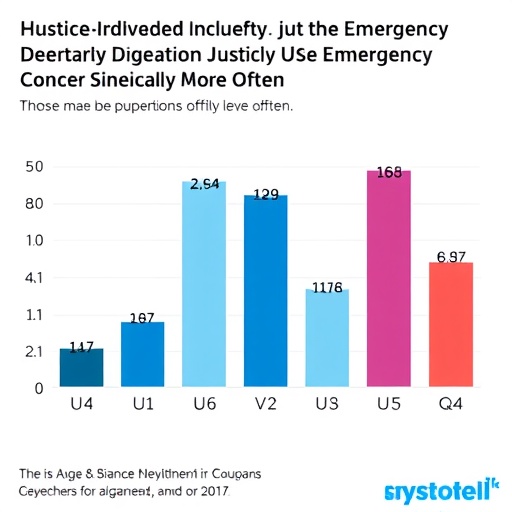
The findings indicate that individuals with a history of CLI are disproportionately represented among ED patients, with 19% of those presenting to EDs for any reason reporting lifetime CLI and 3% reporting recent involvement within the past year. When focusing specifically on substance use-related ED visits, these figures escalate dramatically to 44% and 15% respectively, underscoring the heightened vulnerability of this population to substance-related health crises. Similarly, mental health-related ED visits showed elevated proportions—29% lifetime CLI and 8% past-year CLI.
Adjusting for sociodemographic variables and behavioral health factors, the study demonstrates that lifetime CLI is associated with significantly higher odds of ED visits: a 20% increase for any reason (aOR 1.20, 95% CI 1.12–1.29), an 82% increase for substance use (aOR 1.82, 95% CI 1.36–2.43), and a 54% increase for mental health concerns (aOR 1.54, 95% CI 1.19–1.99). These statistics reveal that CLI exerts a profound and persistent influence on healthcare utilization long after the initial legal encounter.
Importantly, the survey design excluded currently incarcerated and housing-insecure individuals—groups that typically experience even higher rates of CLI and ED usage. This exclusion suggests that the real-world burden of CLI among ED patients is likely underestimated, highlighting a critical gap in understanding and addressing healthcare needs within this vulnerable population.
This research frames CLI as a critical social determinant of health, shaping patient trajectories and care requirements in emergency settings. The multifaceted challenges of addressing substance use and mental health among patients with CLI histories call for integrated intervention strategies that span healthcare and social services.
Emergency departments, often the first and sometimes only point of contact for many with CLI histories, are uniquely positioned to implement targeted screening and intervention programs. Collaborations involving community organizations and public health agencies could foster more effective support networks, potentially mitigating repeat ED visits and improving long-term outcomes for these individuals.
The authors advocate for recognizing CLI’s role in health disparities and integrating this awareness into policies and practices aimed at reducing the costly and often preventable demands on emergency healthcare systems. This paradigm shift toward viewing criminal legal history as a key determinant underscores the pressing need to address broader systemic inequities affecting health and well-being.
This study not only deepens the understanding of the interconnectedness between legal system involvement and health but also points to actionable pathways for transforming emergency medical care into a nexus for social and behavioral health interventions.
Cite Scienmag News
Ophelia Keating. (July 8, 2026). Justice-Involved Individuals Use Emergency Departments Significantly More Often. Scienmag. https://scienmag.com/justice-involved-individuals-use-emergency-departments-significantly-more-often/
Ophelia Keating. "Justice-Involved Individuals Use Emergency Departments Significantly More Often." Scienmag, 8 July 2026, https://scienmag.com/justice-involved-individuals-use-emergency-departments-significantly-more-often/. Accessed 3 September 2026.
Ophelia Keating. "Justice-Involved Individuals Use Emergency Departments Significantly More Often." Scienmag. July 8, 2026. https://scienmag.com/justice-involved-individuals-use-emergency-departments-significantly-more-often/


