
Wednesday, July 8, 2026
Science
No Result
View All Result
  • Login
  • HOME
  • SCIENCE NEWS
  • CONTACT US
  • HOME
  • SCIENCE NEWS
  • CONTACT US
No Result
View All Result
Scienmag
No Result
View All Result
Home Science News Medicine

Return exactly one rewritten English science news headline for the original title below. Maximum 12 words. Output plain text only. Do not use HTML, Markdown, quotes, labels, explanations, bullets, numbering, or multiple options. Original title: Research spotlight: A new standard to better align implantable brain devices with users’ needs

July 8, 2026
in Medicine
Reading Time: 5 mins read
0
Return exactly one rewritten English science news headline for the original title below. Maximum 12 words. Output plain text only. Do not use HTML, Markdown, quotes, labels, explanations, bullets, numbering, or multiple options. Original title: Research spotlight: A new standard to better align implantable brain devices with users’ needs

Return exactly one rewritten English science news headline for the original title below. Maximum 12 words. Output plain text only. Do not use HTML, Markdown, quotes, labels, explanations, bullets, numbering, or multiple options. Original title: Research spotlight: A new standard to better align implantable brain devices with users’ needs

65
SHARES
587
VIEWS
Share on FacebookShare on Twitter
ADVERTISEMENT

Gabriel Lázaro-Muñoz, PhD, JD, and Amanda R. Merner, PhD, of the Health Technology Performance Lab within the Mass General Brigham Neuroscience Institute, are the authors of a paper published in The American Journal of Psychiatry, “Implantable Neuromodulation Devices in Psychiatry: Human Fidelity and Implementation Challenges.”

Q: What challenges or unmet needs make this study important?

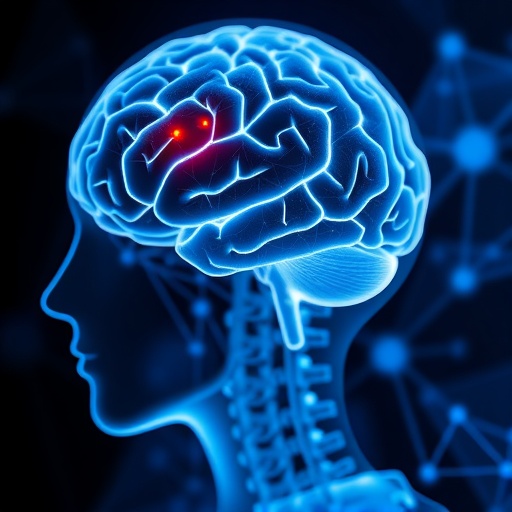
Implantable brain devices—from deep brain stimulation to a new generation of brain-computer interfaces—can help people with severe, treatment-resistant psychiatric and neurological conditions or loss of function (such as paralysis or blindness). Despite the United States’ heavy investment in building these devices and the systems to deliver them, there isn’t a shared, measurable way to tell whether they are meeting the needs and expectations of the people and systems involved.

All too often, good technology that works in the lab fails to reach or be a good fit for “stakeholders,” such as patients, clinicians and healthcare systems. Establishing a way to measure “human fidelity” in the development and implementation of implantable brain devices is necessary to promote trust, access and adoption of neurotechnology.

Q: What central question(s) were you investigating?

We asked whether it’s possible to define and then measure “human fidelity”: how well any given implantable brain device aligns with its stakeholders’ needs and expectations. For example, is the device safe, effective and acceptable for different groups?

While most people would agree that developers should keep patients, clinicians and families top of mind, we wanted a principle that could be woven into the design and development of neurotechnology. That meant asking whether “alignment with the human” could be treated as a concrete property of a device and its surrounding workflows and messaging, rather than a vague aspiration or a one-time checkbox. Just as engineers treat performance requirements like scalability, if “human fidelity” could be measured, it could be benchmarked, compared across devices and improved over time.

Q: What methods or approach did you use?

We synthesized the published literature with roughly a decade of empirical neuroethics research by our team and others into a single organizing concept. Our data foundation included everything from more than 300 in-depth interviews with patients, caregivers, researchers, clinicians, funders, device companies and health insurance providers to other research approaches, including policy analysis, embedded observation within active device trials and public perception surveys on neurotechnology. This work spanned several device types and conditions, including depression, obsessive-compulsive disorder, Tourette syndrome, Parkinson’s disease, dystonia and essential tremor. We drew those threads together to define the concept of “Human Fidelity” and to map pressing alignment gaps.

Q: What did you find?

We introduced a standard we call Human Fidelity and defined it as “the measurable degree to which a device, its access workflows and associated messaging are aligned with the empirically determined needs and expectations of key stakeholders across the full development and clinical translation pipeline.” The central idea is to treat Human Fidelity as a performance variable—much like reliability or scalability in systems engineering—rather than a values statement.

We then identified five domains where the gap between devices and stakeholders is most pressing: Access and Uptake, Invasiveness, Identity and Agency, Patient-Centered Outcomes and Long-term Device Maintenance. For each, we offered concrete recommendations for developers and trial teams.

Q: What are the real-world implications, particularly for patients?

The ultimate goal is to design devices, trials and clinical implementation pathways that patients can trust, access and are more likely to adopt: clear paths to treatment, clear communication about what an implant involves, attention to how a device may affect a person’s sense of self and autonomy, outcomes that matter in daily life and protections for what happens after a study ends—including maintenance for the device a patient’s health now depends on. Our proposed framework offers a shared, measurable target that clinicians and developers can strive toward to benefit more people.

Q: What part of this work feels most meaningful to you personally?

The most meaningful part has been listening to patients and families describe their experiences in their own words, including the challenges they faced, their support needs and what it was like to make decisions about, and live with, brain devices. Those conversations were humbling and emphasized how difficult, yet critical, it is to place people at the center of health technology development. Putting forth the concept of Human Fidelity is our attempt to make that responsibility concrete and durable. If this new standard helps more patients receive a device that genuinely fits their lives, the years behind our research will have been worth it.

Paper cited: Lázaro-Muñoz, G., Merner, A.R. “Implantable Neuromodulation Devices in Psychiatry: Human Fidelity and Implementation Challenges.” The American Journal of Psychiatry. DOI: 10.1176/appi.ajp.20251187

Funding: This paper was supported by grants from the National Institutes of Health (NIH), including the NIH BRAIN Initiative (R01MH133657). This work was also informed by previously funded NIH grants (R01MH114654 and R01MH121371).

Disclosures: The authors report no financial relationships with commercial interests.


DOI

10.1176/appi.ajp.20251187

Method of Research

Data/statistical analysis

Subject of Research

People

Article Title

Implantable Neuromodulation Devices in Psychiatry: Human Fidelity and Implementation Challenges

Article Publication Date

8-Jul-2026

Media Contact

Brandon Chase

Mass General Brigham

bchase7@mgb.org

Funder
NIH/National Institutes of Health
DOI
10.1176/appi.ajp.20251187

DOI

10.1176/appi.ajp.20251187

Method of Research

Data/statistical analysis

Subject of Research

People

Article Title

Implantable Neuromodulation Devices in Psychiatry: Human Fidelity and Implementation Challenges

Article Publication Date

8-Jul-2026

Tags


  • /Life sciences/Physiology/Neurophysiology/Neurotransmission/Neuromodulation

bu içeriği 600 ile 800 kelime arasında olacak şekilde ve alt başlıklar ve madde içermiyecek şekilde ünlü bir science magazine için İngilizce olarak yeniden yaz. Teknik açıklamalar içersin ve Viral science news olacak şekilde İngilizce yaz. Haber dışında başka bir şey içermesin. Haber içerisinde 8 ile 10 paragraf olsun ve toplam uzunluk 600 ile 800 kelime arasında kalsın. Cevapta sadece haber olsun. Ayrıca haberi yazdıktan sonra içerikten yararlanarak aşağıdaki başlıkların bilgisi var ise haberin altında doldur. Eğer yoksa bilgisi ilgili kısmı yazma.:
Subject of Research:
Article Title:
News Publication Date:
Web References:
References:
Image Credits:

Keywords

Share26Tweet16
Previous Post

Return exactly one rewritten English science news headline for the original title below. Maximum 12 words. Output plain text only. Do not use HTML, Markdown, quotes, labels, explanations, bullets, numbering, or multiple options. Original title: KRICT solves internal cracking in sulfide all-solid-state batteries with elastic ion-conductive polymer

Next Post

Return exactly one rewritten English science news headline for the original title below. Maximum 12 words. Output plain text only. Do not use HTML, Markdown, quotes, labels, explanations, bullets, numbering, or multiple options. Original title: Research spotlight: A new standard to better align implantable brain devices with users’ needs

Related Posts

Return exactly one rewritten English science news headline for the original title below. Maximum 12 words. Output plain text only. Do not use HTML, Markdown, quotes, labels, explanations, bullets, numbering, or multiple options. Original title: Could an investigational drug that targets DNA damage help treat Alzheimer’s disease?
Medicine

Return exactly one rewritten English science news headline for the original title below. Maximum 12 words. Output plain text only. Do not use HTML, Markdown, quotes, labels, explanations, bullets, numbering, or multiple options. Original title: Could an investigational drug that targets DNA damage help treat Alzheimer’s disease?

July 8, 2026
Return exactly one rewritten English science news headline for the original title below. Maximum 12 words. Output plain text only. Do not use HTML, Markdown, quotes, labels, explanations, bullets, numbering, or multiple options. Original title: Human-safe drug repairs DNA in a mouse model of Alzheimer’s
Medicine

Return exactly one rewritten English science news headline for the original title below. Maximum 12 words. Output plain text only. Do not use HTML, Markdown, quotes, labels, explanations, bullets, numbering, or multiple options. Original title: Human-safe drug repairs DNA in a mouse model of Alzheimer’s

July 8, 2026
Return exactly one rewritten English science news headline for the original title below. Maximum 12 words. Output plain text only. Do not use HTML, Markdown, quotes, labels, explanations, bullets, numbering, or multiple options. Original title: Emotional, technical, and ethical experiences of nursing students performing oral hygiene for dependent older adults: a qualitative study
Medicine

Return exactly one rewritten English science news headline for the original title below. Maximum 12 words. Output plain text only. Do not use HTML, Markdown, quotes, labels, explanations, bullets, numbering, or multiple options. Original title: Emotional, technical, and ethical experiences of nursing students performing oral hygiene for dependent older adults: a qualitative study

July 8, 2026
Return exactly one rewritten English science news headline for the original title below. Maximum 12 words. Output plain text only. Do not use HTML, Markdown, quotes, labels, explanations, bullets, numbering, or multiple options. Original title: The moderating role of anti-inflammatory diet on the relationship between chronic obstructive pulmonary disease and frailty in older adults: a nationwide cross-sectional and longitudinal study
Medicine

Return exactly one rewritten English science news headline for the original title below. Maximum 12 words. Output plain text only. Do not use HTML, Markdown, quotes, labels, explanations, bullets, numbering, or multiple options. Original title: The moderating role of anti-inflammatory diet on the relationship between chronic obstructive pulmonary disease and frailty in older adults: a nationwide cross-sectional and longitudinal study

July 8, 2026
Return exactly one rewritten English science news headline for the original title below. Maximum 12 words. Output plain text only. Do not use HTML, Markdown, quotes, labels, explanations, bullets, numbering, or multiple options. Original title: The silent hormone: How adrenal tumors quietly raise cardiovascular risk over time
Medicine

Return exactly one rewritten English science news headline for the original title below. Maximum 12 words. Output plain text only. Do not use HTML, Markdown, quotes, labels, explanations, bullets, numbering, or multiple options. Original title: The silent hormone: How adrenal tumors quietly raise cardiovascular risk over time

July 8, 2026
Return exactly one rewritten English science news headline for the original title below. Maximum 12 words. Output plain text only. Do not use HTML, Markdown, quotes, labels, explanations, bullets, numbering, or multiple options. Original title: Satellites are transforming biodiversity monitoring for global nature targets, but major gaps remain
Medicine

Return exactly one rewritten English science news headline for the original title below. Maximum 12 words. Output plain text only. Do not use HTML, Markdown, quotes, labels, explanations, bullets, numbering, or multiple options. Original title: Satellites are transforming biodiversity monitoring for global nature targets, but major gaps remain

July 8, 2026
Next Post
Return exactly one rewritten English science news headline for the original title below. Maximum 12 words. Output plain text only. Do not use HTML, Markdown, quotes, labels, explanations, bullets, numbering, or multiple options. Original title: Research spotlight: A new standard to better align implantable brain devices with users’ needs

Return exactly one rewritten English science news headline for the original title below. Maximum 12 words. Output plain text only. Do not use HTML, Markdown, quotes, labels, explanations, bullets, numbering, or multiple options. Original title: Research spotlight: A new standard to better align implantable brain devices with users’ needs

  • Mothers who receive childcare support from maternal grandparents show more

    Mothers who receive childcare support from maternal grandparents show more parental warmth, finds NTU Singapore study

    27656 shares
    Share 11059 Tweet 6912
  • University of Seville Breaks 120-Year-Old Mystery, Revises a Key Einstein Concept

    1061 shares
    Share 424 Tweet 265
  • Bee body mass, pathogens and local climate influence heat tolerance

    682 shares
    Share 273 Tweet 171
  • Researchers record first-ever images and data of a shark experiencing a boat strike

    546 shares
    Share 218 Tweet 137
  • Groundbreaking Clinical Trial Reveals Lubiprostone Enhances Kidney Function

    531 shares
    Share 212 Tweet 133
Science

Embark on a thrilling journey of discovery with Scienmag.com—your ultimate source for cutting-edge breakthroughs. Immerse yourself in a world where curiosity knows no limits and tomorrow’s possibilities become today’s reality!

RECENT NEWS

  • Postpartum bonding problems tied to abnormal neural processing of infant emotions
  • Salmonella protein SopB curbs early inflammation to slow disease progression
  • Embodied cognition yields interpretable trajectory predictions for autonomous systems.
  • Multi-metal cooperation drives lung cancer chemoresistance, reversed by MiADMSA

Categories

  • Agriculture
  • Anthropology
  • Archaeology
  • Athmospheric
  • Biology
  • Biotechnology
  • Blog
  • Bussines
  • Cancer
  • Chemistry
  • Climate
  • Earth Science
  • Editorial Policy
  • Marine
  • Mathematics
  • Medicine
  • Pediatry
  • Policy
  • Psychology & Psychiatry
  • Science Education
  • Social Science
  • Space
  • Technology and Engineering

Subscribe to Blog via Email

Success! An email was just sent to confirm your subscription. Please find the email now and click 'Confirm Follow' to start subscribing.

Join 5,147 other subscribers

© 2025 Scienmag - Science Magazine

Welcome Back!

Login to your account below

Forgotten Password?

Retrieve your password

Please enter your username or email address to reset your password.

Log In
No Result
View All Result
  • HOME
  • SCIENCE NEWS
  • CONTACT US

© 2025 Scienmag - Science Magazine
