

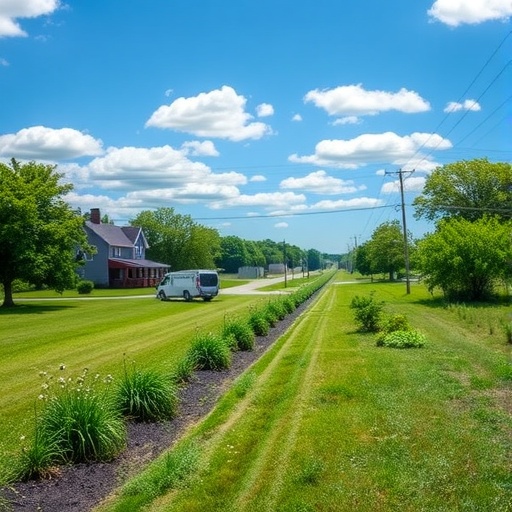
A state-of-the-art mobile examination unit has rolled into the rural backroads of northeastern Louisiana, and the health data it has gathered reads like a clarion call for a nation grappling with hidden epidemics. The Risks Underlying Rural Areas Longitudinal (RURAL) Heart and Lung Study, a first-of-its-kind initiative backed by $43.9 million from the National Institutes of Health, has just released its first comprehensive data book for Franklin Parish — and the numbers are staggering. In a parish of roughly 19,800 residents, where agriculture stretches across the Mississippi Delta flatlands, an astonishing 82 percent of adults are living with overweight or obesity. That figure not only dwarfs the already elevated Louisiana average of 72 percent but also soars far above the national benchmark of 68 percent, painting a picture of a metabolic crisis that cuts across every demographic line.
The RURAL study is a multi-institutional, multi-state effort designed to answer a vexing epidemiological puzzle: why do rural Americans suffer disproportionately from heart disease, stroke, diabetes, chronic lung conditions, and obesity? To decode the complex interplay of environment, socioeconomic status, and biology, the consortium — spanning 16 research institutions across Louisiana, Mississippi, Alabama, and Kentucky — employs a uniquely powerful longitudinal design. The same 833 adults recruited from Assumption and Franklin parishes in 2024 will be tracked over five years, with a repeat evaluation scheduled for 2029. This repeated-measures approach allows scientists to observe the temporal sequence of risk factor accumulation and disease onset, transforming cross-sectional snapshots into a dynamic picture of health trajectories.
The centerpiece of the field operation is a custom-built mobile examination unit, a compact but fully equipped diagnostic clinic on wheels. During each roughly three-hour visit, participants underwent a battery of tests that would be the envy of many urban outpatient centers. After a detailed health questionnaire, technicians collected fasting blood and urine samples to measure lipids, high-sensitivity C-reactive protein, fasting glucose, and HbA1c — key biomarkers of inflammation, dyslipidemia, and glycemic control. Participants then underwent transthoracic echocardiography to assess cardiac structure and function, including left ventricular mass and ejection fraction. A low-dose computed tomography scan provided quantifiable measures of coronary artery calcium, a powerful predictor of future cardiac events, as well as imaging of the lungs to detect subclinical emphysema or airway thickening. Spirometry, the gold standard for pulmonary function testing, was also performed, capturing forced expiratory volume in one second and forced vital capacity. By capturing such a rich phenotypic dataset, the study can identify pathophysiological changes well before a clinical diagnosis is made.
Franklin Parish, where the latest data has been released, sits in the heart of Louisiana’s rural landscape, with a population that is approximately 63 percent White and 33 percent Black or African American. Community engagement specialist Krysta Younker, who lives and works in the area, emphasized that the study turns local voices into meaningful action, a sentiment echoed by the high participation rate. Of the 373 Franklin Parish adults enrolled, the data reveals that obesity rates were elevated across all demographic strata, suggesting that the forces driving weight gain are not confined to a single group but are woven into the fabric of the community’s built environment, food systems, and social norms.
The hypertension findings are equally sobering and add a critical socioeconomic dimension. Rates of high blood pressure in Franklin Parish surpassed those observed across Louisiana as a whole, and the study uncovered a clear inverse gradient: residents in the highest income brackets experienced the lowest rates of hypertension. This dose-response relationship between income and cardiovascular risk is a stark reminder that health disparities are often proxy measures for differences in access to preventive care, medication adherence, and the chronic stress of financial insecurity. The data also unmasked a silent epidemic of uncontrolled and undiagnosed disease. Uncontrolled hypertension was alarmingly prevalent across nearly all demographic groups, and older adults were disproportionately likely to have undiagnosed high cholesterol and type 2 diabetes — conditions that silently damage vasculature and organs for years before manifesting as a heart attack or stroke.
These findings point to profound gaps in routine screening and primary care access, a hallmark of rural health deserts. Because the mobile unit brought advanced diagnostics directly to the participants, the study effectively functioned as a community-wide case-finding mission, unmasking pathologies that might otherwise have remained hidden until a catastrophic event. The pulmonary function tests, for instance, could reveal early-stage chronic obstructive pulmonary disease in individuals who have never smoked but who have been exposed to agricultural dust, biomass fuel, or other occupational hazards common in rural economies.
The RURAL study’s longitudinal framework will soon allow researchers to distinguish between cause and consequence. By following the same individuals, scientists can determine whether obesity precedes the development of uncontrolled hypertension, or whether certain inflammatory profiles predict a faster decline in lung function. Such insights are critical for designing targeted interventions that go beyond the usual advice to “eat less and move more,” and instead address the structural, environmental, and psychosocial factors that trap rural communities in cycles of poor health. The data books for each parish, now publicly available, are being explored by the study team to identify the common drivers that persist across these geographically distinct but socioeconomically similar regions.
Dr. Stephanie Broyles, professor and director of the Contextual Risk Factors Laboratory at LSU’s Pennington Biomedical Research Center, leads the Louisiana arm of this ambitious project. As the mobile unit completes its rounds through the remaining eight counties and parishes in the four-state corridor, the data from Franklin Parish will serve as both a warning and a blueprint. The next wave of assessments in 2029 will not only reveal how these baseline risks have evolved but will also highlight the resilience and vulnerabilities that define rural health in the twenty-first century.
Subject of Research: Cardiometabolic and pulmonary health risks in rural U.S. adults, using longitudinal data from the Risks Underlying Rural Areas Longitudinal (RURAL) study in Franklin Parish, Louisiana.
Article Title: Mobile Lab Uncovers 82% Obesity Rate and Hidden Hypertension Crisis in Rural Louisiana
Web References:
https://www.pbrc.edu/pdf/Assumption_RURAL_Data_Book.pdf
https://www.pbrc.edu/pdf/franklin_rural_data_book.pdf
https://www.pbrc.edu/research-and-faculty/research-programs/rural/
Image Credits: RURAL Heart and Lung Study
Keywords: rural health, obesity, hypertension, health disparities, cardiovascular disease, pulmonary disease, epidemiology, longitudinal study, mobile examination unit, Franklin Parish, Louisiana, Pennington Biomedical, RURAL study


