

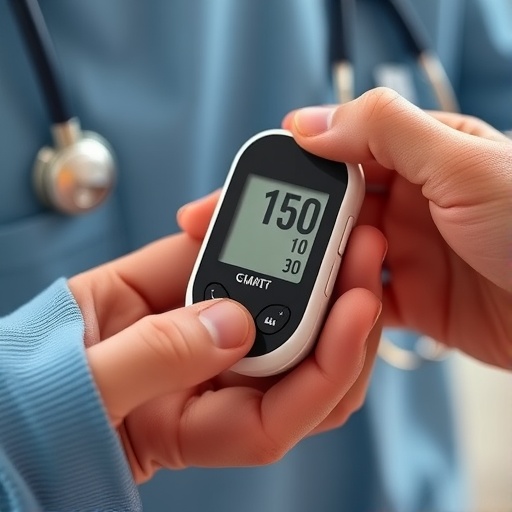
A quiet revolution in diabetes care is unfolding not in specialized endocrine clinics but in the everyday exam rooms of primary care physicians. A sweeping new cohort study published in JAMA Network Open reveals that when primary care clinicians—rather than diabetes specialists—initiate continuous glucose monitoring (CGM) for adults who require insulin, the results are both clinically profound and operationally transformative. Patients experienced meaningful drops in glycated hemoglobin (HbA1c), and the health system saw significant declines in recurrent hospitalizations and emergency department visits. The findings make a powerful case for pushing CGM technology deep into the front lines of medicine, especially for underserved populations who often lack access to subspecialty care.
Continuous glucose monitors are compact devices that use a tiny filament inserted just under the skin to measure glucose concentrations in the interstitial fluid every one to five minutes. Unlike traditional fingerstick tests that provide a single snapshot, a CGM generates a continuous stream of data, mapping glucose trends in near real time and sending alerts when levels veer toward dangerous highs or lows. This torrent of information allows patients and clinicians to see not just a momentary value but the velocity and direction of glucose change, unlocking a far more nuanced understanding of how food, activity, stress, and medications influence metabolism. For the millions of people who rely on insulin, that knowledge can be the difference between a stable day and a life-threatening emergency.
Historically, CGM devices were championed by endocrinologists and diabetes specialists, creating a perception that their optimal use required subspecialty oversight. Yet the reality of healthcare delivery is starkly different: the vast majority of adults with insulin-treated diabetes, particularly those with type 2 diabetes, receive their ongoing care from primary care clinicians. This gap between where the technology was validated and where most patients actually sit created an urgent question. Could CGM be deployed effectively at the primary care level, or would outcomes suffer without specialist involvement? The new study, led by Jovan Milosavljevic of Montefiore, set out to answer that question directly.
The research team conducted a cohort study following adults with insulin-treated diabetes whose CGM was initiated by their primary care providers. The investigators tracked HbA1c—a three-month average marker of blood sugar control that is directly linked to the risk of microvascular complications such as retinopathy, nephropathy, and neuropathy—as well as healthcare utilization patterns. The headline finding was unambiguous: CGM initiation in primary care led to a clinically meaningful reduction in HbA1c. Even modest absolute drops in HbA1c translate into substantial long-term protection; a one-percentage-point decline can slash the risk of complications by a quarter or more, so the magnitude observed strongly suggests that real biological risk was being reduced.
Equally striking was the impact on acute care. The study documented a significant reduction in both recurrent hospitalizations and emergency department visits after CGM was started. Severe hypoglycemia and hyperglycemic crises often announce themselves with little warning when only episodic glucose checks are available. With continuous data streams and predictive alarms, patients and their care teams could intervene hours before a crisis spiraled out of control. The result was fewer ambulance rides, fewer inpatient stays, and a dramatic easing of the burden on overstretched emergency departments—a benefit that resonates far beyond diabetes care itself.
Perhaps the most far-reaching implication concerns health equity. Low-income and minority communities shoulder a disproportionately heavy burden of diabetes and its complications, yet they are also the least likely to have convenient access to endocrinology services. Primary care clinics located in these underserved neighborhoods are perfectly positioned to close the technology gap. The new evidence demonstrates that CGM can be integrated safely and effectively in exactly those settings, effectively democratizing a tool that was once considered the province of the wealthy or the well-connected. As the study suggests, scaling CGM through primary care may be one of the most direct pathways to narrow long-standing disparities in diabetes outcomes.
Behind the clinical outcomes lies a behavioral mechanism that the continuous data stream itself reinforces. When patients see in real time how a particular meal sends their glucose soaring or how a short walk blunts an upward trend, they become active participants in their own physiological management. The monitor transforms an abstract chronic disease into a tangible, moment-by-moment experience. Primary care clinicians, empowered by clear guidelines and minimal training, can coach patients using the same data, building a feedback loop that strengthens self-efficacy and adherence. The study’s real-world design underscores that this synergy is not just theoretical; it plays out robustly across diverse patient panels.
The publication, with the digital object identifier 10.1001/jamanetworkopen.2026.21713, lands at a pivotal moment when policymakers and insurers are weighing expanded coverage for diabetes technology. Until now, the evidence base for CGM in primary care has been thin, leaving room for cautious payers to restrict access. This study erases any doubt that frontline clinicians can harness the power of continuous monitoring to move the needle on both metabolic control and costly acute events. As CGM sensors become smaller, more affordable, and factory-calibrated—no longer requiring fingerstick confirmations—the barriers to scaling evaporate further.
In a healthcare landscape desperate for solutions that are both effective and scalable, the message from this research is clear: giving primary care the tools to monitor glucose continuously is not a compromise; it is a strategic imperative. The study’s senior author and team envision a future where starting CGM is as routine in primary care as prescribing metformin, and where the resulting flood of real-world data continuously refines therapy. If that vision materializes, the impact could be measured not just in percentage points of HbA1c but in lives reclaimed from the relentless cycle of acute diabetes emergencies.
Subject of Research: Adults with insulin-treated diabetes; initiation of continuous glucose monitoring by primary care clinicians and its association with glycemic control and acute care utilization.
Article Title: Not provided in the press release.
News Publication Date: Embargoed – date not specified.
Web References: None provided.
References: doi:10.1001/jamanetworkopen.2026.21713
Image Credits: None
Keywords: glucose, insulin, medical treatments, adults, health care, population, cohort studies, hospitals, emergency medicine, continuous glucose monitoring, primary care, diabetes, health disparities


