

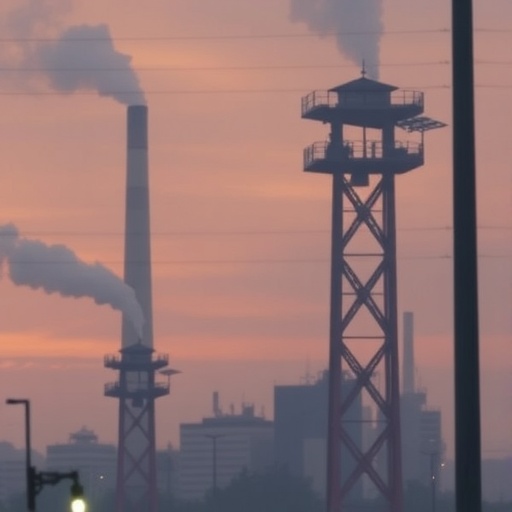
New research reveals that air pollution may do more than irritate the lungs – it could be quietly rewriting the epigenetic instruction manual inside sperm, with potential consequences that ripple into the next generation. Scientists reported today at the 42nd Annual Meeting of the European Society of Human Reproduction and Embryology that exposure to a cocktail of common urban air pollutants during the critical window of sperm production is linked to distinct chemical modifications on sperm DNA. These changes, known as DNA methylation marks, don’t alter the genetic sequence itself but can dial gene activity up or down, influencing everything from sperm maturity to early embryonic development.
The study drew on one of the largest cohorts ever assembled for this kind of molecular sleuthing: over 2,000 men enrolled at fertility clinics in Salt Lake City between 2013 and 2017. Participants provided semen samples at enrollment and then again two, four, and six months later. A subset of 1,220 men had their sperm DNA methylation profiles analyzed at the six-month follow-up, allowing the team to capture a stable snapshot of the epigenome after a full cycle of spermatogenesis. Meanwhile, the researchers modeled each man’s exposure to outdoor air pollutants – specifically ozone, nitrogen dioxide, sulphur dioxide, and fine particulate matter smaller than 2.5 microns (PM2.5) – during the roughly 90-day period it takes for sperm to develop from stem cell to mature gamete.
What emerged was a striking pattern. The team identified 39 differentially methylated regions in sperm DNA that were associated with the air pollution mixture. Ozone and nitrogen dioxide, two of the most pervasive urban pollutants derived from traffic exhaust and natural gas combustion, were the strongest drivers of these epigenetic shifts. The alterations were not random; they clustered in genes with known roles in spermatogenesis, chromosomal organization, and cellular quality control. Most notably, one of the top hits was the GNAS gene, a classic example of an imprinted gene – a gene where the copy inherited from one parent is normally silenced via methylation. Disruption of GNAS imprinting has previously been tied to poor semen quality and to abnormal embryo development, suggesting a direct molecular thread linking a father’s environmental exposures to the health of a future pregnancy.
DNA methylation acts as a dimmer switch for genes: add a methyl group to a promoter region and the gene may be turned off; strip it away and it roars to life. During spermatogenesis, the epigenome undergoes extensive reprogramming, erasing most methylation marks and then laying down new ones in a sex-specific pattern. Imprinted genes like GNAS escape this erasure, preserving a molecular memory of parental origin. When air pollutants perturb the machinery that writes or maintains these marks, the result is a sperm epigenome that carries irregular instructions into the fertilized egg. Because imprinted genes can persist through the waves of epigenetic reprogramming that wash over the early embryo, alterations in sperm may influence not only an individual’s fertility but also the developmental trajectory of offspring.
“Our findings suggest that air pollution exposure during key stages of sperm development may be associated with changes in sperm DNA methylation, including in genes involved in spermatogenesis and early developmental processes,” explained lead author Dr. Carrie Nobles, a reproductive and environmental epidemiologist at the University of Massachusetts Amherst. She emphasized the particular significance of GNAS: “Because imprinted genes can persist through early embryonic development, this raises important questions about whether fathers’ environmental exposures may influence not only fertility, but pregnancy and offspring health.”
The study does not yet prove that these methylation changes directly cause infertility or developmental problems, but it lines up with a growing body of evidence that air pollution impacts male reproduction at multiple levels. Previous work has already documented declines in sperm count, motility, and morphology among men living in highly polluted areas. The new findings add an epigenetic layer to that story, revealing how chemical signals in the air might become embedded in the very code that shapes new life. Professor Karen Sermon, Immediate Past Chair of ESHRE, commented, “This is another piece of the puzzle to understand how pollution negatively influences our fertility. We know that couples exposed to air pollution often have difficulties becoming pregnant, and this may be one of the explanations amongst the myriad ways that pollution impacts our reproductive health.”
While the results are compelling, Dr. Nobles stressed the need for replication in other populations and for functional studies that trace whether these epigenetic marks actually translate into measurable differences in fertility outcomes or children’s health. Future work, she added, should also unpack the role of indoor and personal air pollution exposures, which can differ dramatically from outdoor monitors. Still, the research sends a clear signal that the male germline is environmentally responsive in ways that public health policy has yet to fully appreciate. With urban air quality continuing to deteriorate in many parts of the world, the silent assault on sperm may represent an overlooked pathway through which pollution tightens its grip on human health across generations.
Subject of Research: Impact of air pollution mixtures during spermatogenesis on sperm DNA methylation in men seeking infertility treatment
Article Title: Air Pollution Alters Sperm Epigenetics, Raising Concerns for Fertility and Offspring Health
News Publication Date: July 2026 (ESHRE 42nd Annual Meeting)
Web References: https://www.eshre.eu/; https://academic.oup.com/humrep
References:
[1] Nobles, C., et al. (2026). Exposure to air pollution mixtures during spermatogenesis and sperm DNA methylation in men seeking infertility treatment. Human Reproduction.
[2] Tang Q, Pan F, Yang J, et al. (2018). Idiopathic male infertility is strongly associated with aberrant methylation of imprinted genes in sperm: a case-control study. Clin Epigenetics, 10:134.
[3] Wang L, Zhang J, Duan J, et al. (2017). Altered GNAS imprinting due to folic acid deficiency contributes to poor embryo development and abnormal foetal outcomes. Oncotarget, 8(38):64901–64917.
[4] World Health Organization. (2025). Air pollution.
[5] Omolaoye, T. S., du Plessis, S. S., & Ramsay, M. (2024). Implications of exposure to air pollution on male reproduction: a review. Antioxidants, 13(1), 92.
Image Credits: Not applicable
Keywords: air pollution, sperm DNA methylation, epigenetics, male fertility, GNAS gene, imprinted genes, spermatogenesis, reproductive health, offspring health, ozone, nitrogen dioxide, particulate matter


