


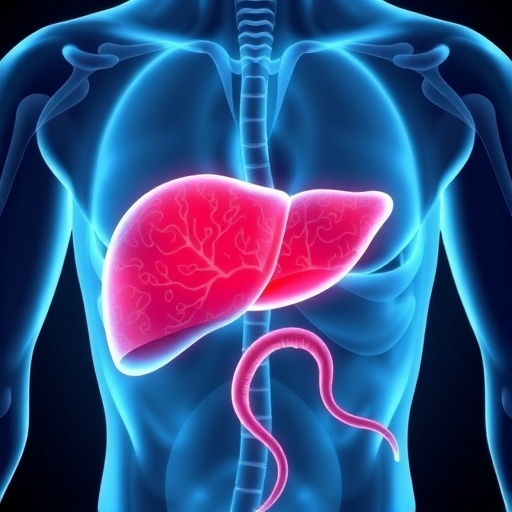
Leuven, 1 July 2026 – A groundbreaking study conducted by researchers at VIB and KU Leuven, in collaboration with international partners, has unveiled a striking connection between fatty liver disease and the aggressive progression of metastatic colorectal cancer (CRC). Published in the prestigious journal Nature, the research sheds light on the molecular and physiological underpinnings that explain why patients with fatty liver often experience poorer prognoses. This discovery is poised to revolutionize the landscape of cancer therapy by integrating metabolic health into treatment strategies, ultimately promoting precision medicine that addresses not only the tumor but also its biological environment.
Colorectal cancer persists as one of the most lethal malignancies worldwide, accounting for nearly ten percent of all cancer diagnoses. Particularly alarming is the trend of increasing mortality among individuals under the age of 50, whereby CRC has emerged as the leading cause of cancer-related death. A pivotal challenge in managing colorectal cancer is the propensity of tumors to metastasize, with up to half of the patients developing secondary tumors in distant organs, especially the liver. These liver metastases drastically decrease survival chances, posing a major clinical hurdle.
Intriguingly, the survival outcomes amongst patients harboring liver metastases vary dramatically depending on the nature of the tumor-liver interface. Encapsulated metastases, characterized by distinct separation from healthy liver tissue, correspond to significantly higher five-year survival rates of approximately 73%. Conversely, patients whose tumors exhibit replacement metastases, where cancer cells intricately infiltrate and co-opt normal liver parenchyma, endure much lower survival rates dipping below 44%. Despite this stark clinical dichotomy, the mechanisms steering the development of these invasive replacement metastases remain largely obscure, and effective targeted therapies are lacking.
A pivotal stride in addressing this knowledge gap emerged from the work led by Prof. Sarah-Maria Fendt at the VIB-KU Leuven Center for Cancer Biology. Her team identified liver steatosis, commonly known as fatty liver disease—a lifestyle-associated metabolic disorder—as a significant determinant that predisposes patients to develop the more virulent replacement type of liver metastases. The epidemic rise in fatty liver prevalence, fueled largely by obesity and metabolic syndrome, underscores the global relevance of this finding.
The study integrated meticulous analysis of patient-derived samples and advanced experimental models, revealing that fatty liver alters the biochemical milieu within the liver, creating favorable conditions for aggressive metastatic growth. The research demonstrated that increased hepatic fat content stabilizes MYC, a critical oncogenic transcription factor implicated in numerous cancers. Stabilized MYC upregulates proline biosynthesis, an amino acid essential for collagen synthesis. The surplus collagen-rich extracellular matrix forms a scaffold that facilitates tumor invasion and coexistence with normal liver tissue, thus driving the formation of replacement metastases.
This mechanistic insight dramatically reframes our understanding of tumor behavior in metabolically altered environments. As Prof. Fendt elaborated, the fatty liver doesn’t just serve as a passive backdrop; instead, it actively remodels the tumor microenvironment by supplying both the molecular cues and structural substrates that tumors exploit to enhance their invasiveness. This highlights the fundamental notion that cancer progression is a multi-faceted dialogue between tumor cells and their host tissues.
From a clinical standpoint, the implications of these discoveries are profound. Drugs targeting the MYC pathway are already under clinical evaluation, primarily for their safety profiles. However, their therapeutic efficacy hinges on the ability to selectively identify patients who will derive the greatest benefit. The current study indicates that patients suffering from fatty liver and replacement metastases represent the ideal candidates for MYC-targeted therapies. This stratification strategy promises to enhance the success rate of clinical trials by aligning treatment with underlying disease biology.
Precision in patient selection is thus elevated as a critical objective for oncological research and practice. The patient’s metabolic profile, particularly liver fat content, could serve as a biomarker guiding treatment decisions and predicting metastatic potential. This approach can potentially minimize the administration of ineffective therapies, sparing patients from undue side effects while accelerating the development of successful interventions.
Beyond the identification of patient subsets, the study pioneers new therapeutic avenues by demonstrating that interfering with various nodes of the fatty liver metastasis axis can substantially curtail aggressive tumor growth. Targeting MYC stabilization, proline synthesis, or collagen deposition each yielded promising results in experimental and patient-derived liver metastasis models. This multipronged strategy may pave the way for combinatorial treatments tailored to the metabolic state of patients, transforming the therapeutic landscape for CRC metastases.
The integration of metabolic health into cancer care represents a seismic shift in how clinicians and researchers view tumor biology. Traditionally, treatment paradigms have focused predominantly on tumor-intrinsic factors. This study underscores the necessity of acknowledging the systemic and organ-specific environments that shape cancer progression. As Dr. Yiming Peng-Winkler, the study’s first author, highlighted, the future of oncology lies in embracing this holistic perspective to design therapies that are simultaneously precise and powerful.
The broader implications extend beyond colorectal cancer and fatty liver disease. Metabolic disorders are rising globally, and their impact on cancer biology may be pervasive across different tumor types and metastatic sites. This research provides a critical roadmap for exploring how metabolic alterations sculpt the tumor ecosystem, thereby informing diagnostics, prognostics, and therapeutic innovation on a wider scale.
Ultimately, this paradigm shift heralds a new era where metabolic health is placed at the forefront of cancer treatment strategies. The findings illustrate that addressing metabolic dysfunction is not only a preventive measure but also a vital component of therapeutic intervention. By bridging the gap between metabolic diseases and oncology, this research opens unprecedented opportunities to improve outcomes for patients grappling with the most formidable manifestations of metastatic cancer.
Cite Scienmag News
Nathaniel Bowman. (July 2, 2026). Fatty Liver Accelerates Aggressive Cancer Metastasis. Scienmag. https://scienmag.com/fatty-liver-accelerates-aggressive-cancer-metastasis/
Nathaniel Bowman. "Fatty Liver Accelerates Aggressive Cancer Metastasis." Scienmag, 2 July 2026, https://scienmag.com/fatty-liver-accelerates-aggressive-cancer-metastasis/. Accessed 2 September 2026.
Nathaniel Bowman. "Fatty Liver Accelerates Aggressive Cancer Metastasis." Scienmag. July 2, 2026. https://scienmag.com/fatty-liver-accelerates-aggressive-cancer-metastasis/


