


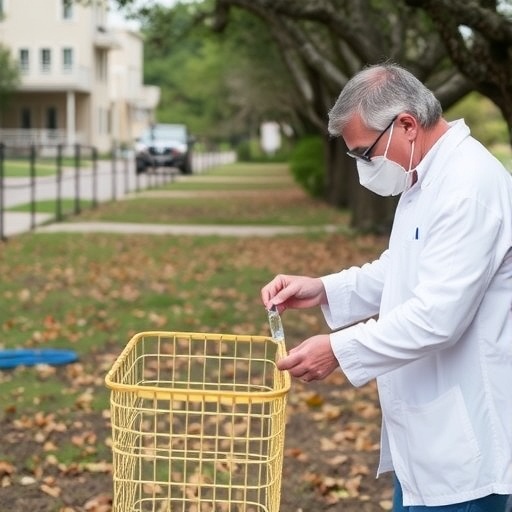
For over ten years, residents of Austin’s Colony, a suburban neighborhood located in an unincorporated area southeast of Austin, Texas, have been grappling with intermittent episodes of discolored and extremely hard tap water. This persistent issue has created widespread concern about the safety and quality of their drinking water, especially given the sporadic nature of these disturbances. Despite repeated complaints, a comprehensive scientific investigation into their water quality had been lacking—until recently. Researchers from The University of Texas at Austin, collaborating closely with community members and the local advocacy organization PODER, embarked on a detailed study to uncover the underlying causes of these water quality problems.
The study, published in the peer-reviewed journal PLOS Water, encompassed an eighteen-month sampling period from April 2024 to October 2025. During this time, the research team collected and analyzed 81 water samples across the neighborhood, primarily from eight different households. Their aim was to integrate rigorous scientific analysis with community-based participatory methods, ensuring that residents were active collaborators rather than mere subjects. This approach not only enriched the data set but also empowered the community to gain credible, science-backed insights into their ongoing water issues.
Results from the investigation revealed a troubling pattern: several water samples exhibited contaminant levels that exceeded state regulatory guidelines, particularly for lead and arsenic. Specifically, three samples surpassed Texas’s lead threshold of 15 parts per billion (ppb), while three others exceeded the more stringent World Health Organization standard of 10 ppb. Although contamination was absent at the initial water sources and neighborhood water entry points, these harmful substances appeared intermittently in household tap water. This observation led researchers to hypothesize that the problem arises within the neighborhood’s internal plumbing and distribution system, where water from multiple sources converges and interacts.
Austin’s Colony receives its water from a coalition of three wells: neighborhood-localized wells, wells located in nearby Manor city, and those drawing from the Carrizo-Wilcox Aquifer in Burleson County. While each individual source meets all regulatory quality standards, the mixing of these waters within the local distribution network appears to catalyze chemical and physical interactions that cause contaminant buildup. Analysis revealed that lead, manganese, and iron contaminants were predominantly suspended as particulate matter, indicative of corrosion-related detachment from the aging and stressed pipeline infrastructure.
This phenomenon of mixing-induced corrosion and intermittent particle sloughing offers a plausible explanation for the neighborhood’s persistent and sporadic episodes of discolored water. The physical chemistry underlying these interactions can cause pipeline sediments to destabilize and enter the water stream unpredictably, leading to discoloration and potential exposure to hazardous metals. Such processes complicate traditional water quality monitoring, which typically tests only source water or treatment plant outputs, thus missing contamination arising within community-level infrastructure.
In addition to heavy metal concerns, the study also highlighted significant hardness in the water supply originating from Austin’s Colony and Manor wells. Elevated calcium and magnesium ions contribute to this hardness, which not only affects water taste and usability but can also accelerate scaling and exacerbate plumbing corrosion. Conversely, the Carrizo-Wilcox Aquifer’s water exhibited lower hardness parameters, suggesting that increasing its contribution to the neighborhood’s supply could mitigate these effects. This insight opens new avenues for managing the water blend to optimize quality and reduce infrastructure degradation.
Household-level water treatment solutions, such as filtration and softening systems, proved effective in removing contaminants and alleviating hardness. Nonetheless, many families lack the financial resources to install or maintain these systems consistently. Survey data indicated that 70% of residences reported experiences with discolored water, while only 71% had any form of treatment device. This disparity underscores socioeconomic challenges that compound the environmental health risks, revealing that marginalized communities may be disproportionately affected by infrastructure vulnerabilities.
Resident advocate Bianca Guerrero, who played an instrumental role in both sampling and community organization, expressed relief that scientific validation is now supporting what residents had long reported anecdotally. “Our experiences have often been dismissed or ignored, but now that there is academic, peer-reviewed evidence, our voices carry much more weight,” she stated. This scientific credibility is critical for galvanizing policy action and regulatory attention toward resolving the neighborhood’s water safety concerns.
Study lead David Bahamón-Pinzón emphasized that the participatory nature of the research was essential to its success, fostering trust and cooperation between researchers and residents. “The community members were active collaborators throughout, not just subjects but partners. Their involvement in sample collection and data interpretation was invaluable,” he explained. This model exemplifies how community-based participatory research can bridge gaps between academia and vulnerable populations, producing actionable knowledge rooted in lived experience.
The broader initiative behind this investigation is the UT BRIDGES program, sponsored by the Environmental Science Institute’s Jackson School of Geosciences. UT BRIDGES facilitates collaborations between university experts and local communities to address environmental challenges affecting residents’ health and well-being. The Austin’s Colony project is a poignant example of how such partnerships can generate critical data while empowering communities to advocate for systemic change.
Legal and policy implications of the findings are now under consideration by PODER and the Environmental Clinic at the UT School of Law. Kelly Haragan, the clinic’s director, highlighted multiple potential avenues for addressing the identified regulatory gaps, including formal complaints, legislative action, and litigation. Navigating these complex pathways requires both scientific evidence and community organizing, a synergy that the Austin’s Colony stakeholders are actively pursuing to ensure safer, cleaner water for all residents.
Funded by the National Science Foundation, the Cynthia and George Mitchell Foundation, and the Jackson School of Geosciences, this research embodies a comprehensive and pragmatic approach to water quality challenges in marginalized, peri-urban settings. By integrating technical water chemistry analyses with participatory social science methods, UT researchers have laid the groundwork for sustainable solutions that recognize and elevate community voices alongside rigorous science.
News Publication Date: 21-May-2026
Web References:
- PLOS Water: http://dx.doi.org/10.1371/journal.pwat.0000496
- UT BRIDGES: https://www.esi.utexas.edu/community-engagement/bridges/
References:
DOI: 10.1371/journal.pwat.0000496
Cite Scienmag News
Violet Maxwell. (July 2, 2026). Scientists Detect Contaminated Water in Austin Neighborhood. Scienmag. https://scienmag.com/scientists-detect-contaminated-water-in-austin-neighborhood/
Violet Maxwell. "Scientists Detect Contaminated Water in Austin Neighborhood." Scienmag, 2 July 2026, https://scienmag.com/scientists-detect-contaminated-water-in-austin-neighborhood/. Accessed 4 September 2026.
Violet Maxwell. "Scientists Detect Contaminated Water in Austin Neighborhood." Scienmag. July 2, 2026. https://scienmag.com/scientists-detect-contaminated-water-in-austin-neighborhood/


