


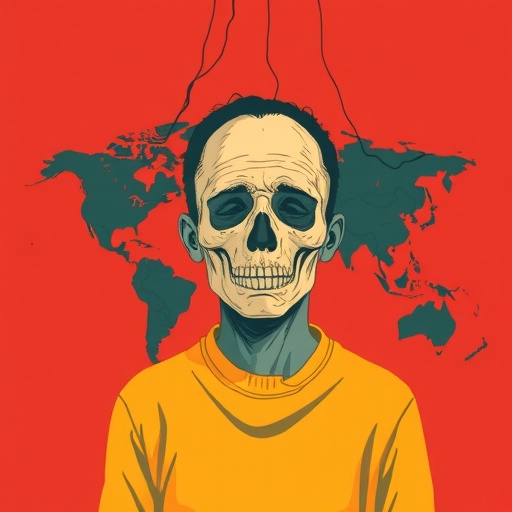
Despite decades of international commitments to uphold the rights of individuals living with psychosis, a recent comprehensive review conducted by researchers at La Trobe University reveals a grim reality: many people with psychosis continue to endure systemic abuse, discrimination, and disproportionately early mortality. The study, published in The Lancet Psychiatry, meticulously analyzed more than 350 scholarly articles spanning 35 years, unveiling a persistent and deeply entrenched discrepancy between human rights frameworks and the everyday experiences of those struggling with psychosis in low- and middle-income countries.
The persistence of coercive treatment practices remains a significant concern. Dr. Piers Gooding, Associate Professor of Law and co-lead author, highlights that despite international legal instruments, individuals with psychosis face conditions that are not only degrading but legally sanctioned in many jurisdictions. These include involuntary detention without due process, forced sterilizations, and physical confinement. The review pinpoints a widespread failure to shift from traditional institutional care toward humane community-based models, especially in resource-scarce environments where legal protections are weak or poorly enforced.
These coercive practices are particularly oppressive among marginalized populations, where factors such as ethnicity, gender, age, and socioeconomic status intersect to exacerbate vulnerability. The authors emphasize that people within minority groups experience higher incidences of forced treatment and confinement, reinforcing cycles of disenfranchisement and systemic injustice. Acute discrimination compounds barriers to autonomy, perpetuating stigma around mental health and fostering neglect within health and social care systems.
Despite the ratification of international protocols like the United Nations Convention on the Rights of Persons with Disabilities (CRPD), national reforms frequently fall short of affecting meaningful change. The review underscores that legal advances have rarely translated into real-world improvements, with many countries lacking the necessary infrastructure, political will, or expertise to implement rights-based mental health policies effectively. This disconnect reveals fundamental challenges in bridging international norms with local practices on the ground.
A startling dimension surfaced in the review is the pronounced health disparities experienced by those with psychosis. Individuals with chronic psychotic disorders face a mortality gap, dying 10 to 15 years earlier than the general population. These premature deaths are predominantly attributable to untreated or inadequately managed physical health conditions, revealing systemic neglect and insufficient integration of mental and physical health services. Such health inequalities underscore the urgency for comprehensive healthcare reforms that address the totality of these patients’ needs.
Integral to mitigating these disparities is the integration of mental health services into broader universal health coverage schemes. Dr. Gooding points to successful models in Latin America where community-based care has been effectively scaled under constrained resources. Countries like Chile demonstrate how legislative reform paired with investment in accessible, community-oriented mental health programs can yield improvements in both care quality and human rights adherence. These examples offer a blueprint for policymakers aiming to reform mental health systems globally.
The review also sheds light on how psychosis intersects with social determinants of health, notably employment and housing. People with psychosocial disabilities often find themselves excluded from these fundamental aspects of societal participation, leading to entrenched poverty and housing instability. Such exclusion not only exacerbates mental illness but restricts opportunities for recovery and social inclusion, perpetuating a vicious cycle that undermines human dignity and societal equity.
Civil rights violations extend beyond healthcare and economic participation. Restrictions on voting, marriage, and property ownership linger in some countries, further curtailing the autonomy and citizenship status of individuals with mental health disabilities. These legal and social barriers reflect outdated attitudes and systemic failures to acknowledge the full personhood and agency of individuals affected by psychosis. Human rights frameworks insist on eliminating such discrimination, yet implementation remains inconsistent.
Addressing these multifaceted challenges demands cohesive action on multiple fronts. Legislative reform must occur alongside shifts in policy and community practice to align national laws with international human rights standards. A critical dimension involves expanding investment in universal health systems to provide comprehensive, respectful, and accessible care. Moreover, public education and stigma reduction campaigns are essential for fostering social inclusion, combating discrimination, and empowering individuals with psychosis.
Central to all reform efforts is the elevation of voices of those with lived experience. Dr. Gooding advocates for their meaningful participation in the creation and evaluation of policies and services impacting their lives. By centering their expertise and perspectives, reforms stand a greater chance of addressing actual needs and promoting autonomy. Without this inclusive approach, reforms risk perpetuating paternalistic models that fail to respect dignity or deliver effective care.
Ultimately, the fight for the human rights of people with psychosis symbolizes a broader struggle for dignity, autonomy, and equality. It calls for a global commitment to dismantle coercive and discriminatory systems, to champion comprehensive healthcare integration, and to foster societies where individuals with psychosocial disabilities can thrive on their own terms. The review’s findings serve both as a sobering indictment of persistent injustices and a clarion call to action—one predicated on respect, empowerment, and the radical reimagining of mental health care.
This landmark review, published in The Lancet Psychiatry, is a seminal contribution to discourses on psychosis, mental health policy, and human rights, offering critical insights into the lived realities of vulnerable populations worldwide. It challenges researchers, clinicians, policymakers, and advocates to transcend rhetoric, focus on implementation, and embrace inclusive strategies that honor the inherent dignity of every person.
- The Lancet Psychiatry Article
- UN CRPD
References: 10.1016/S2215-0366(26)00156-2
Keywords: Psychosis, human rights, mental health law, coercive treatment, community-based care, health disparities, universal health coverage, social inclusion, discrimination, low- and middle-income countries
Cite Scienmag News
Glenn Wilkins. (July 1, 2026). Despite Global Reforms, Individuals with Psychosis Still Suffer Abuse, Discrimination, and Premature Mortality. Scienmag. https://scienmag.com/despite-global-reforms-individuals-with-psychosis-still-suffer-abuse-discrimination-and-premature-mortality/
Glenn Wilkins. "Despite Global Reforms, Individuals with Psychosis Still Suffer Abuse, Discrimination, and Premature Mortality." Scienmag, 1 July 2026, https://scienmag.com/despite-global-reforms-individuals-with-psychosis-still-suffer-abuse-discrimination-and-premature-mortality/. Accessed 1 September 2026.
Glenn Wilkins. "Despite Global Reforms, Individuals with Psychosis Still Suffer Abuse, Discrimination, and Premature Mortality." Scienmag. July 1, 2026. https://scienmag.com/despite-global-reforms-individuals-with-psychosis-still-suffer-abuse-discrimination-and-premature-mortality/


