


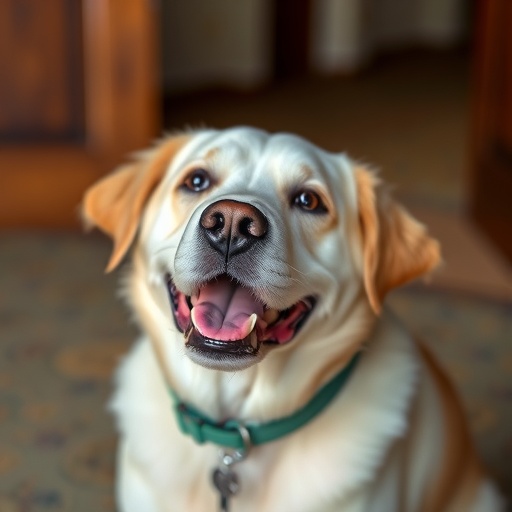
For over three decades, the quest for effective pharmacological treatments for autism spectrum disorder (ASD) has been fraught with persistent challenges and repeated setbacks. Despite considerable investment and countless studies, the translation of promising compounds from laboratory settings to human clinical trials has been notably inefficient. A recent scholarly Perspective published in Genomic Psychiatry offers a compelling re-examination of this dilemma, proposing that a paradigm shift in preclinical models may hold the key to future breakthroughs. This synthesis underscores the overlooked potential of the domestic dog, a species uniquely evolved through millennia of symbiosis with humans, as an invaluable intermediary model that could bridge the critical gap between cellular studies and clinical application.
A fundamental obstacle in autism drug development has been the inadequacy of traditional animal models to replicate the intricate social behaviors disrupted in ASD. Rodents, primarily mice, have long been the mainstay for genetic and pharmacological investigations due to their genetic tractability and cost-effectiveness in laboratory environments. However, mice, by nature, lack the sophisticated social cognition that characterizes human interaction—they neither read subtle facial expressions nor engage in nuanced interpersonal communication mediated by eye contact and gaze. Non-human primates, while behaviorally closer to humans, present their own set of challenges; their slow reproductive cycles, high maintenance costs, and fundamentally different social signaling—where steady human gaze can be perceived as threatening—limit their utility for autism-related sociability studies. Consequently, drugs demonstrating efficacy in such models frequently fail to translate clinically, underscoring a crucial disconnect.
This Perspective article, led by Dr. Siqi Yuan and colleagues at Hubei University, brings into focus the canine species, particularly laboratory Beagles, as a previously underappreciated model that naturally exhibits a high degree of social attunement to humans. Unlike other laboratory animals, dogs have undergone approximately 30,000 years of co-evolution with humans, resulting in a neural architecture finely tuned to interpret human social cues, including eye gaze, facial expressions, and vocal intonations. This shared social circuitry implies that dogs can manifest behavioral phenotypes that align more closely with the social impairments characteristic of ASD in humans. The authors argue that this evolutionary legacy equips dogs to serve as an optimal translational bridge for autism research, capable of revealing both biological mechanisms and therapeutic targets that remain elusive in other species.
Central to the synthesis is a discussion of genetically engineered dogs bearing mutations in the Shank3 gene, a genetic locus robustly implicated in the etiology of autism in humans. Shank3 encodes a synaptic scaffolding protein critical for proper neural communication, and its disruption is associated with social withdrawal, sensory processing abnormalities, and altered pain perception—hallmarks of ASD. These gene-edited dogs display strikingly human-like behavioral and neurological traits: they avoid sustained eye contact, exhibit heightened sensitivity or diminished responses to sensory stimuli, and demonstrate social withdrawal patterns mirroring clinical observations in autistic individuals. The authors meticulously summarize emerging data into an integrative framework that traces shared phenotypes from synaptic dysfunction to complex social behaviors, a synthesis previously unattainable due to fragmented individual studies.
Exploration of these phenotypes extends to preliminary pharmacological interventions tested in the canine Shank3 model. Though still nascent and with limited sample sizes, there are intriguing indications that certain compounds may partially ameliorate ASD-like symptoms in these animals. Administration of intranasal oxytocin, a neuropeptide intricately involved in social bonding, was linked to increased maternal behaviors and enhanced attention to human eyes. Additionally, a precisely controlled low-dose psychedelic facilitated a reinstatement of synchronized neural activity—so-called brain-to-brain synchrony—between dogs and their handlers, disrupted by the Shank3 mutation. Furthermore, a pharmacological agent aimed at normalizing aberrant neural excitability was found to rescue deficits in tactile sensitivity and social engagement. While these findings are far from conclusive, they energize a research trajectory focused on translational therapeutics with greater fidelity than previous models.
The choice to utilize dogs in genetic and behavioral neuroscience research is ethically complex, resonating deeply with public sentiment due to dogs’ unique status as companion animals. Acknowledging this, the authors engage earnestly with the bioethical discourse, framing their work within the well-established three Rs of animal research ethics: replacement, reduction, and refinement. They emphasize rigorous ethical oversight in experimental design to minimize animal use without compromising scientific validity. This ethical tension between scientific imperatives and moral responsibilities stands at the heart of the discussion, compelling the field to balance the undeniable potential scientific gains against the profound obligations owed to animal welfare.
Technical challenges present formidable barriers to the widespread adoption of gene-edited canine models. Gene editing efficacy currently hovers around a modest 25%, entailing substantial experimental attrition. Certain mutations exert lethality, further constraining viable subject pools. The logistics of behavioral phenotyping and neuroimaging are complicated by the necessity of prolonged training protocols, sometimes requiring up to two years for animals to habituate to procedures like functional brain imaging. Moreover, the suite of neuroscientific tools and resources optimized for rodent research remains comparatively undeveloped for dogs. Addressing these technical constraints will require collaborative efforts spanning molecular genetics, veterinary science, neuroethology, and ethology.
Looking toward the future, the authors advocate for intensified interdisciplinary collaborations that integrate molecular biology, clinical psychiatry, animal behavior, and neuroscience to refine the canine model further. Improvements in gene-editing precision, development of minimally invasive behavioral and imaging paradigms, and enhanced humane training methodologies are critical milestones. These advances promise not only to deepen understanding of autism’s biological substrates but also to expedite the translation of novel therapeutics from bench to bedside by leveraging the dog’s unique sociobiological platform.
Ultimately, the dog embodies more than a mere experimental subject; it serves as a biological translator that encapsulates a profound evolutionary dialogue between species. This animal, shaped by tens of thousands of years of companionship and mutual adaptation, offers a mirror through which humanity may better decode the neural and behavioral intricacies of its own social fabric. The Perspective concludes with a sober yet hopeful vision: that by inviting this ancient companion into the fold of cutting-edge neuroscience, we unlock a transformative lens into the biology of connection, one that may finally surmount the longstanding impasse in autism therapy development.
The article titled “Emerging gene-edited dog models for autism spectrum disorder” embraces an Open Access model and can be accessed in Genomic Psychiatry as of 24 June 2026. It presents a meticulously reviewed synthesis that not only challenges prevailing paradigms but also opens promising avenues for future research in autism biology and treatment. Such innovative approaches underscore the shifting landscape of psychiatric genetics, calling for models that are both scientifically robust and ethically conscientious.
Cite Scienmag News
Courtney Benton. (June 24, 2026). How Family Dogs Could Become Science’s Unexpected Ally in the Fight Against Autism. Scienmag. https://scienmag.com/how-family-dogs-could-become-sciences-unexpected-ally-in-the-fight-against-autism/
Courtney Benton. "How Family Dogs Could Become Science’s Unexpected Ally in the Fight Against Autism." Scienmag, 24 June 2026, https://scienmag.com/how-family-dogs-could-become-sciences-unexpected-ally-in-the-fight-against-autism/. Accessed 3 September 2026.
Courtney Benton. "How Family Dogs Could Become Science’s Unexpected Ally in the Fight Against Autism." Scienmag. June 24, 2026. https://scienmag.com/how-family-dogs-could-become-sciences-unexpected-ally-in-the-fight-against-autism/


