


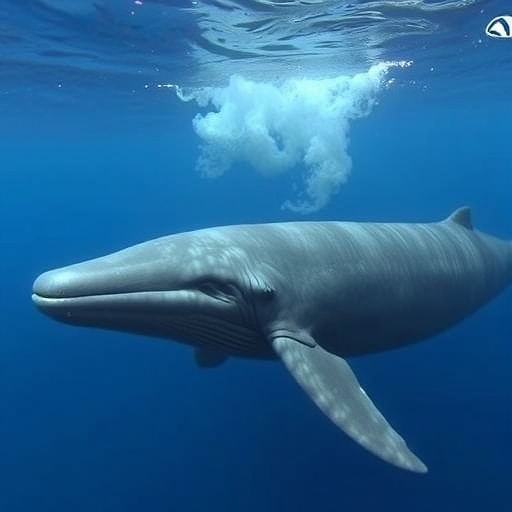
In a groundbreaking study published in the prestigious Proceedings of the Royal Society B Biological Sciences, researchers have unveiled compelling evidence of cultural evolution in the vocal dialects of sperm whales inhabiting the Mediterranean Sea. This extraordinary finding, the result of a two-decade-spanning meta-analysis, provides profound insights into how these majestic creatures adapt their communication methods while preserving ancestral calls. The investigation reveals a nuanced picture of how sperm whales culturally diversify their vocalizations in an isolated population, offering a rare glimpse into the social dynamics and cultural transmission among non-human animals.
Sperm whales—renowned as the largest of the toothed whales—are not only widespread in the world’s oceans but also inhabit the Mediterranean, a region more commonly associated with sun-soaked coastlines and human tourism than with deep-sea leviathans. Genetic data suggest these whales first ventured into the Mediterranean around 20,000 years ago. Since then, they have gradually spread eastward from their initial entry point near Gibraltar, establishing a genetically isolated population that is both small and increasingly vulnerable. The significance of this population’s endangered status is compounded by threats such as entanglement in fishing gear and ship strikes, making studies into their behavior and communication vital for informed conservation efforts.
At the heart of sperm whale communication lies a fascinating vocalization known as the “coda.” These codas are characterized by short, structured sequences of clicks functioning as social identifiers, allowing whales to signal their membership within broader cultural assemblages known as vocal clans. Historically, it was assumed that all sperm whales within the Mediterranean belonged to a single vocal clan, distinguished by a predominant “3+1” coda pattern—three clicks followed by a brief pause and a fourth click. This stereotyped pattern was long viewed as the unifying acoustic signature of the entire Mediterranean population.
However, this new research shatters that uniformity assumption. By analyzing extensive acoustic recordings from both the western and eastern Mediterranean basins, scientists uncovered the presence of a distinct vocal dialect in sperm whales residing around the Hellenic Trench near Crete. This eastern group exhibits a variation of the “3+1” coda that is markedly faster than the standard form recorded in the western basin, which spans from Gibraltar to Italy. Intriguingly, on several occasions, eastern whales demonstrated the ability to switch back and forth between this new accelerated dialect and the traditional slower western form on “retro” days, indicating a retained memory of both dialects in their vocal repertoire.
The implications of these findings reach far beyond the Mediterranean. Dr. Luke Rendell, a leading marine mammal researcher at the University of St Andrews, emphasizes the deep historical context of cultural evolution in this region. “The Mediterranean has long been a crucible of human civilization and cultural development,” Rendell explains. “Our new understanding that sperm whale culture has been evolving alongside these civilizations—albeit at a glacial pace—reveals a parallel narrative unfolding beneath the waves, one that challenges our conceptions of culture as an exclusively human domain.”
The study’s lead author, Dr. Taylor Hersh from the University of Bristol, underscores the eastward progression of cultural innovation within the population, describing the eastern dialect as a modified evolution of the ancestral slow “3+1” coda. Hersh posits that the emergence of this dialect around the Hellenic Trench signifies an adaptive cultural divergence, potentially reflecting localized environmental or social factors influencing vocal behavior. Crucially, the whales’ continued use of the older dialect during “throwback” days suggests an intergenerational transmission of cultural knowledge and social memory.
Research collaborators from Greece, including Dr. Alexandros Frantzis of the Pelagos Cetacean Research Institute, have long been invested in studying sperm whales within the eastern Mediterranean, having first documented this population some thirty years ago. Frantzis asserts that decoding the complex vocal communication of sperm whales is not only critical for conservation but also unravels the mysteries of cetacean culture itself. This research stands as some of the most exciting work emerging from decades of dedicated field observations paired with advanced acoustic analyses.
The Spanish team from Asociación Tursiops, led by Dr. Txema Brotons, adds a profound anthropological perspective, noting that the cultural richness of the Mediterranean is a shared heritage extending beyond humans. “While ancient peoples of Mare Nostrum forged languages, customs, and identities, sperm whales concurrently maintained their own vocal traditions. This coexistence of cultural evolution between humans and animals paints the Mediterranean as a theater of intertwined cultural histories transcending species barriers.”
At a technical level, the researchers employed sophisticated meta-analytic techniques to synthesize over 20 years of acoustic data. By cataloging and comparing click patterns, inter-click intervals, and the temporal rhythm of codas across different locations and times, the scientists quantified dialect variation with unprecedented precision. This method allowed them to detect subtle but consistent divergences in call speed and structure between populations, providing robust evidence for cultural evolution within a genetically isolated population, where gene flow is limited, making cultural transmission an even more critical vehicle for behavioral adaptation.
Understanding vocal dialects in sperm whales carries significant implications for conservation biology. These acoustic markers illuminate population structure and social networks that are otherwise difficult to discern in the vast and dark oceanic environment. As Dr. Rendell notes, cultural factors—such as dialect diversity—impact mating systems, social cohesion, and migration patterns, underpinning the resilience or vulnerability of animal populations. Incorporating cultural data into conservation planning, therefore, enhances the efficacy of protective measures tailored to the intricate fabric of whale societies.
Looking ahead, the researchers acknowledge several open questions. The precise ecological or social pressures that catalyzed the emergence of the faster eastern dialect remain speculative. It is unclear whether this vocal adaptation confers specific advantages or is a result of drifts in social preferences among groups. Moreover, the mechanisms by which whales maintain and switch between dialects over time warrant further investigation, potentially involving neuroethological studies on memory and learning in marine mammals.
This landmark study exemplifies the power of international collaboration and long-term data collection in addressing complex biological phenomena. Through a concerted effort spanning institutions in the UK, Greece, Spain, and beyond, the research community has advanced our understanding of non-human culture, revealing the ocean’s depths as dynamic arenas of cultural transmission and evolution. Such insights not only enrich scientific knowledge but also inspire deeper conservation commitment at a critical juncture for the survival of the Mediterranean sperm whale population.
As the Mediterranean continues to evolve as a mosaic of human and animal cultures, sperm whales stand as sentinels of marine biodiversity and cultural heritage. Their evolving dialects are living records of adaptation, memory, and social complexity. This study calls upon the scientific community and broader public to recognize and protect the cultural dimensions of wildlife, a frontier that remains largely uncharted but ripe with discovery.
Cite Scienmag News
Gavin Prescott. (June 24, 2026). Scientists Discover Evolving Sperm Whale Dialects in the Mediterranean Sea. Scienmag. https://scienmag.com/scientists-discover-evolving-sperm-whale-dialects-in-the-mediterranean-sea/
Gavin Prescott. "Scientists Discover Evolving Sperm Whale Dialects in the Mediterranean Sea." Scienmag, 24 June 2026, https://scienmag.com/scientists-discover-evolving-sperm-whale-dialects-in-the-mediterranean-sea/. Accessed 4 September 2026.
Gavin Prescott. "Scientists Discover Evolving Sperm Whale Dialects in the Mediterranean Sea." Scienmag. June 24, 2026. https://scienmag.com/scientists-discover-evolving-sperm-whale-dialects-in-the-mediterranean-sea/


