


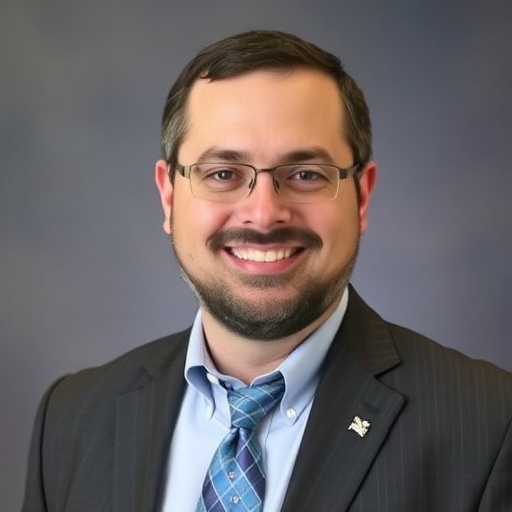
Alain Berinstain, a globally acknowledged authority in space research and business innovation, has recently been appointed as the director of the Florida Space Research Consortium. This consortium represents a pioneering statewide alliance designed to synchronize the efforts of Florida’s leading universities in the realms of research, technological innovation, and workforce development within the rapidly expanding space sector. Berinstain’s leadership is set to drive a new era of collaborative space research, leveraging the combined expertise and resources of partner institutions to push the boundaries of space science and technology.
Berinstain currently serves as the director of the Florida Space Institute at the University of Central Florida (UCF), an institution known for its deep-rooted commitment to advancing America’s space exploration capabilities. With this new role, he is tasked with orchestrating a cohesive strategy across multiple universities, including Embry-Riddle Aeronautical University, Florida A&M University, Florida Institute of Technology, Florida International University, Florida State University, UCF, the University of Florida, and the University of South Florida. The consortium aims to bridge academic research with governmental and industrial initiatives, fostering a collaborative environment that accelerates innovation and workforce training in aerospace and space sciences.
The Florida Space Research Consortium is perfectly positioned to capitalize on Florida’s unique geographical advantages, which include hosting some of the world’s busiest launch sites and spaceports. This natural infrastructure, coupled with a robust academic foundation, makes Florida a hub for groundbreaking space missions and technological advancements. Berinstain envisions the consortium as a catalyst for transformative, multidisciplinary projects that cannot be achieved by individual universities alone, emphasizing the strategic value of collaborative research initiatives.
Berinstain brings over three decades of multifaceted experience from government, industry, and academia. His tenure at the Canadian Space Agency, notably as director of planetary exploration and space astronomy, saw him spearhead numerous high-profile projects that expanded humanity’s understanding of the cosmos. His involvement in advising pioneering companies such as Virgin Galactic and his executive roles at Space Tango and CSS Inc. underscore his ability to meld scientific insight with commercial viability, an essential skill for driving the consortium’s mission forward.
The consortium’s research encompasses a wide spectrum of space science and engineering disciplines. An area of intense focus is the development of advanced spacecraft and satellite technologies. Researchers are designing systems that enhance propulsion efficiency, navigation precision, and communication reliability, all critical parameters for the success of future deep-space missions. These technological innovations aim not only to optimize performance but also to ensure the durability and resilience of spacecraft operating in the harsh, unforgiving environment of space.
Material science also plays a pivotal role in the consortium’s research agenda. Scientists are investigating new composite materials capable of withstanding extreme temperature fluctuations, radiation exposure, and micrometeoroid impacts. These materials are vital for constructing spacecraft frames, protective shielding, and even habitats for long-duration missions, where the structural integrity of equipment and living quarters cannot be compromised.
Beyond hardware, the consortium prioritizes the development of in-space manufacturing and construction technologies. This includes experiments in additive manufacturing and robotic assembly techniques designed to facilitate the building and maintenance of structures on the Moon, Mars, and potentially other celestial bodies. Such technologies are fundamental to establishing sustainable extraterrestrial operations, reducing the need for costly supply missions from Earth, and advancing human presence beyond our planet.
A significant component of the consortium’s research is dedicated to understanding the physiological and biological impacts of spaceflight on humans. Long-duration space missions expose astronauts to unique challenges such as microgravity, radiation, and isolation. Studies focus on cellular aging, neurodegenerative diseases like Alzheimer’s and Parkinson’s, and the development of countermeasures to mitigate these health risks. Research into closed-loop life support systems and in-situ food production techniques is advancing the goal of self-sufficiency for future crews on lunar or Martian bases.
Planetary science, astrophysics, space weather forecasting, and Earth observation are also integral to the consortium’s efforts. These disciplines contribute to a holistic approach to space research, encompassing exploration of distant planets, understanding cosmic phenomena, monitoring solar activities, and utilizing satellite data to address environmental and climate challenges on Earth. Such cross-disciplinary research drives comprehensive insights that inform space mission design and terrestrial applications alike.
Berinstain underscores that the consortium’s success relies on fostering strong partnerships beyond academia. Collaborations with government agencies, industry stakeholders, and investors are essential for translating scientific discoveries into practical applications and economic growth. By integrating the innovation pipeline from fundamental research to commercialization, the consortium aims to bolster the regional space economy and create high-tech jobs that support Florida’s status as a leading spacefaring state.
As the director, Berinstain is focused on building a unified vision that leverages the strengths of each member university while encouraging novel approaches and high-impact projects. He believes that through this collective effort, Florida’s space community can achieve unprecedented scientific breakthroughs and technological advancements that will propel humanity’s exploration ambitions into the coming decades.
The Florida Space Research Consortium stands at the forefront of a new era in space exploration and technology development. With Alain Berinstain’s experienced leadership, the consortium is positioned to significantly contribute to the future of space science, helping to solve the most pressing challenges of spaceflight while opening new frontiers for human presence beyond Earth.
Berinstain’s appointment affirms UCF’s reputation as America’s Space University and highlights the institution’s integral role in fostering innovations that drive the global space industry. As Florida continues to attract talent, investment, and public interest in space exploration, the work of the consortium under Berinstain’s direction is poised to have lasting impacts on science, industry, and education.
News Publication Date: Not specified
Web References:
– https://www.ucf.edu/space/
– https://www.ucf.edu/research/
Keywords
Alain Berinstain, Florida Space Research Consortium, Florida Space Institute, University of Central Florida, space research, space innovation, spacecraft technology, planetary science, space health research, in-space manufacturing, space materials science, collaborative space research
Cite Scienmag News
Grant Pearson. (June 23, 2026). UCF’s Alain Berinstain Appointed Director of Florida Space Research Consortium. Scienmag. https://scienmag.com/ucfs-alain-berinstain-appointed-director-of-florida-space-research-consortium/
Grant Pearson. "UCF’s Alain Berinstain Appointed Director of Florida Space Research Consortium." Scienmag, 23 June 2026, https://scienmag.com/ucfs-alain-berinstain-appointed-director-of-florida-space-research-consortium/. Accessed 4 September 2026.
Grant Pearson. "UCF’s Alain Berinstain Appointed Director of Florida Space Research Consortium." Scienmag. June 23, 2026. https://scienmag.com/ucfs-alain-berinstain-appointed-director-of-florida-space-research-consortium/


