


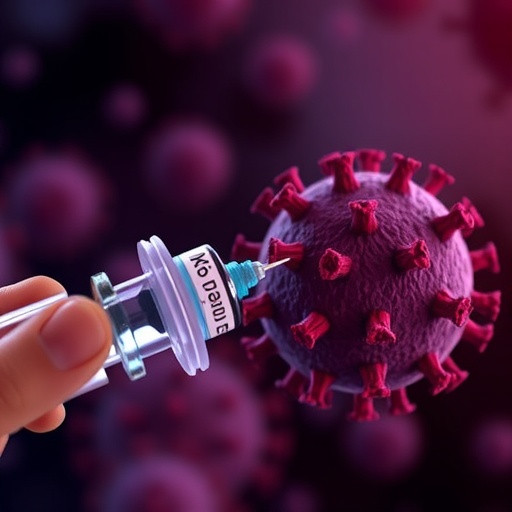
In a groundbreaking advance that could redefine therapeutic strategies against one of the deadliest and most stubborn cancers, scientists have unveiled promising results from a phase I clinical trial utilizing a mutant KRAS peptide vaccine combined with dual checkpoint blockade. This innovative approach targets metastatic colorectal cancer, a condition notorious for its resistance to conventional treatments and high mortality rates. The study, led by Wang, H.H., Huff, A.L., Haldar, S.D., and colleagues, published in Nature Communications 2026, illuminates new pathways toward harnessing the immune system’s power to combat cancer more effectively.
Colorectal cancer remains a global health challenge, especially when metastasis occurs, significantly diminishing survival rates. Traditional chemotherapy and targeted therapies often provide only marginal improvements in advanced stages, necessitating novel methods to boost the immune response specifically against tumor cells. The focus on mutant KRAS—the most frequently mutated oncogene in colorectal and other cancers—represents an elegant approach to address this need. Mutations in KRAS fuel unchecked cell proliferation and cancer progression, making the protein an attractive yet historically difficult therapeutic target.
The trial’s core innovation lies in a peptide vaccine engineered to stimulate immune recognition of mutated KRAS proteins present on cancer cells. By presenting these mutant peptides to the host immune system, the vaccine primes cytotoxic T lymphocytes to identify and eradicate KRAS-mutant tumor cells. However, cancer cells possess various mechanisms to evade immune attack, often involving checkpoint proteins such as PD-1 and CTLA-4 that downregulate immune responses. To overcome this, the researchers combined the vaccine with dual checkpoint inhibitors to block these immune-suppressive pathways, effectively enhancing the immune system’s ability to attack the tumor.
During the trial, patients with metastatic colorectal cancer received the mutant KRAS peptide vaccine alongside antibodies targeting both PD-1 and CTLA-4 checkpoints. This combination rapidly activated T-cell populations, as confirmed by increased infiltration of CD8+ cytotoxic lymphocytes into tumor tissues. Remarkably, the vaccine’s specificity for KRAS mutations allowed for a highly targeted attack, minimizing off-target effects and sparing normal tissues. This precision not only underscores the potential for reduced toxicity but also highlights the elegance of personalized cancer immunotherapy.
Immunological monitoring revealed that the dual blockade significantly amplified the T-cell response against mutant KRAS peptides, overcoming the typical immune exhaustion seen in advanced cancers. Patients exhibited robust cytokine production and proliferative responses, critical hallmarks of effective anti-tumor immunity. These findings validate the hypothesis that checkpoint inhibition synergizes with targeted peptide vaccines, laying the foundation for future combinatorial immunotherapies tailored to the genetic signatures of tumors.
Despite the trial’s early phase status, clinical outcomes were encouraging. Among the participants, several demonstrated disease stabilization, with a subset experiencing partial regression of metastatic lesions. Although objective response rates were modest, the treatment’s manageable safety profile and evidence of immune activation provide a hopeful signal for subsequent studies. These initial insights could serve as a catalyst for larger trials designed to refine dosage, optimize timing, and evaluate long-term survival benefits.
The scientific community is particularly excited about the implications of targeting KRAS mutations with vaccines, given the protein’s critical role in oncogenesis and previous challenges in drug development. Historically, KRAS was deemed “undruggable” due to its high affinity for GTP and structural features that limited inhibitory possibilities. The advent of mutation-specific immunotherapy circumvents these obstacles by enlisting the patient’s immune system, a natural and adaptive defense mechanism, to selectively eliminate tumor cells expressing mutant KRAS.
Moreover, the dual checkpoint blockade aspect provides important insight into overcoming tumor-induced immune suppression, a major hurdle in modern cancer immunotherapy. While monotherapies targeting PD-1 or CTLA-4 have revolutionized treatment for some cancers, their efficacy in colorectal cancer, especially metastatic cases, has been limited. By integrating checkpoint inhibitors with a mutation-focused vaccine, this trial suggests a paradigm shift in treatment strategies—transitioning from broad immunomodulation toward targeted immune activation.
The trial also addressed critical challenges related to vaccine development, such as antigen selection, vaccine formulation, and delivery strategy. Peptides derived from common KRAS mutations were synthesized and formulated to optimize immunogenicity while maintaining safety. The administration schedule was carefully calibrated to induce sustained immune responses without provoking adverse autoimmunity or excessive inflammation. These methodological advances underline the complexity of translating molecular discoveries into clinically viable treatments.
In addition to clinical observations, extensive molecular and immunophenotypic analyses provided valuable mechanistic insights. Tumor biopsies before and after treatment revealed decreased expression of immune checkpoint ligands, increased markers of T-cell activation, and evidence of tumor microenvironment remodeling. These alterations are pivotal for breaking the cycle of immune escape and suggest that the combination therapy not only activates circulating lymphocytes but also transforms the tumor niche into a more immunologically hostile environment for cancer cells.
This research exemplifies the ongoing shift in oncology toward personalized medicine, where treatments are matched to the genetic and immunological profiles of tumors. By honing in on KRAS mutations with a bespoke vaccine and reinforcing the immune response with checkpoint inhibition, the trial offers a blueprint for future cancer therapeutics grounded in the principles of precision immunotherapy. The approach holds promise for other KRAS-driven malignancies beyond colorectal cancer, potentially broadening its impact.
The phase I trial’s success also raises important questions and opportunities for further research. Optimizing patient selection based on KRAS mutation subtype, immune checkpoint expression levels, and other biomarkers will be critical for maximizing therapeutic efficacy. Furthermore, investigating combination strategies with other emerging modalities, such as adoptive T-cell therapy or oncolytic viruses, may enhance anti-tumor responses even further. The integration of bioinformatics and genomic analyses will also accelerate the identification of novel target epitopes and resistance mechanisms.
Safety profiles in this initial trial were consistent with expectations for immunotherapy, with manageable side effects related primarily to immune activation. Common adverse events included mild flu-like symptoms, injection site reactions, and transient immune-related inflammation, without severe autoimmune complications. This tolerability affirms the feasibility of combining vaccines with dual checkpoint blockade, offering a viable path forward for multi-modal immunotherapies aimed at metastatic colorectal cancer.
Beyond its immediate clinical ramifications, this work has broader scientific significance. It demonstrates the potential of harnessing the immune system’s specificity and adaptability to target otherwise elusive oncogenic drivers. The successful development and application of mutant KRAS peptide vaccines exemplify the power of translational research bridging molecular biology, immunology, and clinical oncology. This synergy accelerates innovation and potentially transforms patient outcomes across diverse cancer types.
Patient advocacy groups and cancer researchers alike have hailed the study as a milestone in the fight against metastatic colorectal cancer. Given the poor prognosis and limited treatment options for patients with advanced disease, the prospect of a vaccine capable of inducing meaningful immune responses in conjunction with checkpoint blockade offers renewed hope. Future investigations will need to validate these findings in larger, randomized trials and explore integration into standard treatment regimens.
In sum, the unveiling of a mutant KRAS peptide vaccine combined with dual checkpoint inhibition heralds a new horizon in cancer immunotherapy. It capitalizes on the specificity of immunological targeting while dismantling tumor immune evasion tactics, setting a precedent for multi-faceted therapeutic strategies. As the field progresses, this approach may establish a new standard of care for patients battling the formidable challenge of metastatic colorectal cancer and inspire innovation across the oncology landscape.
With the insights gleaned from this phase I trial, the oncology community stands poised to further harness the interplay between genetic mutations and immune modulation. The lessons learned will inform next-generation vaccines, checkpoint inhibitors, and combinatorial regimens aimed at improving survival and quality of life for patients worldwide. The dawn of mutation-specific immunotherapy coupled with immune checkpoint blockade marks an exhilarating chapter in the ever-evolving saga of cancer treatment.
Wang, H.H., Huff, A.L., Haldar, S.D. et al. Mutant KRAS peptide vaccine with dual checkpoint blockade in metastatic colorectal cancer: a phase I trial. Nat Commun (2026). https://doi.org/10.1038/s41467-026-74711-8
Cite Scienmag News
Nathaniel Bowman. (June 23, 2026). Mutant KRAS Vaccine and Checkpoint Blockade Trial. Scienmag. https://scienmag.com/mutant-kras-vaccine-and-checkpoint-blockade-trial/
Nathaniel Bowman. "Mutant KRAS Vaccine and Checkpoint Blockade Trial." Scienmag, 23 June 2026, https://scienmag.com/mutant-kras-vaccine-and-checkpoint-blockade-trial/. Accessed 5 September 2026.
Nathaniel Bowman. "Mutant KRAS Vaccine and Checkpoint Blockade Trial." Scienmag. June 23, 2026. https://scienmag.com/mutant-kras-vaccine-and-checkpoint-blockade-trial/


