


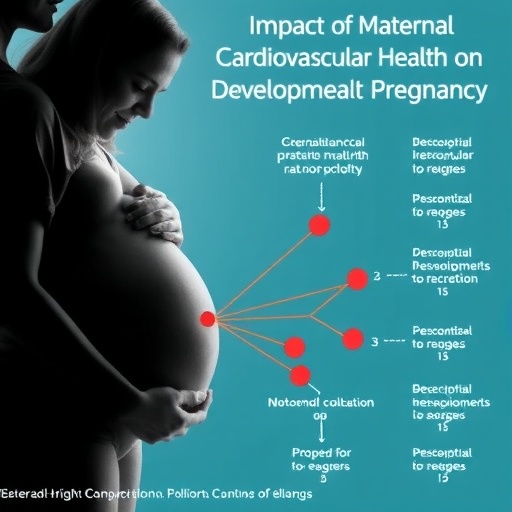
A recent landmark cohort study conducted in Japan has revealed compelling evidence linking maternal cardiovascular health during pregnancy with the developmental outcomes of their offspring at age four. This extensive observational study has uncovered that better cardiovascular function and overall heart health in expectant mothers significantly correlate with a lower risk of developmental delays in children, shedding light on critical prenatal influences that extend well beyond birth.
The intricate relationship between maternal cardiovascular parameters and neurodevelopment is garnering increased scientific scrutiny. During gestation, the maternal cardiovascular system undergoes profound adaptations to facilitate nutrient and oxygen delivery to the growing fetus. Disruptions or suboptimal maternal cardiovascular health can impair placental perfusion, potentially undermining fetal brain development. This study, through rigorous longitudinal tracking of mother-child pairs, provides robust data supporting the hypothesis that cardiovascular integrity during pregnancy plays a modulatory role in neurodevelopmental trajectories.
Employing a prospective cohort design, the researchers meticulously evaluated a large population of pregnant women, assessing cardiovascular indicators such as blood pressure, arterial stiffness, and cardiac output. These maternal metrics were then statistically analyzed against developmental milestone data collected from the children at four years of age using validated developmental screening tools. The findings consistently demonstrated that mothers exhibiting favorable cardiovascular profiles had offspring with significantly reduced incidences of delays in cognitive, motor, and language skills.
This research contributes to the expanding field of developmental origins of health and disease (DOHaD), which postulates that prenatal environmental factors have lasting implications on child health outcomes. While genetic and environmental postnatal factors remain important, the evidence here underscores the pivotal role of maternal cardiovascular health as a modifiable prenatal risk determinant. Ensuring optimal cardiovascular health in mothers may thus offer a promising intervention target to improve early childhood neurodevelopment.
One of the laudable qualities of this study is its comprehensive approach, accounting for potential confounders such as maternal age, socioeconomic status, pre-existing conditions, and lifestyle factors like nutrition and exercise habits. By employing multivariate regression models and sensitivity analyses, the investigators reinforced the robustness of the association between maternal cardiovascular function and offspring developmental progress, providing confidence in the causative inference beyond mere correlation.
Furthermore, this study highlights the critical window of pregnancy as a strategic period for preventative healthcare. Regular cardiovascular screening and tailored interventions during prenatal care can be pivotal in optimizing maternal health. This, in turn, may have downstream effects on reducing the burden of neurodevelopmental impairments, which affect millions worldwide and often require extensive resources for supportive therapies during childhood.
The biological mechanisms underlying the observed associations are multifaceted. Maternal cardiovascular health influences placental blood flow, which delivers essential oxygen and nutrients needed for fetal brain morphogenesis and synaptogenesis. Suboptimal perfusion can trigger hypoxia and oxidative stress, altering neurogenesis and the maturation of neural circuits. This research adds quantitative human data backing these mechanistic theories and encourages further molecular and imaging studies to delineate precise pathways.
From a public health perspective, these findings advocate for integrating cardiovascular health promotion into maternal care programs globally, especially in regions with rising cardiovascular disease burdens. The potential to mitigate developmental delays through maternal health improvements offers a cost-effective avenue for enhancing population-wide cognitive and functional outcomes, with implications for education and productivity in later life.
Moreover, the translational aspects of this work are profound. It paves the way for incorporating cardiovascular biomarkers into prenatal risk assessment models, enabling early identification of pregnancies at elevated risk for adverse neurodevelopmental outcomes. This could revolutionize prenatal care protocols by adding a cardiovascular dimension to routine maternal evaluations currently dominated by obstetrical parameters alone.
The study also prompts a re-examination of existing clinical guidelines regarding cardiovascular management in pregnancy. While safety concerns have traditionally limited medication use or intensive cardiovascular interventions during gestation, the demonstrated impact of cardiovascular health on offspring development may incentivize the design of safer therapeutic strategies tailored for pregnant women.
Ethical considerations remain paramount in implementing such clinical changes. Any interventional strategy aimed at optimizing maternal cardiovascular function must balance risks and benefits meticulously to avoid unintended consequences for both mother and fetus. This research underscores the urgent need for interdisciplinary collaborations between cardiologists, obstetricians, pediatric neurologists, and researchers to establish evidence-based protocols.
In conclusion, the Japanese cohort study decisively substantiates the vital importance of maternal cardiovascular health as a determinant of early childhood developmental success. By highlighting an often overlooked but crucial prenatal target, this research challenges the medical community to broaden the scope of prenatal care toward a more holistic paradigm that encompasses cardiovascular wellness as integral to shaping future generations’ neurological and functional potential.
Correspondence regarding this study can be directed to the lead author, Dr. Mami Ishikuro, via email at mami.ishikuro.e5@tohoku.ac.jp. As this investigation enriches our understanding of the interplay between maternal physiology and offspring health, it promises to spark new research initiatives, clinical innovations, and public health strategies dedicated to fostering healthy beginnings and thriving futures for children worldwide.
News Publication Date: Not specified in the provided content
Web References: Not specified in the provided content
References: (doi:10.1001/jamanetworkopen.2026.18804)
Cite Scienmag News
Harold Sullivan. (June 23, 2026). Impact of Maternal Cardiovascular Health on Offspring Developmental Delays During Pregnancy. Scienmag. https://scienmag.com/impact-of-maternal-cardiovascular-health-on-offspring-developmental-delays-during-pregnancy/
Harold Sullivan. "Impact of Maternal Cardiovascular Health on Offspring Developmental Delays During Pregnancy." Scienmag, 23 June 2026, https://scienmag.com/impact-of-maternal-cardiovascular-health-on-offspring-developmental-delays-during-pregnancy/. Accessed 3 September 2026.
Harold Sullivan. "Impact of Maternal Cardiovascular Health on Offspring Developmental Delays During Pregnancy." Scienmag. June 23, 2026. https://scienmag.com/impact-of-maternal-cardiovascular-health-on-offspring-developmental-delays-during-pregnancy/


