


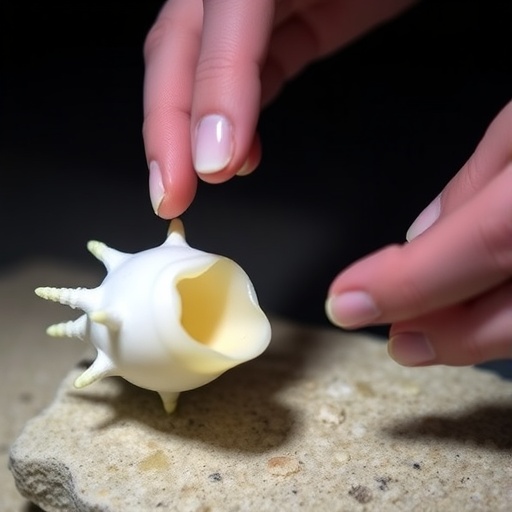
On the island of Eleuthera in The Bahamas, a groundbreaking initiative in marine conservation has taken a definitive leap forward with the launch of the Queen Conch Mobile Lab, a state-of-the-art aquatic hatchery designed to restore and sustain one of the Caribbean’s most treasured marine species. Spearheaded by Florida Atlantic University’s Harbor Branch Oceanographic Institute and partnered with The Island School’s Cape Eleuthera Institute (CEI), this innovative mobile lab reflects a dynamic fusion of cutting-edge aquaculture technology and community-driven conservation efforts. Supported by Chef José Andrés’ Longer Tables Fund, the lab has successfully incubated its first queen conch egg masses and observed the inaugural hatchlings, signaling a transformative milestone in the species’ preservation.
The Queen Conch Mobile Lab is engineered to bolster conservation initiatives by nurturing up to 2,000 juvenile queen conch annually. This mobile hatchery is wholly self-contained, designed to operate in remote coastal communities across the Caribbean that lack permanent aquaculture facilities. With a footprint measuring approximately 26 feet by 8 feet, the lab is solar-powered and equipped with sophisticated saltwater and aeration systems, capable of maintaining optimal water conditions essential for the delicate early life stages of queen conch larvae. This mobility allows it to be deployed where it is needed most, connecting directly to local seawater sources to sustain the entire lifecycle from egg to juvenile.
The lab’s operational success was marked in April, when CEI researchers introduced the first queen conch egg masses, witnessing the subsequent hatch of tiny veliger larvae — a critical rite of passage for the species. Over a 21-day larval period, these microscopic free-swimmers underwent metamorphosis into juveniles, transitioning from the planktonic stage into benthic, seagrass-associated organisms. This metamorphic shift is triggered by biochemical signals from seagrass detritus, an essential habitat for the species’ survival. Thus far, the lab has produced approximately 200 newly metamorphosed juveniles from the initial egg cohort, with over 100 additional individuals from subsequent batches completing this vital development phase.
Queen conch (Lobatus gigas) plays a pivotal ecological role in the Caribbean’s seagrass beds by grazing on algae and maintaining the health and balance of these underwater meadows, which serve as critical habitats for myriad marine species. Due to decades of overfishing and habitat degradation, queen conch populations have plummeted, resulting in their current “threatened” status under the U.S. Endangered Species Act. Historically, the Caribbean harvested roughly 31,000 tons annually, representing an economic value nearing $39 million per year, demonstrating the species’ significance not only ecologically but also socioeconomically. Without intervention, scientific projections forecast that commercial populations in The Bahamas could collapse within the next decade to decade and a half.
Megan Davis, Ph.D., director of the Queen Conch Lab at FAU Harbor Branch and a leading aquaculture research professor, emphasizes the broader implications of this project: “This mobile hatchery is more than just a technological achievement; it embodies the convergence of science, community engagement, and conservation with a shared vision of restoring and preserving queen conch populations. The hatch marks a pivotal step in actively cultivating the next generation to repopulate and rejuvenate the vital seagrass ecosystems they inhabit.”
The queen conch’s reproductive biology underscores both its resilience and fragility. From April through September, individual females can deposit up to 10 gelatinous egg masses, each containing upward of 500,000 eggs. These masses hatch nocturnally, releasing veliger larvae which rely on oceanic currents and microalgae for nourishment during their planktonic stage. However, harsh natural mortality rates mean fewer than 1% survive to adulthood. Typically, queen conch reach sexual maturity in 4 to 5 years, characterized by the thickening of their shell lip to a noticeable 9 to 15 millimeters. Longevity can extend to 40 years, during which the shell continuously grows with the animal.
Following metamorphosis within the lab, the juveniles will be transferred to grow-out tanks where they are nurtured on a highly specialized diet consisting of natural diatoms and a proprietary seaweed-based gel. This controlled feeding regime ensures optimal growth rates and health, necessary for survival post-release. Juveniles will grow to an approximate size of 7 to 9 centimeters before acclimatization in secure pens. This final rearing phase facilitates adaptation to natural conditions before eventual restoration into their native seagrass beds, where they will contribute to the ecological balance.
Community involvement lies at the heart of the Queen Conch Mobile Lab initiative, transcending mere scientific output. The lab anticipates engaging as many as 1,500 visitors annually, including local residents, fishers, students, and interns. This holistic approach fosters environmental stewardship through education, hands-on workforce training, and aquaculture skills development. According to Becky Holt, assistant director at the Queen Conch Lab, the project serves as an inspirational nexus where diverse groups converge to exchange knowledge and celebrate conservation successes firsthand. The lab has become a beacon of hope and a hub for sustainable marine science practices deeply intertwined with the cultural fabric of the Caribbean.
The collaboration between FAU Harbor Branch and CEI draws on decades of expertise and a shared commitment to community-based solutions. CEI’s long-standing environmental science programs and revered queen conch research provide an invaluable foundation for the mobile lab’s success. Together, the partnership is pioneering a replicable model for conservation aquaculture that may well revolutionize marine restoration efforts throughout the Caribbean.
This pilot program is part of a broader vision orchestrated by FAU Harbor Branch to establish a network of community-operated queen conch farms spanning multiple Caribbean nations. Since launching its first mobile hatchery in 2022, the Queen Conch Lab has expanded operations to Puerto Rico, Jamaica, Curaçao, and additional Bahamian sites. These mobile labs encapsulate a transformative approach to marine conservation, seamlessly integrating scientific innovation with community empowerment.
Davis and Holt’s groundbreaking work was recognized in 2025 by the Global Seafood Alliance with the Responsible Seafood Innovation Award in Aquaculture. Their achievements underscore the critical importance of decentralizing restoration science and actively involving local communities in safeguarding marine biodiversity. The sustained success and scaling of these initiatives represent a hopeful pathway toward recovering queen conch populations and preserving marine ecosystems that sustain regional economies and cultural identities.
The project benefits from funding by the Longer Tables Fund, a philanthropic endeavor founded by chef and humanitarian José Andrés. Additional foundational support came from The Moore Bahamas Foundation, underscoring the vital role of philanthropic partnerships in advancing sustainable aquaculture innovations. Together, science, conservation, and community stewardship are converging to create a resilient future where queen conch populations not only survive but thrive for generations to come.
News Publication Date: Information not provided
Web References:
- Florida Atlantic University: https://www.fau.edu/
- FAU Harbor Branch Oceanographic Institute: https://www.fau.edu/hboi/
- The Island School’s Cape Eleuthera Institute: https://islandschool.org/cape-eleuthera-institute/about-us-cei/
- Queen Conch Lab: https://www.queenconchlab.com/
Cite Scienmag News
Alan Morgan. (June 17, 2026). FAU Queen Conch Mobile Lab Launches in the Bahamas, Achieves First Egg Masses and Hatchings. Scienmag. https://scienmag.com/fau-queen-conch-mobile-lab-launches-in-the-bahamas-achieves-first-egg-masses-and-hatchings/
Alan Morgan. "FAU Queen Conch Mobile Lab Launches in the Bahamas, Achieves First Egg Masses and Hatchings." Scienmag, 17 June 2026, https://scienmag.com/fau-queen-conch-mobile-lab-launches-in-the-bahamas-achieves-first-egg-masses-and-hatchings/. Accessed 3 September 2026.
Alan Morgan. "FAU Queen Conch Mobile Lab Launches in the Bahamas, Achieves First Egg Masses and Hatchings." Scienmag. June 17, 2026. https://scienmag.com/fau-queen-conch-mobile-lab-launches-in-the-bahamas-achieves-first-egg-masses-and-hatchings/


