


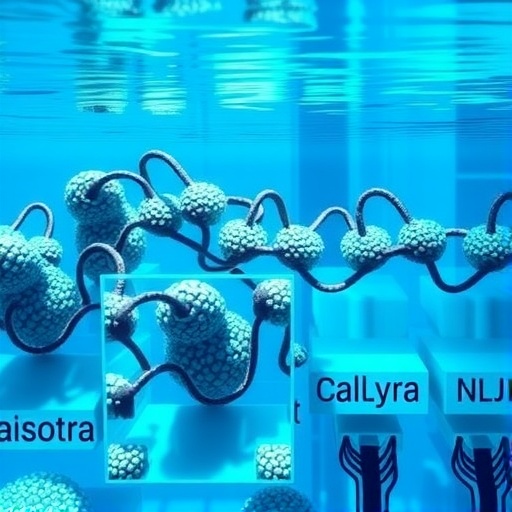
In an era where the vast and intricate ecosystems of the ocean remain some of the least understood realms on Earth, a groundbreaking study has illuminated a transformative way to decode the secrets held within marine environments. Recently published in Communications Earth & Environment, this research reveals that the marine microbiome—the complex assemblage of microorganisms inhabiting ocean waters—can serve as a precise and insightful predictor of its surrounding chemical and biological environment. This revelation marks a significant leap in marine science, potentially reshaping how we monitor, understand, and protect the health of the world’s oceans.
Traditionally, the chemical and biological conditions of marine environments have been assessed through direct water sampling and physicochemical analyses, which are often resource-intensive, spatially limited, and temporally sporadic. These conventional techniques, while valuable, lack the continuous, ecosystem-wide resolution necessary for understanding dynamic oceanic processes on a large scale. The innovation presented by Bell, Garefelt, Jurdzinski, and colleagues lies in harnessing the inherent sensitivity and rapid adaptive responses of microbial communities, transforming the marine microbiome into a robust bioindicator system.
The study’s methodology merges cutting-edge metagenomic sequencing with sophisticated computational modeling, offering an unprecedented window into the ocean’s microscopic inhabitants as both responders to and informants of their environment. By sequencing microbial DNA from diverse marine samples and applying machine learning algorithms, the researchers deciphered patterns linking microbial community structures directly to chemical parameters such as nutrient concentrations, pollutants, and other biologically relevant compounds. This multi-dimensional dataset permitted a predictive framework, where the marine microbiome’s composition could reliably forecast environmental conditions without reliance on traditional chemical assays.
This approach leverages the fundamental biology of microorganisms, whose distributions and activity profiles are finely tuned to their milieu. Microbes respond instantaneously to shifts in nutrient availability, trace element concentrations, oxygen levels, and the presence of organic or inorganic compounds. Consequently, their community composition acts as a living archive, capturing intricate details about the environment’s state at the time of sampling. Through this lens, microbial populations are not merely passive residents but active gauges, encoding information about water chemistry and biological interactions.
Crucially, the research team undertook broad spatial and temporal sampling encompassed by various marine ecosystems. By analyzing samples from coastal regions to open ocean environments and across different seasons, they demonstrated the robustness of their predictive models under diverse ecological contexts. This adaptability underscores the approach’s potential utility for real-world applications, allowing for scalable, cost-effective, and continuous environmental monitoring of marine habitats worldwide.
The implications of these findings extend beyond marine biology to global environmental management and climate science. Oceans are pivotal in carbon cycling, climate regulation, and sustaining biodiversity, yet they face unprecedented threats from pollution, acidification, and warming. Accurate, timely data about ocean chemistry and biological processes are critical for managing these threats effectively. The microbial predictive framework offers a powerful, sensitive tool, capable of early detection of perturbations and enabling preemptive interventions.
Moreover, the technology and analytical techniques developed here hold promise for integration with autonomous sampling platforms such as buoys, underwater drones, and remote sensing systems. These advancements could usher in a new age of real-time ocean health monitoring, where microbiome data streams inform policymakers, conservationists, and researchers about emerging trends and hotspots of concern with unparalleled precision.
The research also raises exciting questions about the broader ecological roles of marine microbes. By decoding their community dynamics, scientists can gain novel insights into trophic interactions, pollutant degradation pathways, and biochemical transformations critical to oceanic ecosystems. Such knowledge has profound implications for biotechnology, bioremediation, and the sustainable exploitation of marine resources.
Nevertheless, challenges remain in fully unlocking the microbiome’s predictive power, particularly regarding standardization of sampling methods, data harmonization across global datasets, and the translation of genetic data into actionable environmental metrics. Bell and colleagues acknowledge these hurdles but emphasize the foundational value of their approach as a proof-of-concept and a platform for future research expansion.
In sum, the revelation that the marine microbiome can act as an accurate proxy for its chemical and biological milieu represents a paradigm shift. It exploits the unparalleled sensitivity, diversity, and responsiveness of microbial communities, turning microscopic life into a macroscopic sensor for our planet’s vast oceans. This breakthrough has the potential to revolutionize ocean science, providing tools that are not only scientifically transformative but also imperative for addressing the profound environmental challenges facing Earth’s blue heart.
As humanity grapples with the urgent need to preserve marine ecosystems amidst global change, such innovative bioindication methodologies could form the cornerstone of next-generation ocean stewardship. By tuning into the language of microbes, we may finally be able to listen more closely to the ocean’s whispers—her subtle shifts in chemistry and biology—long before they escalate into irreversible damage. This advancement propels us into a future where marine ecosystems are protected not through guesswork or delayed reaction, but through an intimate, molecular-level understanding that empowers timely and effective conservation action.
The research by Bell et al. exemplifies the transformative power of interdisciplinary science, weaving together genomics, ecology, and data science into a cohesive narrative with real-world impact. It reminds us that often, the answers to grand environmental mysteries lie not in the largest or most visible creatures, but in the smallest inhabitants whose continuous and nuanced dance with their surroundings encodes the health of the entire system.
Looking forward, the marine microbiome’s newfound role as a predictive tool is likely to inspire a cascade of innovative studies and technologies. Integrating microbial insights with oceanographic models, satellite data, and climate projections could generate comprehensive frameworks for understanding and mitigating human impacts on marine systems. This confluence of biology and technology promises to transform ocean monitoring into a proactive, dynamic practice, rather than a reactive, fragmented endeavor.
Ultimately, this study is a testament to the intricate connectivity between life and environment in the marine realm, showcasing that even at microscopic scales, biology reflects and influences the broader planetary system. The marine microbiome’s ability to predict its chemical and biological environment underscores the profound intelligence embedded within natural ecosystems—intelligence that, if harnessed wisely, could safeguard the health of our oceans for generations to come.
Cite Scienmag News
Violet Maxwell. (June 15, 2026). Marine Microbiome Predicts Ocean’s Chemical, Biological State. Scienmag. https://scienmag.com/marine-microbiome-predicts-oceans-chemical-biological-state/
Violet Maxwell. "Marine Microbiome Predicts Ocean’s Chemical, Biological State." Scienmag, 15 June 2026, https://scienmag.com/marine-microbiome-predicts-oceans-chemical-biological-state/. Accessed 4 September 2026.
Violet Maxwell. "Marine Microbiome Predicts Ocean’s Chemical, Biological State." Scienmag. June 15, 2026. https://scienmag.com/marine-microbiome-predicts-oceans-chemical-biological-state/


