


In the relentless quest for sustainable and efficient metal extraction techniques, a groundbreaking study has emerged, promising to revolutionize the way the mining industry approaches ultramafic resources. Researchers Lv, Wang, Makuza, and their team have unveiled an innovative thermal treatment process that could unlock the vast nickel potential embedded within these geologically complex deposits. As global demand for nickel — essential for battery technologies powering electric vehicles and renewable energy storage — skyrockets, this development couldn’t be more timely or significant.
Ultramafic rocks, rich in magnesium and iron silicate minerals, have long been recognized as prime hosts for nickel deposits. However, their complex mineralogy and refractory nature have made conventional extraction methods costly, inefficient, and environmentally challenging. Current techniques often suffer from low recovery rates and generate significant waste, fueling the urgent need for alternative approaches that marry efficiency with ecological responsibility.
The research team’s pioneering thermal treatment process hinges on precisely controlled high-temperature protocols designed to restructure the mineral matrix within ultramafic ores. By subjecting the raw materials to temperatures optimized for phase transformation, the process unlocks bound nickel resources that were previously inaccessible with traditional methods. This thermal activation effectively alters the chemical state and physical structure of the minerals, increasing nickel liberation and facilitating downstream extraction.
Beyond simply enhancing nickel yield, this method reduces the reliance on harsh chemical reagents typically employed in hydrometallurgical and pyrometallurgical operations. The reduction in chemical input not only decreases operational expenditures but also mitigates the environmental footprint of nickel mining by minimizing toxic effluents and greenhouse gas emissions. Such environmental benefits align directly with the growing global emphasis on green mining practices and responsible resource stewardship.
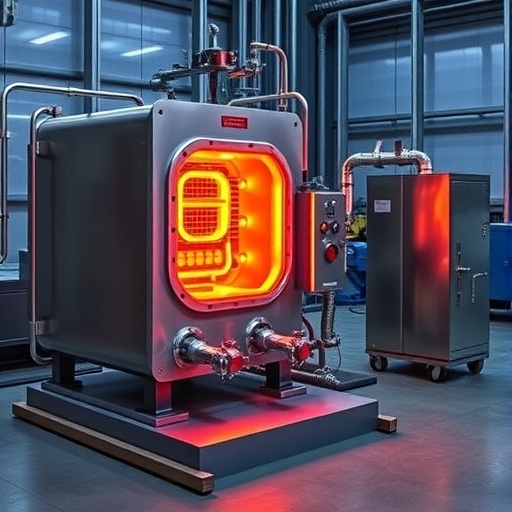
A key technical highlight of the process involves the integration of advanced thermal reactors equipped with dynamic temperature control and gas atmosphere modulation. This bespoke environment allows for precise tailoring of the ore’s thermal reaction pathways, enabling selective phase conversions favorable to nickel recovery. Theoretical modeling and laboratory-scale experiments helped optimize critical parameters such as temperature ramp rates, peak temperature, and dwell time to maximize nickel exposure.
One of the most remarkable aspects of this innovation lies in its scalability potential. The modular design of the thermal treatment units means that the process can be adapted to various operational scales, from pilot plants to full mining operations. According to the authors, the technology holds promise not only for new mining ventures but also for retrofitting existing facilities, thereby boosting productivity without the need for wholesale infrastructure overhaul.
The implications of this advancement extend well beyond the technical domain. By unlocking previously untapped nickel reserves within ultramafic bodies, the process could alleviate global supply constraints that currently threaten to stall electrification and clean energy transitions. Given that nickel is a cornerstone for lithium-ion battery cathodes, enhancing throughput and reducing supply risks have direct ties to economic stability and geopolitical dynamics surrounding critical mineral sourcing.
Furthermore, the team’s work introduces compelling insights into the mineralogical behavior of ultramafic ore at elevated temperatures. The comprehensive characterization techniques employed — including X-ray diffraction, scanning electron microscopy, and thermal analysis — have illuminated mechanisms such as spinel phase destabilization and sulfide oxidation, integral to the nickel liberation pathway. These findings provide a foundation for further refinement of thermal processing strategies and encourage multidisciplinary collaboration across mineralogy, metallurgy, and environmental science.
The researchers emphasize the process’s complementary compatibility with downstream hydrometallurgical treatments, creating a seamless integrated extraction pipeline. Enhanced nickel liberation through thermal treatment improves leaching efficiency, reducing acid consumption and shortening processing cycles. This synergy optimizes overall throughput, operational costs, and environmental impact, underscoring the holistic value proposition of the innovation.
Another dimension of importance is the potential utilization of process heat and gases generated during thermal treatment. Capturing and repurposing these energy streams could elevate the method’s sustainability profile by enabling ancillary power generation or secondary chemical production. Ongoing studies aim to quantify these benefits and design closed-loop systems that further minimize resource waste.
As the study progresses toward large-scale validation, the authors acknowledge challenges such as energy input optimization and equipment durability under continuous operation. Nonetheless, preliminary industrial trials are encouraging, demonstrating robust performance, consistent nickel enrichment, and reduced environmental emissions relative to benchmark processes.
Industry stakeholders have responded with keen interest, recognizing the blend of innovation, practicality, and environmental consciousness embodied by this approach. Given the escalating urgency to secure critical raw materials responsibly, the thermal treatment process detailed by Lv and colleagues positions itself as a disruptive force capable of shaping the future landscape of nickel mining.
In conclusion, the innovative thermal treatment process propounded in this study offers a transformative pathway to harness the nickel riches embedded within ultramafic resources. By melding sophisticated thermal engineering with mineralogical science, it paves the way for more efficient, cost-effective, and environmentally attuned extraction methods. As transitions to clean energy accelerate globally, advancements such as these will be pivotal in ensuring sustainable resource availability and driving the green technologies of tomorrow.
Cite Scienmag News
Denise Maddox. (June 15, 2026). Innovative Thermal Process Unlocks Nickel from Ultramafics. Scienmag. https://scienmag.com/innovative-thermal-process-unlocks-nickel-from-ultramafics/
Denise Maddox. "Innovative Thermal Process Unlocks Nickel from Ultramafics." Scienmag, 15 June 2026, https://scienmag.com/innovative-thermal-process-unlocks-nickel-from-ultramafics/. Accessed 4 September 2026.
Denise Maddox. "Innovative Thermal Process Unlocks Nickel from Ultramafics." Scienmag. June 15, 2026. https://scienmag.com/innovative-thermal-process-unlocks-nickel-from-ultramafics/


