


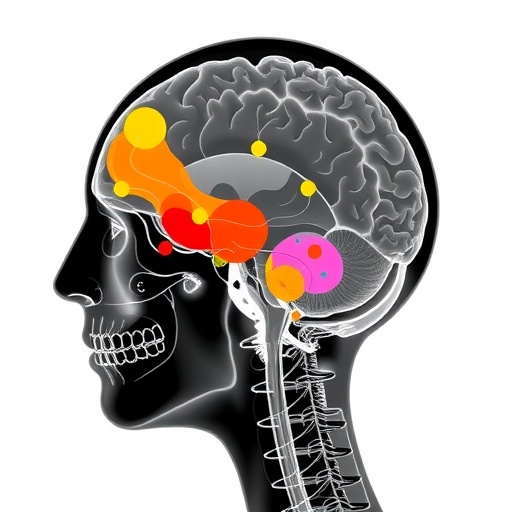
In a groundbreaking development poised to reshape the future of medical diagnostics, researchers have unveiled a new class of multimodal foundation models that leverage textual information to enhance the predictive power of medical image analysis. This approach, detailed in a 2026 publication in Nature Communications by Buckley, Diao, Srivastava, and colleagues, represents a watershed moment in artificial intelligence (AI) applications within healthcare, promising unprecedented accuracies and diagnostic insights.
At the core of this innovation lies the integration of multimodal learning paradigms—wherein machine learning algorithms assimilate and process multiple types of data simultaneously. Traditionally, medical image analysis has relied heavily on visual data extracted from modalities such as MRI, CT scans, and X-rays. However, clinical scenarios are inherently complex, often accompanied by copious textual data in the form of patient histories, radiology reports, and clinical notes. The novel foundation models intelligently fuse these textual inputs with visual features, enabling a more comprehensive understanding of disease manifestations.
The significance of incorporating textual data is not merely additive but transformative. Text in medical contexts encodes a wealth of contextual nuances—ranging from symptom descriptions and diagnostic hypotheses to subtleties about disease progression—that are invisible to image-only models. By exploiting this latent semantic information, multimodal models can refine image-based predictions, substantially elevating diagnostic confidence and accuracy.
Technically, these foundation models deploy advanced natural language processing (NLP) frameworks in tandem with cutting-edge convolutional neural networks (CNNs) or vision transformers (ViTs). The architecture typically involves a dual-stream encoder system: one stream processes the visual data, extracting hierarchical features, while the other digests textual inputs via transformer-based language models such as BERT or GPT variants fine-tuned on medical corpora. An integrative fusion module then synthesizes the multimodal embeddings, facilitating enhanced clinical predictions.
One of the pivotal breakthroughs reported is the model’s ability to dynamically correlate textual symptoms and findings with subtle imaging biomarkers, which previously might have gone unnoticed or misclassified by standalone image classifiers. For example, in pulmonary imaging, descriptions of breathing difficulty documented in clinical notes help disambiguate the visual appearance of ambiguous opacities, leading to more precise identification of pathologies such as interstitial lung disease or early pneumonia.
The training process involved large-scale datasets curated from diverse clinical institutions, incorporating over hundreds of thousands of patient cases with paired imaging and detailed narrative text. This breadth of data was essential to ensure the generalized performance of the models across different modalities, pathologies, and demographic variations. The authors emphasized the importance of rigorous preprocessing pipelines, including standardization of imaging formats, de-identification of sensitive data, and normalization of medical text using ontologies like SNOMED CT and UMLS.
Moreover, the research team introduced novel evaluation metrics tailored for multimodal medical AI, combining classical area-under-the-curve (AUC) statistics with linguistic consistency scores to assess how well the model’s predictions align with clinical documentation. This multifaceted approach to validation underscored the model’s superior capability to not only recognize diseases but also to justify predictions in terms that are interpretable to healthcare providers.
From an implementation standpoint, the models exhibit real-time inference capabilities, making them suitable for integration into hospital information systems and imaging workstations. This integration can enable radiologists and clinicians to receive augmented reports where automated insights highlight correlated textual and imaging evidence, facilitating faster and more informed decision-making.
Importantly, the research does not shy away from addressing ethical considerations inherent to AI in medicine. The authors advocate for continuous human oversight, transparency in model decision processes, and mitigation strategies for potential biases arising from uneven data representation. They also stress the need for longitudinal studies to monitor model behavior over clinical deployments to ensure enduring trustworthiness.
Scientifically, this work bridges the gap between natural language understanding and visual perception in clinical AI. It epitomizes a shift from isolated unimodal analysis towards holistic models that better reflect the multifaceted nature of medical data. This fusion-based approach holds promise not only for diagnostics but also for treatment planning, prognostication, and personalized medicine applications.
Furthermore, the potential applications extend beyond radiology. Pathology slides, dermatology imagery, and even endoscopic videos paired with procedural notes could benefit from such multimodal AI frameworks. By harnessing the synergy of visual and textual medical information, these models could democratize expert-level diagnostic assistance across resource-limited settings and specialist-scarce environments globally.
The implications for medical education are also profound. These models could serve as training aids, enabling budding clinicians to visualize the interaction between clinical narratives and medical images dynamically. By simulating diagnostic reasoning through AI, they offer a unique feedback loop to improve human expertise in tandem with machine intelligence.
Looking ahead, the researchers propose expanding the multimodal architectures to incorporate emerging data modalities such as genomic sequences and wearable sensor streams. Such an integrative approach could pave the way toward truly comprehensive digital twins for patients—virtual counterparts that synthesize every facet of a person’s health data to optimize care continuously.
In summary, the study led by Buckley and collaborators exemplifies the transformational impact of multimodal foundation models in medicine, weaving together the threads of text and image to produce richer, more precise insights than ever before. As these systems mature and penetrate clinical workflows, they herald a new era in medical AI—one where understanding context is just as critical as recognizing patterns, and where multidimensional data synergies unlock powerful diagnostic capabilities that can ultimately save lives.
Cite Scienmag News
Ophelia Keating. (June 12, 2026). Multimodal Models Use Text for Medical Image Predictions. Scienmag. https://scienmag.com/multimodal-models-use-text-for-medical-image-predictions/
Ophelia Keating. "Multimodal Models Use Text for Medical Image Predictions." Scienmag, 12 June 2026, https://scienmag.com/multimodal-models-use-text-for-medical-image-predictions/. Accessed 4 September 2026.
Ophelia Keating. "Multimodal Models Use Text for Medical Image Predictions." Scienmag. June 12, 2026. https://scienmag.com/multimodal-models-use-text-for-medical-image-predictions/


