


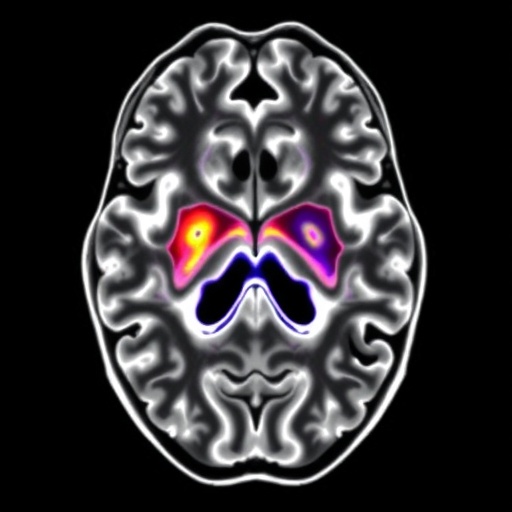
In a groundbreaking study poised to reshape our understanding of Parkinson’s disease (PD), researchers have uncovered compelling links between advanced neuroimaging biomarkers and the clinical severity across the Parkinson’s disease spectrum. The investigation, led by Wang, Lin, Wu, and colleagues, presents data that elucidate the relationship between the diffusion tensor imaging-analysis along the perivascular space (DTI-ALPS) index and choroid plexus volume, revealing new dimensions in the pathophysiology and progression of PD. This study, to be published in npj Parkinson’s Disease in 2026, offers unprecedented insight into how changes in brain fluid dynamics and structural components relate directly to the severity of motor and non-motor symptoms in Parkinson’s patients.
At the heart of this research lies the DTI-ALPS index, an innovative neuroimaging metric derived from diffusion tensor imaging (DTI). The ALPS method measures water diffusivity along the perivascular spaces of the brain, which are integral components of the glymphatic system—a recently characterized cerebrospinal fluid (CSF) clearance pathway critical for maintaining brain homeostasis. This system acts akin to a waste disposal unit, facilitating the removal of neurotoxic waste, such as misfolded α-synuclein proteins, whose accumulation typifies Parkinson’s pathology. Alterations in the DTI-ALPS index may, therefore, serve as indicators of compromised glymphatic clearance, providing a non-invasive window into glymphatic dysfunction in vivo.
Parallel to this, the choroid plexus—a network of cells producing cerebrospinal fluid and forming a barrier between the blood and CSF—has garnered increasing attention in neurodegenerative diseases. Enlargement or volumetric changes in the choroid plexus may reflect inflammatory responses or altered CSF production, both of which can influence disease progression. By quantifying choroid plexus volume through high-resolution magnetic resonance imaging, the research team has identified its significant association with clinical severity markers in PD, suggesting that structural changes in this critical brain interface contribute to symptom manifestation.
The study population encompassed a spectrum of Parkinson’s disease severity, ranging from early, mildly symptomatic individuals to those with advanced stages exhibiting profound motor complications and cognitive decline. This inclusive cohort allowed the researchers to assess biomarker changes longitudinally and correlate these with standardized clinical scales, including the Unified Parkinson’s Disease Rating Scale (UPDRS) and non-motor symptom assessments. Their analyses disclosed a robust inverse relationship between the DTI-ALPS index values and disease severity scores, affirming that reduced glymphatic function associates with worse clinical outcomes.
Moreover, choroid plexus volume demonstrated a positive correlation with symptom severity, supporting the hypothesis that inflammatory or degenerative mechanisms within this structure are key contributors to disease progression. These imaging biomarkers collectively offer a dual perspective on the interplay between brain fluid dynamics and neurodegeneration in Parkinson’s disease, reinforcing the concept that PD extends beyond dopaminergic neuronal loss to involve systemic and cerebrospinal fluid-related pathophysiologies.
Technically, the study deployed state-of-the-art imaging protocols, including refined DTI sequences optimized to resolve fluid movement along perivascular spaces. These advanced imaging techniques overcome previous methodological limitations by maximizing sensitivity to microstructural changes in brain water flow dynamics. Concurrently, automated volumetric assessment of the choroid plexus was enabled by cutting-edge segmentation algorithms leveraging machine learning, enhancing reliability and reproducibility.
Understanding the glymphatic system’s role in PD pathogenesis opens exciting avenues for therapeutic intervention. If glymphatic clearance impairment contributes to α-synuclein accumulation and neuronal toxicity, enhancing this pathway pharmacologically or via lifestyle modifications could decelerate disease progression. Similarly, the choroid plexus, once considered merely a fluid-producing tissue, emerges as a potential immunological and metabolic nexus in PD, where targeting inflammatory cascades or modulating CSF production might yield clinical benefits.
This paradigm shift emphasizes the importance of viewing Parkinson’s disease through a multifaceted lens that integrates neuroimaging biomarkers, neurovascular dynamics, and immunological factors. The clinical application of DTI-ALPS index and choroid plexus volumetry offers the tantalizing prospect of stratifying patients based on glymphatic and choroidal signatures, facilitating personalized management strategies and monitoring treatment efficacy.
Future research is poised to delve deeper into the molecular underpinnings linking choroid plexus alterations and glymphatic dysfunction with neurodegeneration. Investigations integrating cerebrospinal fluid biomarkers, proteomics, and advanced imaging could unearth novel pathogenetic mechanisms and offer more precise biomarkers for early diagnosis and progression tracking. Longitudinal studies tracking changes in DTI-ALPS index and choroid plexus volume relative to clinical progression will be essential to establish causality and validate these metrics as prognostic tools.
The implications extend beyond Parkinson’s disease alone, as disruptions in glymphatic clearance and choroid plexus function have been implicated in other neurodegenerative disorders such as Alzheimer’s disease and multiple sclerosis. This research, therefore, contributes to a broader neuroscientific endeavor aiming to comprehend how brain fluid systems influence diverse neurological pathologies.
Given the growing incidence of Parkinson’s disease worldwide and the pressing need for biomarkers that not only diagnose but also predict disease trajectory, this study represents a significant milestone. Identification of accessible neuroimaging markers like the DTI-ALPS index and choroid plexus volumetry enhances our toolkit for tackling PD by providing measurable physiological indicators entwined with clinical manifestations.
Clinicians can anticipate integrating these imaging metrics into routine assessments, complementing genetic, clinical, and biochemical data to construct comprehensive patient profiles. Such integration will sharpen diagnostic accuracy, enable earlier intervention, and improve the evaluation of novel therapies aimed at modifying disease course rather than merely managing symptoms.
This study was made possible by interdisciplinary collaboration between neurologists, radiologists, bioengineers, and computational scientists, underscoring the necessity of cross-disciplinary approaches in unraveling complex neurodegenerative diseases. The innovative use of neuroimaging biomarkers as functional proxies for brain clearance systems reaffirms the power of technology-driven neuroscience in advancing clinical care.
As the scientific community awaits peer-reviewed validation and extended datasets, this pioneering investigation lays the groundwork for a new era of research targeting the neurofluid dynamics of Parkinson’s disease. The marriage of neuroimaging and clinical neurology foreshadows transformative progress, promising to reshape how we diagnose, monitor, and ultimately treat Parkinson’s disease through the lens of brain clearance mechanisms and immunological interfaces.
In summary, Wang, Lin, Wu, and collaborators’ study delivers compelling evidence that the DTI-ALPS index and choroid plexus volume are tightly linked to clinical severity across the Parkinson’s disease spectrum. These findings illuminate the integral role of glymphatic function and choroid plexus integrity in PD pathogenesis and progression, heralding novel biomarker paradigms and therapeutic targets in the relentless pursuit of combating neurodegeneration.
Cite Scienmag News
Diana Fleming. (June 11, 2026). DTI-ALPS and Choroid Plexus Linked to Parkinson’s Severity. Scienmag. https://scienmag.com/dti-alps-and-choroid-plexus-linked-to-parkinsons-severity/
Diana Fleming. "DTI-ALPS and Choroid Plexus Linked to Parkinson’s Severity." Scienmag, 11 June 2026, https://scienmag.com/dti-alps-and-choroid-plexus-linked-to-parkinsons-severity/. Accessed 4 September 2026.
Diana Fleming. "DTI-ALPS and Choroid Plexus Linked to Parkinson’s Severity." Scienmag. June 11, 2026. https://scienmag.com/dti-alps-and-choroid-plexus-linked-to-parkinsons-severity/


