


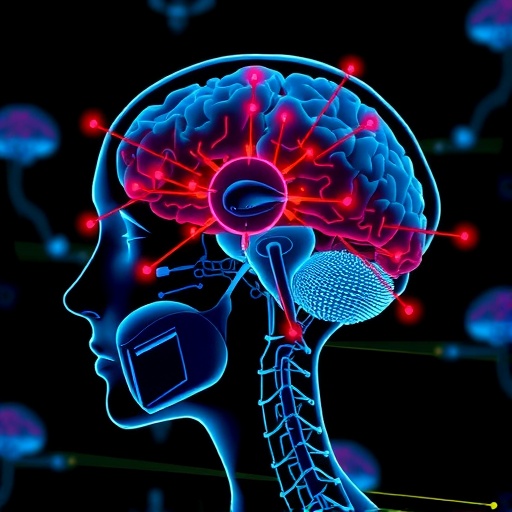
In a groundbreaking advancement poised to transform the landscape of neuro-oncology diagnostics, researchers in Heidelberg have engineered an artificial intelligence system capable of classifying brain tumors with unmatched precision, utilizing only standard histological tissue sections. This pioneering AI model, named Hetairos, leverages conventional microscopic stains combined with sophisticated deep learning to accurately identify more than 100 distinct molecular subtypes of central nervous system (CNS) tumors. By dramatically reducing diagnostic turnaround times from weeks to mere minutes, Hetairos promises to expedite therapeutic decision-making and democratize premium diagnostic capabilities across diverse medical infrastructures worldwide.
The complexity and heterogeneity of CNS tumors have long challenged neuropathologists, largely owing to the intricate molecular underpinnings that define tumor identity beyond their morphological characteristics. Currently, DNA methylation profiling stands as the definitive gold standard for molecular tumor classification, offering high-resolution insights into epigenetic modifications that correspond to specific tumor subgroups. Despite its diagnostic prowess, methylation analysis demands specialized laboratories, expensive instrumentation, and sufficient viable tumor specimens—resources often scarce in underprivileged regions. Additionally, the process entails protracted timelines averaging up to two weeks, impeding prompt clinical interventions.
Hetairos circumvents these barriers by extracting molecularly informative patterns directly from routinely prepared, H&E-stained histological slides—the same slides analyzed under conventional pathology workflows. Spearheaded by Moritz Gerstung of the German Cancer Research Center (DKFZ) and Felix Sahm from Heidelberg University Hospital, the system was meticulously trained on an extensive dataset encompassing over 11,000 digitized histological images from 9,606 patients, aggregated from eleven prominent medical centers spanning four continents. This vast, heterogeneous training corpus enabled Hetairos to assimilate the complex visual signatures associated with 102 molecular CNS tumor subtypes, effectively mirroring the breadth of the latest World Health Organization (WHO) CNS tumor classification.
What sets Hetairos apart is not merely its expansive subtype taxonomy but also its capacity for probabilistic confidence assessment with each classification decision. In roughly half to two-thirds of analyzed cases, the system demonstrates high-confidence predictions boasting an impressive accuracy of approximately 87 to 88 percent. Even in instances of lower confidence, Hetairos narrows down the differential diagnosis to a manageable subset of plausible tumor subtypes, thereby significantly streamlining subsequent molecular assays and optimizing resource utilization.
A pivotal validation of Hetairos’s clinical potential emerged from a stringent head-to-head evaluation against seasoned neuropathologists. Five internationally recognized experts were tasked with diagnosing 210 tumor cases based solely on routine histological sections. Despite their extensive experience, their accuracy hovered around 30 percent. Conversely, Hetairos achieved a remarkable 68 percent accuracy under identical conditions. Notably, when factoring in the top three predicted diagnoses offered by the AI, its concordance soared to 84 percent, starkly outpacing the specialists’ 50 percent benchmark. These findings underscore the AI’s extraordinary aptitude for discerning subtle morphological nuances imperceptible to even the keenest human observers.
Nevertheless, challenges remain. Rare tumor entities present ongoing difficulties for Hetairos, where diagnostic precision approximates but does not consistently surpass human expertise. The developers anticipate that the integration of larger, more diverse datasets will bolster the model’s proficiency in these domains over time, underscoring an iterative learning trajectory inherent to AI systems.
An additional triumph of Hetairos lies in its operational efficiency. In a prospective clinical deployment, the AI system processed tumor samples contemporaneously with standard diagnostic workflows without influencing real-time treatment decisions. Traditional DNA methylation assays required an average of twelve days, whereas Hetairos produced molecular subtype predictions within twelve minutes post-digitization on conventional computing hardware. Factoring slide preparation and image acquisition, the full diagnostic timeline can often be compressed to less than two days, an exponential acceleration with profound implications for patient management.
Beyond speed and accuracy, Hetairos offers pragmatic advantages in challenging clinical scenarios. Cases characterized by limited tumor material or ambiguous molecular test results often stall conventional diagnostics. Here, the AI can provide pivotal guidance by spotlighting histological regions most influential to its decision-making process. This interpretability allows clinicians to target subsequent analyses more effectively and fosters trust through transparent AI reasoning—a critical consideration for clinical adoption.
Importantly, Hetairos is positioned as an adjunct rather than a replacement for existing molecular diagnostics. Its design philosophy centers on augmenting neuropathological workflows, catalyzing faster preliminary stratifications and prioritizing patients who might benefit most from comprehensive molecular testing. Such synergy is particularly valuable in resource-constrained environments, where expensive and technically demanding assays remain inaccessible. Given that DNA methylation profiling costs several hundred euros, the cost-effectiveness of utilizing pre-existing stained sections for AI analysis could considerably alleviate healthcare burdens without sacrificing diagnostic fidelity.
From a broader perspective, Hetairos exemplifies the transformative potential of AI-driven digital pathology to revolutionize cancer diagnostics at scale. By integrating cutting-edge machine learning with ubiquitous histological data, it ushers in an era where rapid, accurate, and globally available molecular classification is attainable—even in settings previously limited by technological disparities. This democratization of precision diagnostics not only promises improved patient outcomes but also a paradigm shift in how oncological diseases are characterized and treated.
As the model evolves, the research team envisions expanding Hetairos’s capabilities through ongoing data acquisition and refinement, encompassing even more granular tumor subtypes and integrating multimodal data inputs. Such advancements could further disentangle the complex biology of CNS tumors, enabling personalized therapeutic regimens with heightened specificity. Ultimately, Hetairos stands at the forefront of a digital renaissance in neuropathology, transforming microscopic images into molecular insights with unprecedented speed and accuracy.
This breakthrough was comprehensively detailed by Jin, Shmatko, Patel, and colleagues in their seminal publication in Nature Cancer, underscoring the confluence of AI innovation and clinical necessity. As Hetairos transitions from research to real-world application, it may herald a new epoch in brain tumor diagnostics—one where artificial intelligence synergizes with human expertise to unravel the mysteries of the central nervous system and improve lives worldwide.
News Publication Date: Not explicitly specified; article references publication in 2026.
Web References:
References:
- Jin D., Shmatko A., Patel A. et al. Hetairos is a histology-based artificial intelligence model for predicting central nervous system tumor methylation subtypes. Nature Cancer (2026).
Cite Scienmag News
Ophelia Keating. (June 10, 2026). AI Diagnoses Brain Tumors in Minutes Rather Than Weeks. Scienmag. https://scienmag.com/ai-diagnoses-brain-tumors-in-minutes-rather-than-weeks/
Ophelia Keating. "AI Diagnoses Brain Tumors in Minutes Rather Than Weeks." Scienmag, 10 June 2026, https://scienmag.com/ai-diagnoses-brain-tumors-in-minutes-rather-than-weeks/. Accessed 4 September 2026.
Ophelia Keating. "AI Diagnoses Brain Tumors in Minutes Rather Than Weeks." Scienmag. June 10, 2026. https://scienmag.com/ai-diagnoses-brain-tumors-in-minutes-rather-than-weeks/


