


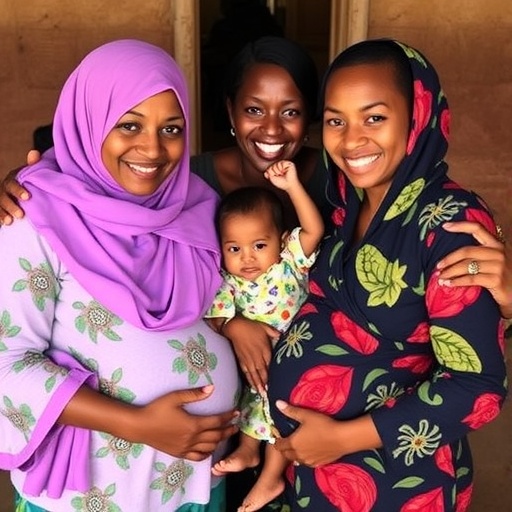
In recent years, the escalating impacts of climate change have surfaced as a formidable threat to global health, with some of the most vulnerable populations being pregnant individuals and their infants. Emerging research underscores that the consequences of a warming planet extend beyond environmental degradation, deeply affecting perinatal health outcomes. These outcomes encompass an increased risk of stillbirth, prematurity, low birth weight, congenital anomalies, and impaired neurodevelopment in newborns. As the climate crisis intensifies, it becomes imperative for healthcare providers specializing in perinatal care to not only recognize but anticipate and respond adequately to these health challenges.
The pathophysiological underpinnings linking climate change to adverse perinatal outcomes are multifaceted, involving direct and indirect mechanisms. Exposure to extreme temperatures, poor air quality, and heightened incidence of infectious diseases all contribute to a hostile gestational environment. For example, heatwaves can induce maternal hyperthermia, placental insufficiency, and systemic inflammation, which are causally linked with preterm labor and fetal growth restriction. Additionally, environmental pollutants such as particulate matter and volatile organic compounds exacerbate oxidative stress and epigenetic alterations critical during fetal development, potentially resulting in congenital anomalies and long-term neurodevelopmental impairments.
Perinatal healthcare providers have traditionally focused on well-established obstetric and pediatric risks; however, the evolving landscape of climate change demands an expansion of this expertise to encompass environmental health literacy. Integrating climate science into the training and continuing education of medical professionals is essential to equip them with the tools to identify climate-related health risks, provide counseling tailored to climate-exacerbated stressors, and advocate for policies that protect pregnancy and infancy. This multidisciplinary approach bridges obstetrics, neonatology, environmental science, and public health policy, fostering a holistic framework for climate-smart healthcare.
A climate curriculum for perinatal professionals must thus include comprehensive modules addressing the epidemiology of climate-sensitive health outcomes, the molecular and physiological pathways of environmental exposures during pregnancy, and emergent data on social determinants of health. Vulnerable groups, often characterized by socioeconomic disadvantage, racial and ethnic disparities, and limited access to healthcare, are disproportionately burdened by climate change. Therefore, an understanding of environmental justice is critical to developing equitable interventions and fostering resilience in affected communities.
Beyond clinical education, preparedness for climate-driven disasters such as hurricanes, wildfires, and floods requires perinatal teams to engage in proactive disaster planning. This includes developing protocols for maintaining continuity of care during emergencies, ensuring access to essential services like safe delivery environments and neonatal intensive care, and mitigating risks associated with displacement and resource scarcity. Such planning is vital as extreme weather events increasingly disrupt healthcare infrastructure, threatening maternal-infant health outcomes on a systemic scale.
Mitigation strategies within the healthcare setting also necessitate attention. Perinatal healthcare providers are uniquely positioned to influence sustainability practices that lower the carbon footprint of healthcare delivery. Initiatives might involve optimizing resource utilization, reducing medical waste, and advocating for renewable energy usage in hospitals and clinics. Moreover, counseling patients on environmentally mindful lifestyle adaptations during pregnancy can cumulatively contribute to broader climate action efforts.
This evolving role of healthcare professionals extends into the realm of policy and advocacy. The recent wave of climate policies globally underscores the urgency of integrating health considerations into climate action plans. Perinatal healthcare providers, leveraging their clinical expertise and patient relationships, can be powerful advocates for policies that address air pollution reduction, promote climate-resilient healthcare infrastructure, and support social safety nets for vulnerable populations. Collective advocacy efforts pave the way for systemic change that protects the health of future generations.
Scientific inquiry continues to elucidate novel dimensions of climate perinatal health interactions. Cutting-edge research employs omics technologies to decode the epigenetic and transcriptomic consequences of prenatal environmental exposures. Epidemiological studies utilize geospatial analysis and large-scale datasets to identify hotspots of climate-related health disparities in pregnancy outcomes. Such advancements enrich the evidence base, guiding tailored interventions and health policy formulation.
However, significant challenges persist. There exists a gap in climate-related health education across medical schools and allied health training programs, impeding the dissemination of vital knowledge. Additionally, data scarcity in low-resource settings complicates comprehensive risk assessments and intervention planning, which is particularly troubling considering these regions often bear the brunt of climate change impacts. Addressing these gaps requires concerted global efforts, resource allocation, and cross-disciplinary collaborations.
From a physiological perspective, the gestational period represents a critical window of vulnerability wherein environmental insults can induce structural and functional perturbations. The placenta, serving as the interface between mother and fetus, is sensitive to environmental toxins and hypoxic stress, which may precipitate pathologies including preeclampsia and intrauterine growth restriction. Understanding these mechanisms provides a basis for preventive and therapeutic strategies in climate-impacted gestations.
The neurodevelopmental sequelae arising from prenatal climate exposures are particularly concerning given their long-term societal implications. Aberrant neurodevelopment linked to toxic exposures and maternal stress can manifest as cognitive deficits, behavioral disorders, and susceptibility to neuropsychiatric conditions. Early intervention and monitoring protocols are essential to mitigate these outcomes and support affected children’s developmental trajectories.
Integrating climate considerations into perinatal healthcare necessitates transformative educational paradigms, infrastructure investments, and policy frameworks. Interprofessional collaboration among obstetricians, midwives, neonatologists, environmental scientists, and public health professionals fosters comprehensive care models. Importantly, patient engagement must be central, empowering pregnant individuals with knowledge and resources to navigate climate-related health risks.
The intersection of climate change and perinatal health represents an urgent frontier in medical and public health domains. As environmental challenges mount, proactive adaptation and mitigation within perinatal care stand as critical measures to safeguard maternal and infant health. The development of robust climate curriculum and healthcare policies anchored in scientific evidence and social justice principles forms the cornerstone of this endeavor. Embracing this multifaceted approach can transform perinatal healthcare into a vanguard of climate-smart medicine.
In summary, the imperative is clear: perinatal healthcare teams must be equipped with climate-relevant knowledge and strategies to confront escalating health threats posed by climate change. From education and clinical practice to disaster preparedness and policy advocacy, comprehensive engagement at all levels is required. Only through such integrative and anticipatory efforts can we hope to protect generations to come from the insidious health ramifications of a changing climate.
Cite Scienmag News
Harold Sullivan. (June 8, 2026). Empowering Perinatal Teams for Climate-Smart Care. Scienmag. https://scienmag.com/empowering-perinatal-teams-for-climate-smart-care/
Harold Sullivan. "Empowering Perinatal Teams for Climate-Smart Care." Scienmag, 8 June 2026, https://scienmag.com/empowering-perinatal-teams-for-climate-smart-care/. Accessed 3 September 2026.
Harold Sullivan. "Empowering Perinatal Teams for Climate-Smart Care." Scienmag. June 8, 2026. https://scienmag.com/empowering-perinatal-teams-for-climate-smart-care/


