


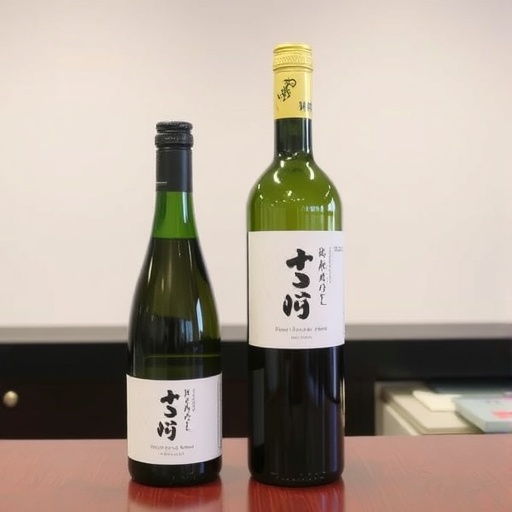
In the serene landscapes of Okayama Prefecture, Japan, a remarkable resurgence is taking place in the world of viticulture. The city of Ibara, nestled within this region, has long been renowned for its cultivation of Muscat Bailey A grapes, a variety with deep roots in Japanese winemaking history. On May 11, 2025, this tradition was celebrated on an international stage as “Aldebaran,” a red wine produced exclusively from these grapes, garnered a prestigious Gold Award at the Kura Master competition held in France. This recognition, achieved under the expert supervision of Professor Akihiro Kaneko of Okayama University of Science, marks a significant milestone in the preservation and revitalization of a nearly lost grape heritage.
The Kura Master competition is a distinguished event that has, since 2017, provided a platform for Japanese sake and wine to be evaluated by French consumers and experts alike. It serves as a bridge connecting Japanese fermentation craftsmanship and European wine culture. The success of “Aldebaran” at this contest signals a compelling story of agricultural revival, technological expertise, and cultural exchange. The wine itself was crafted by Yokohama Winery, a respected producer known for its dedication to quality and tradition, which collaborated closely with Professor Kaneko to bring this project to fruition.
Muscat Bailey A is not just any grape; it is a hybrid variety developed in Japan and cherished for its unique flavor profile that combines sweetness with subtle acidity. Historically, the Aono district in Ibara was a central hub for these grapes, producing significant quantities that supported local winemaking industries. However, economic pressures and changing market preferences led many cultivators to abandon Muscat Bailey A in favor of varieties commanding higher prices, causing a steep decline in production. This shift threatened to erase a vital chapter of Japan’s viticultural identity.
The initiative to revive Muscat Bailey A grapes was driven by a collective passion among local farmers, vintners, and researchers. In the autumn of 2025, these stakeholders rallied to purchase 200 kilograms of the grapes from surviving vineyards. This concerted effort was not merely a nostalgic gesture but a strategic move to reintroduce a grape variety with distinctive qualities into modern winemaking. The involvement of Yokohama Winery ensured that traditional methods would be blended with cutting-edge oenological techniques, overseen meticulously by Professor Kaneko, whose expertise in viticulture and enology provided a scientific foundation for the project’s success.
The final product, “Aldebaran,” is a testament to the potential locked within this grape. Tasting notes reveal a complex bouquet dominated by a concentrated strawberry-like aroma, evocative of fruit preserves or jam, complemented by a fresh, slightly herbaceous undertone. Such sensory characteristics point to the grape’s unique biochemical composition, influenced by regional terroir—soil, microclimate, and cultivation practices—that impart a harmonious balance between sweetness and acidity. Professor Kaneko highlights the wine’s approachable palate and its versatility when paired with diverse culinary dishes, underscoring the commercial and gastronomic viability of this revived product.
The nomenclature of the wine, “Aldebaran,” adds a poetic dimension to the endeavor. Named after the bright red star in the Taurus constellation, which graces the early winter night sky coinciding with the conclusion of the winemaking season, the title evokes both celestial grandeur and the passage of time. This metaphor elegantly ties the celestial to the terrestrial, linking ancient astronomical observation to the cyclic rhythms of agriculture and craft.
Parallel to this celebration of red wine, the 2025 Kura Master competition also honored “Junmai -eme-,” a sake remarkable not only for its quality but for its innovative genesis. Brewed by Kamikokoro Brewery, this sake uses a proprietary yeast strain isolated by the research team at the Institute of Viticulture and Enology under Professor Kaneko’s leadership. This yeast, derived from Muscat of Alexandria grapes, represents a fascinating cross-disciplinary integration of viticultural microbiology and traditional sake brewing, achieving a Platinum Award in the Junmai Sake category, the competition’s highest honor.
The scientific underpinning of this success story is multifaceted. The isolation and application of a grape-derived yeast strain in sake brewing exemplify the potential to harness naturally occurring microbial diversity to enhance fermentation processes. This can lead to unique flavor profiles and possibly improve the sustainability and authenticity of sake production. It is indicative of a broader trend in fermentation sciences to explore indigenous microbiota as valuable resources for beverage innovation.
Moreover, this dual recognition at an international competition underscores the vital role that university-led research and regional collaboration play in elevating local agricultural products to global prominence. Professor Kaneko’s institute functions as a nexus between academic inquiry, practical viticulture, and commercial winemaking, embodying a model where science directly informs production and marketing strategies.
This narrative also reflects a broader cultural significance. The revalorization of Muscat Bailey A grapes and the innovative integration of grape yeast into sake brewing both represent efforts to maintain and enhance Japan’s fermentative heritage in the face of globalization and industrial homogenization. They illustrate how scientific expertise coupled with community engagement can protect biodiversity and traditional agricultural knowledge while simultaneously appealing to modern palates and markets.
In conclusion, the story of “Aldebaran” offers a compelling example of how historical varieties, scientific innovation, and international recognition can converge to foster agricultural renewal. The wine itself is not merely a product but a symbol of cultural resilience and scientific achievement. With its robust flavor profile, evocative naming, and celebrated status, “Aldebaran” is poised to inspire both consumers and producers, rekindling appreciation for Muscat Bailey A grapes and reinforcing the importance of research-driven viticulture and enology. The achievements at the 2025 Kura Master competition highlight the dynamic interplay between tradition and innovation, promising a bright future for Japanese fermented beverages on the global stage.
News Publication Date:
May 11, 2025
Keywords
Muscat Bailey A, Aldebaran wine, Kura Master competition, Japanese viticulture, Professor Akihiro Kaneko, Yokohama Winery, Kamikokoro Brewery, Junmai sake, fermentation science, grape yeast, viticulture innovation, enology
Cite Scienmag News
Bethany Barker. (June 7, 2026). Professor Kaneko’s Sake and Wine Win Top Honors at French-Japanese Sake Competition for the Second Year Running. Scienmag. https://scienmag.com/professor-kanekos-sake-and-wine-win-top-honors-at-french-japanese-sake-competition-for-the-second-year-running/
Bethany Barker. "Professor Kaneko’s Sake and Wine Win Top Honors at French-Japanese Sake Competition for the Second Year Running." Scienmag, 7 June 2026, https://scienmag.com/professor-kanekos-sake-and-wine-win-top-honors-at-french-japanese-sake-competition-for-the-second-year-running/. Accessed 4 September 2026.
Bethany Barker. "Professor Kaneko’s Sake and Wine Win Top Honors at French-Japanese Sake Competition for the Second Year Running." Scienmag. June 7, 2026. https://scienmag.com/professor-kanekos-sake-and-wine-win-top-honors-at-french-japanese-sake-competition-for-the-second-year-running/


