


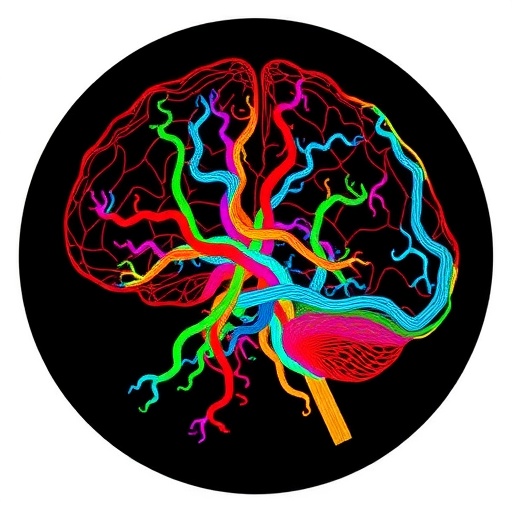
A groundbreaking study spearheaded by researchers from Beijing Tiantan Hospital, Capital Medical University, Changping Laboratory, and Peking University has unveiled an unprecedented atlas capturing the intricate morphology of human brain vasculature. This atlas sheds light on the subtle alterations in small vessel networks that may underpin why certain stroke patients suffer from poorer recovery trajectories and adverse long-term outcomes. This pioneering work is encapsulated within the novel platform called MARVAL—Morphological Analysis of ceRebroVAscuLature—a comprehensive system that automates intracranial vessel segmentation from time-of-flight magnetic resonance angiography (TOF-MRA) scans, extracts quantitative imaging-derived phenotypes, and facilitates robust group-level statistical analyses.
Blood vessels form the foundation of cerebral health by delivering oxygen and essential nutrients, maintaining adequate cerebral perfusion, and supporting neuronal function. However, assessing the intricate three-dimensional vascular network has remained a formidable challenge due to the limitations of conventional imaging and analytical tools. Manual annotation is prohibitively time-consuming, and existing automated methods often fail to capture distal, small-caliber vessels where early pathological changes typically manifest. This technological gap has hindered large-scale population studies into cerebrovascular morphology and its pathological transformations.
The MARVAL platform was meticulously engineered to address these challenges. The development process began with constructing a high-fidelity annotated dataset comprising 150 TOF-MRA scans—100 from neurologically healthy individuals in the PRECISE community cohort and 50 from stroke patients within the nationwide CNSR-III cohort. Each vessel segmentation was rigorously refined through a two-tier expert consensus to ensure accuracy, especially focusing on distal branches traditionally difficult to delineate. The MARVAL pipeline incorporates multiple stages including brain extraction, image denoising, vessel enhancement, and histogram standardization to optimize image quality prior to the neural network segmentation step.
At the heart of MARVAL lies a state-of-the-art deep learning model pretrained on diverse public datasets and subsequently fine-tuned using the bespoke MARVAL dataset, which adeptly balances generalizability and specificity. This is complemented by a post-processing phase that refines segmented vessels to mitigate artifacts and improve anatomical fidelity. From these segmentations, MARVAL derives quantitative imaging phenotypes (IDPs) including vessel diameter, segment length, curvature, tortuosity, torsion, bifurcation characteristics, volume fraction, and fractal complexity. These metrics are synthesized into both scalar summaries and spatially resolved maps, offering an unprecedentedly rich depiction of the cerebrovascular landscape.
Applying MARVAL to a large cohort of 3,035 healthy participants, the investigators extracted 218 cerebrovascular morphological features and modeled their trajectories across the adult lifespan. The results revealed striking age-related patterns: total vessel volume declines progressively, while average vessel diameter and curvature exhibit increases. Intriguingly, these aging signatures are scale-dependent; large vessels maintain relatively stable diameters with advancing age, whereas medium and small vessels undergo marked remodeling, suggesting that subtle microvascular changes may serve as early indicators of vascular aging that precede overt clinical manifestations.
To foster cross-study and cross-population comparability, researchers constructed the Chinese Human Cerebrovascular Template (CHC-Template) based on TOF-MRA scans from 300 healthy Chinese participants. This template functions analogously to standard brain templates by providing a coordinate system that encapsulates cerebrovascular anatomical variability typical to East Asian populations. The CHC-Template retains fine tubular structures and characterizes spatial consistency gradients, faithfully representing conserved major arteries alongside more variable distal vessel branches.
Beyond capturing normative aging changes, the study elucidated intriguing associations between cerebrovascular morphology and systemic health indicators. Vascular features correlated with renal function markers such as serum creatinine and uric acid, lifestyle exposures including smoking and alcohol, plaque burdens in peripheral and coronary arteries, cognitive performance scores, and vascular risk factors like hypertension and diabetes. These findings underscore that intracranial vascular morphology serves as a sensitive imaging biomarker reflective of systemic vascular health and may possess predictive value for non-imaging clinical measures.
Crucially, the clinical relevance of MARVAL-derived phenotypes was evidenced through analyses of 8,994 high-quality TOF-MRA scans drawn from the CNSR-III stroke cohort encompassing over 15,000 acute ischemic stroke patients. Specific vascular features—particularly those derived from small and medium-sized vessels and global network complexity metrics—exhibited significant associations with early functional disability and all-cause mortality. This suggests that microvascular integrity and cerebrovascular network topology critically influence stroke prognosis beyond conventional large-vessel assessments.
To disentangle complex interrelationships among vascular features, the team employed sparse principal component analysis, which distilled the high-dimensional imaging data into six interpretable components. Notably, one component, PC 2, predominantly reflected small-vessel tortuosity, diameter, segment length, and fractal complexity. Lower PC 2 scores were robustly linked to increased risks of early post-stroke disability, recurrence, and mortality, with the strongest association observed at the three-month follow-up. This finding highlights small-vessel health and vascular network complexity as pivotal determinants of stroke recovery and survival.
MARVAL’s capability to extract rich, reproducible vascular metrics from widely available non-contrast TOF-MRA data heralds a new era in cerebrovascular imaging research. Unlike traditional stenosis-centric evaluations focused on large arteries, MARVAL facilitates comprehensive interrogation of the entire vascular tree, including distal branches that may signify cerebrovascular reserve capacity and resilience. This paradigm shift opens avenues for refined risk stratification, personalized treatment planning, and deeper mechanistic understanding of cerebrovascular disease pathology.
While the current study’s template and dataset primarily represent Chinese populations, the authors emphasize the need for expansion to encompass more ethnically and geographically diverse cohorts to enhance generalizability. Moreover, intrinsic limitations of 3.0 Tesla TOF-MRA, such as flow-related signal loss and limited resolution of the smallest caliber vessels, warrant future validation leveraging higher-field MRI (e.g., 7.0 T), contrast-enhanced MRA, or complementary modalities like CT angiography. Such enhancements will clarify distinctions between genuine structural changes and imaging artifacts, bolstering the clinical utility of MARVAL phenotyping.
Together, MARVAL and the CHC-Template constitute a powerful, reusable platform uniquely positioned to propel large-scale quantitative cerebrovascular studies. Their deployment promises to transform understanding of vascular aging, systemic vascular health interplay, stroke risk prediction, and precision medicine approaches within cerebrovascular diseases. This integrative framework paves the way for impactful advances in both fundamental cerebrovascular biology and clinical neurology.
News Publication Date: Not specified
Web References: http://dx.doi.org/10.1016/j.scib.2026.05.044
References: Published in Science Bulletin
Cite Scienmag News
Cassandra Pierce. (June 5, 2026). New Brain Vessel Atlas Reveals Vascular Aging Patterns and Identifies Stroke Recovery Risks. Scienmag. https://scienmag.com/new-brain-vessel-atlas-reveals-vascular-aging-patterns-and-identifies-stroke-recovery-risks/
Cassandra Pierce. "New Brain Vessel Atlas Reveals Vascular Aging Patterns and Identifies Stroke Recovery Risks." Scienmag, 5 June 2026, https://scienmag.com/new-brain-vessel-atlas-reveals-vascular-aging-patterns-and-identifies-stroke-recovery-risks/. Accessed 4 September 2026.
Cassandra Pierce. "New Brain Vessel Atlas Reveals Vascular Aging Patterns and Identifies Stroke Recovery Risks." Scienmag. June 5, 2026. https://scienmag.com/new-brain-vessel-atlas-reveals-vascular-aging-patterns-and-identifies-stroke-recovery-risks/


