


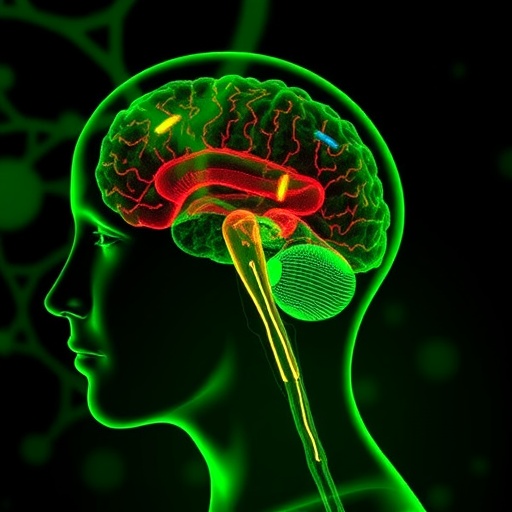
In a groundbreaking advancement poised to reshape our understanding of emotional regulation and pain processing, researchers have unveiled compelling evidence that activating the nociceptin/orphanin FQ receptor (NOP receptor) substantially dampens both behavioral and neural reactions to conditioned aversive stimuli. This revelation, detailed in a transformative study published in Translational Psychiatry, meticulously dissects the neurobiological pathways through which NOP receptor agonism modulates emotional and sensory responses, carving new avenues for therapeutic interventions targeting anxiety, trauma, and mood disorders.
The nociceptin/orphanin FQ peptide, an endogenous neuropeptide structurally related to opioids but distinct in function, binds selectively to the NOP receptor, a G protein-coupled receptor abundantly distributed across neural circuits implicated in emotion and pain regulation. Historically enigmatic in its role compared to classic opioid receptors, recent research has increasingly illuminated nociceptin’s unique capacity to fine-tune behavioral and physiological responses to stress and adverse environments. The current study expands this knowledge by providing an integrative examination of the receptor’s ability to attenuate the learned behavioral aversions and corresponding neural activity that arise from conditioned negative stimuli.
Through the deployment of precise pharmacological agonists targeting the NOP receptor, the investigative team embarked upon a multi-modal exploration, employing both behavioral assays in animal models and cutting-edge neuroimaging techniques in humans. Subjects exposed to stimuli previously paired with negative outcomes demonstrated reduced avoidance behaviors and diminished neural activation within key brain regions such as the amygdala, prefrontal cortex, and insular cortex following receptor activation. These findings elucidate how NOP receptor engagement effectively weakens the salience of threats that are internally represented through associative learning rather than immediate sensory input.
Critically, the attenuation of aversive responses does not imply a blunt suppression of sensation or cognition but rather a selective downregulation of maladaptive, conditioned fear responses. This nuanced modulation suggests potential for therapeutic application in conditions characterized by pathological fear conditioning, such as post-traumatic stress disorder (PTSD) and phobias, where heightened reactivity to environmental cues perpetuates chronic distress and dysfunction. By targeting the NOP receptor’s signaling cascades, it may be possible to recalibrate the brain’s emotional valence assignment without impairing overall sensory processing or cognitive flexibility.
Neural circuit analyses revealed that nociceptin/orphanin FQ receptor agonism primarily affects glutamatergic and GABAergic neurotransmission within limbic and cortical hubs, thereby restoring inhibitory-excitatory balance disrupted by chronic stress or traumatic conditioning. The dynamic suppression of hyperactive neurons in the amygdala curtails the amplification of fear signals, while the concurrent enhancement of prefrontal regulatory control bolsters top-down inhibition. This dual mechanism fosters an environment conducive to extinction learning, wherein previously threatening stimuli lose their emotional charge, facilitating adaptive coping and resilience.
Furthermore, the study underscores the receptor’s influence on the hypothalamic-pituitary-adrenal (HPA) axis, a critical neuroendocrine system orchestrating the stress response. Agonism of the NOP receptor markedly attenuated cortisol release in response to conditioned stressors, highlighting a systemic role in calibrating both central and peripheral stress pathways. This holistic modulation potentiates the receptor’s candidacy as a molecular target for integrative treatment approaches aimed at mitigating stress-induced psychopathology.
At the molecular level, investigations revealed that NOP receptor activation initiates intracellular signaling via Gi/o protein coupling, resulting in decreased cyclic adenosine monophosphate (cAMP) production and subsequent attenuation of protein kinase A (PKA) activity. These downstream effects culminate in the modulation of gene expression patterns linked to synaptic plasticity, enabling long-term adaptation of neuronal circuits involved in aversive conditioning. The resultant epigenetic landscape adjustments may underlie sustained therapeutic benefits following receptor-targeted interventions.
Importantly, the favorable safety profile observed with NOP receptor agonists distinguishes them from traditional opioid-based treatments, which carry high risk for dependence, tolerance, and adverse side effects. Unlike mu-opioid receptor agonists, nociceptin’s engagement does not produce significant respiratory depression nor pronounced reward-motivated behaviors, presenting a promising alternative for managing affective disorders without compromising patient safety.
These findings emerge within a broader scientific context that increasingly recognizes the complexity of the brain’s neuromodulatory systems beyond classical neurotransmitters. The study’s integrative approach—melding behavioral neuroscience, pharmacology, neuroimaging, and endocrinology—exemplifies the cutting-edge methodologies driving contemporary psychopharmacological research. The identification of the NOP receptor as a pivotal modulator of learned emotional responses heralds a paradigm shift in therapeutic strategies targeting the neurobiology of fear and anxiety.
The translational implications are profound. Pharmaceutical development based on NOP receptor agonists could usher in a new class of anxiolytics and antidepressants capable of dismantling pathological fear memories with enhanced precision. Additionally, adjunctive use in cognitive-behavioral therapies might amplify treatment efficacy by biologically facilitating fear extinction and emotional recalibration.
While the study provides robust mechanistic insights, it also evokes crucial questions about the receptor’s role across diverse populations, comorbid conditions, and chronicity of symptoms. Longitudinal clinical trials will be vital to ascertain optimal dosing regimens, durability of therapeutic effects, and potential interactions with existing pharmacotherapies or psychotherapies. Moreover, given the receptor’s involvement in multiple physiological domains, expanding research into its systemic effects will enrich understanding of its full clinical utility.
In sum, the demonstration of nociceptin/orphanin FQ receptor agonism as a modulator capable of attenuating aversive behavioral and neural responses stands as a landmark in neuropsychopharmacology. By illuminating a previously underappreciated neuromodulatory axis, this work paves the way for innovative, targeted interventions against some of the most debilitating mental health challenges rooted in maladaptive fear conditioning. As science advances, the promise of harnessing the nociceptin system to foster emotional resilience and mental well-being moves ever closer to fruition.
Cite Scienmag News
Glenn Wilkins. (May 30, 2026). Nociceptin Receptor Activation Reduces Aversive Responses. Scienmag. https://scienmag.com/nociceptin-receptor-activation-reduces-aversive-responses/
Glenn Wilkins. "Nociceptin Receptor Activation Reduces Aversive Responses." Scienmag, 30 May 2026, https://scienmag.com/nociceptin-receptor-activation-reduces-aversive-responses/. Accessed 3 September 2026.
Glenn Wilkins. "Nociceptin Receptor Activation Reduces Aversive Responses." Scienmag. May 30, 2026. https://scienmag.com/nociceptin-receptor-activation-reduces-aversive-responses/


