


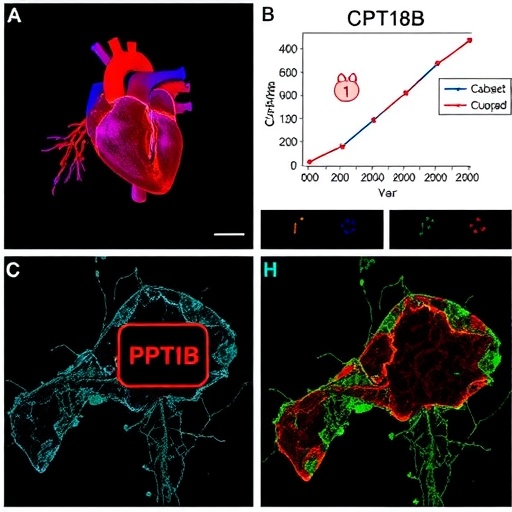
In a groundbreaking study published in Experimental & Molecular Medicine on May 28, 2026, researchers have unveiled a pivotal molecular mechanism contributing to cardiac dysfunction during endotoxic shock, a life-threatening condition often resulting from sepsis. The study, led by Yang N., Yang J., Xu YF., and colleagues, reveals the crucial role of crotonylation at lysine 321 of Carnitine Palmitoyltransferase 1B (CPT1B), a key enzyme in fatty acid metabolism, in modulating heart function under septic conditions. This discovery sheds new light on the metabolic disruptions underlying acute cardiac injury in sepsis and opens avenues for novel therapeutic interventions.
Endotoxic shock is a severe systemic inflammatory response triggered by bacterial endotoxins, particularly lipopolysaccharides (LPS), which frequently culminates in multiple organ failure and death. Among the affected organs, the heart is especially vulnerable, with dysfunction manifesting early and significantly influencing patient outcomes. Despite extensive research, the molecular underpinnings of septic cardiomyopathy remain incompletely understood. The current investigation dives deep into the post-translational modifications of metabolic enzymes, specifically crotonylation, and their impact on cardiac energetics during endotoxic insult.
Crotonylation, a relatively recent addition to the repertoire of post-translational modifications, involves the addition of a crotonyl group to lysine residues on proteins, thereby altering their function and interactions. It has been implicated in chromatin remodeling and gene regulation, but its role in metabolic enzyme modulation is less explored. The team focused on CPT1B because this mitochondrial enzyme governs the rate-limiting step of fatty acid β-oxidation by facilitating the transport of long-chain fatty acids into mitochondria, a critical energy source for the myocardium.
Utilizing an integrative approach combining proteomics, biochemical assays, and in vivo models of endotoxemia, the researchers demonstrated a marked increase in CPT1B crotonylation at lysine 321 following LPS-induced endotoxic shock. This modification significantly impaired CPT1B enzymatic activity, leading to a reduction in fatty acid oxidation rates within cardiomyocytes. Notably, this metabolic shift correlated with decreased ATP production, mitochondrial dysfunction, and the exacerbation of myocardial contractile deficits observed in septic animals.
Further mechanistic studies pinpointed that crotonylation at K321 destabilizes CPT1B conformation, limiting its interaction with essential mitochondrial membrane components and substrates. This insight explains how a single post-translational modification can exert profound effects on cardiac energy metabolism. The disruption of fatty acid oxidation forces the heart to rely increasingly on less efficient glucose metabolism pathways, a metabolic reprogramming known to worsen cardiac performance under stress conditions.
The translational significance of these findings was underscored by experiments showing that pharmacological inhibition of crotonylation restored CPT1B activity and improved cardiac function in endotoxemic mice. Specifically, administration of crotonylation inhibitors preserved mitochondrial integrity and ATP synthesis, resulting in better myocardial contractility and overall survival rates. These promising results highlight crotonylation as a viable target for therapeutic strategies aimed at mitigating septic cardiomyopathy.
In parallel, the study explored upstream regulatory mechanisms driving CPT1B crotonylation during endotoxemia. It identified heightened activity of crotonyltransferases in response to inflammatory signaling cascades triggered by LPS, suggesting that systemic inflammation directly influences metabolic enzyme modifications. This link provides a comprehensive view of how immune activation and metabolism intersect to influence cardiac pathology in septic shock.
Significantly, the researchers noted that crotonylation patterns exhibit temporal dynamics; early-phase crotonylation activates compensatory pathways while sustained modifications lead to energetic failure and functional decline. This temporal dimension offers critical insight into therapeutic windows for intervention. Early modulation of crotonylation might prevent irreversible myocardial injury, a hypothesis warranting further exploration in clinical settings.
Moreover, the study expands the conceptual framework of metabolic regulation in critical illness by integrating epigenetic-like modifications into the realm of mitochondrial biology. Such findings challenge traditional perspectives, promoting a more nuanced understanding of cellular adaptations to systemic insults. Experts anticipate that these insights will stimulate broader investigations into crotonylation’s role across various tissues affected by sepsis.
The implications of this research extend beyond the cardiac context. Since fatty acid metabolism is fundamental to multiple organ systems, aberrant crotonylation may represent a common pathological mechanism in septic multi-organ dysfunction. Investigating this possibility could revolutionize therapeutic design, enabling interventions that target metabolic flexibility and resilience in critical illness.
In addition to its biochemical significance, the identification of CPT1B K321 as a modifiable hotspot for crotonylation adds a valuable molecular biomarker for sepsis-induced cardiac injury. Clinically, this marker could aid in early diagnosis, prognostic assessment, and monitoring therapeutic responses. Future studies are expected to develop sensitive assays capable of detecting CPT1B crotonylation status in patient samples.
The publication’s robust experimental design, combining molecular biology, animal modeling, and pharmacological validation, sets a new standard for translational research in sepsis. Furthermore, the use of advanced mass spectrometry techniques facilitated precise mapping of post-translational modifications, showcasing the power of proteomics in uncovering subtle yet crucial disease mechanisms.
While these findings are transformative, the authors caution that clinical translation requires careful validation given the complexity of human sepsis. The diverse etiology and progression of septic shock necessitate tailored therapeutic approaches, and the interplay of crotonylation with other regulatory modifications like acetylation and ubiquitination must be delineated.
In summary, the elucidation of CPT1B K321 crotonylation as a central driver of cardiac dysfunction during endotoxic shock represents a seminal advancement in our understanding of septic cardiomyopathy. This study bridges metabolic, inflammatory, and epigenetic domains, offering innovative angles for tackling a historically obstinate clinical problem that accounts for significant morbidity and mortality worldwide.
As sepsis continues to challenge global health systems, pioneering research like this paves the way for precision medicine approaches. Targeting specific metabolic enzyme modifications could ultimately transform outcomes for millions of patients with critical septic cardiac injury. The future of sepsis therapy may well hinge on our ability to manipulate the intricate molecular dance revealed in this landmark investigation.
Cite Scienmag News
Nathaniel Bowman. (May 28, 2026). CPT1B K321 Crotonylation Drives Heart Dysfunction in Shock. Scienmag. https://scienmag.com/cpt1b-k321-crotonylation-drives-heart-dysfunction-in-shock/
Nathaniel Bowman. "CPT1B K321 Crotonylation Drives Heart Dysfunction in Shock." Scienmag, 28 May 2026, https://scienmag.com/cpt1b-k321-crotonylation-drives-heart-dysfunction-in-shock/. Accessed 4 September 2026.
Nathaniel Bowman. "CPT1B K321 Crotonylation Drives Heart Dysfunction in Shock." Scienmag. May 28, 2026. https://scienmag.com/cpt1b-k321-crotonylation-drives-heart-dysfunction-in-shock/


