


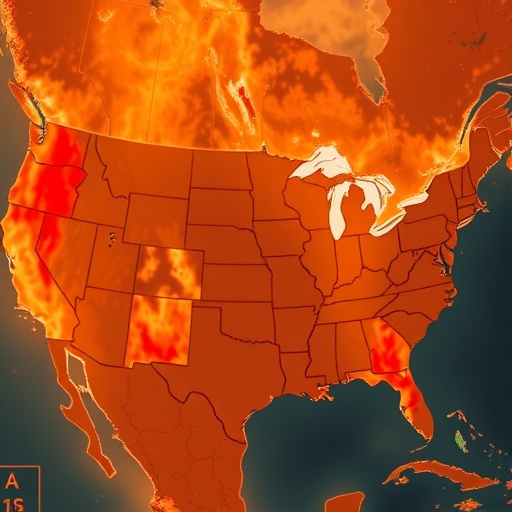
A groundbreaking study conducted by scientists from Case Western Reserve University, University Hospitals, and the Louis Stokes Cleveland VA Medical Center has unveiled alarming projections concerning the future burden of cardiovascular disease in the United States, directly linked to escalating temperatures attributed to climate change. Published in the prestigious journal JAMA Cardiology, this research anticipates a staggering 200% increase in heat-related heart disease cases by the year 2050 if current climate trajectories persist.
This comprehensive investigation meticulously analyzed heart disease incidence rates across every county within the contiguous United States over a seven-year period from 2010 to 2016. Utilizing this extensive epidemiological dataset, researchers developed sophisticated models to forecast how rising ambient temperatures will exacerbate cardiovascular morbidity over the coming decades. They harnessed data from the Global Burden of Disease project to quantify cardiovascular health burdens, incorporated NASA-derived climate models projecting future temperature changes, and integrated population statistics from the U.S. Census Bureau to account for demographic shifts. This multi-dimensional approach enabled nuanced, county-level predictions of heat-related cardiac risk.
The physiological underpinnings connecting heat exposure and cardiovascular distress are well recognized. Elevated environmental temperatures necessitate increased cardiac output to facilitate thermoregulation through enhanced skin perfusion and sweating. This intensified workload stresses the myocardium and heightens the risk of thrombotic events due to alterations in blood viscosity and endothelial function. Vulnerable populations, particularly elderly individuals and those with pre-existing cardiac conditions, face amplified danger as their cardiovascular resilience wanes under thermal stress.
According to Gokul Parameswaran, the lead author and research associate at Case Western Reserve University’s Cardiovascular Research Institute, this study is the first to delineate the geographic variations in heat-associated cardiac disease burden at such a granular scale. The researchers discovered that counties within the Pacific Northwest currently demonstrate the highest baseline rates of heat-related cardiovascular illness. However, the projections reveal that southern states will experience the most pronounced increases in cardiovascular incidents as climate warming accelerates. This regional vulnerability stems from a convergence of factors including existing high prevalence of heart disease, rapid temperature escalation, and socioeconomic challenges such as lower median household incomes and limited healthcare accessibility.
Salil Deo, an associate professor and senior author on the study, emphasized the intersectionality of climate change, health, and socioeconomic disparities. He articulated that climate change must be reframed not solely as an environmental threat but fundamentally as a health equity crisis. The compounded stresses on healthcare infrastructure and socioeconomic resources in disadvantaged regions will exacerbate disparities in heat-related cardiovascular outcomes. These insights call for prioritizing vulnerable communities in the development of mitigation policies and adaptive healthcare interventions.
The demographic component of the projections further compounds concerns. Independent of thermal factors, the aging of the American population is expected to contribute an additional 34% surge in heat-attributable cardiovascular disease burden by 2050. An aging populace inherently carries increased baseline risks for cardiovascular events, and when coupled with intensifying heat stress, the expected cardiac morbidity magnifies substantially. This demographic dimension underscores the urgent need for preemptive public health strategies addressing the intersecting forces of climate and aging.
The study’s implications extend to urban planning and public health policy. Increasing urban green spaces and enhancing tree canopy cover can mitigate urban heat island effects, thus reducing cardiovascular stress among city dwellers. Public health interventions, such as expanding access to cooling centers and subsidizing air conditioning for low-income households, have the potential to alleviate the disproportionate heat burden on marginalized communities. These adaptive measures could serve as critical levers to improve cardiovascular health resilience amid climate change.
Sanjay Rajagopalan, director of the Cardiovascular Research Institute and chief of Cardiovascular Medicine at University Hospitals Harrington Heart & Vascular Institute, reiterated the urgent nature of the findings. He cautioned that climate change’s cardiovascular repercussions are not distant or theoretical but ongoing and escalating threats affecting millions of Americans. Policy decisions on greenhouse gas emissions, urban design, and healthcare resource allocation made today will determine the magnitude of preventable cardiovascular morbidity and mortality experienced in the decades ahead.
This study represents a significant advance in environmental cardiology, a field that investigates how external environmental exposures influence heart health. Rajagopalan’s lab has been instrumental in shifting scientific paradigms to acknowledge environmental determinants alongside traditional cardiovascular risk factors. Their body of work, including this current study, deepens our understanding of the complex interplay between climate, socioeconomic status, demographic trends, and cardiovascular disease dynamics.
In summary, the anticipated tripling of heat-related heart disease in the U.S. by mid-century signals a looming public health crisis tightly bound to climate change and social inequities. It demands urgent, multi-sectoral responses encompassing climate mitigation, health care system preparedness, urban greening initiatives, and targeted support for vulnerable populations. Without concerted action, the cardiovascular toll of rising temperatures will exact a heavy price on American communities, especially the most disadvantaged and medically fragile.
- JAMA Cardiology article DOI
- Case Western Reserve University
- University Hospitals
- Louis Stokes Cleveland VA Medical Center
- Global Burden of Disease
- Centers for Disease Control and Prevention – Heat and Cardiovascular Disease
Image Credits: Credit: Case Western Reserve University
Keywords: Cardiovascular disorders, heat-related heart disease, climate change, environmental cardiology, health equity, urban heat island, aging population, socioeconomic disparities
Cite Scienmag News
Frances Kline. (May 27, 2026). New Study Links Climate Change to Rising Heat-Related Heart Disease Across the Nation. Scienmag. https://scienmag.com/new-study-links-climate-change-to-rising-heat-related-heart-disease-across-the-nation/
Frances Kline. "New Study Links Climate Change to Rising Heat-Related Heart Disease Across the Nation." Scienmag, 27 May 2026, https://scienmag.com/new-study-links-climate-change-to-rising-heat-related-heart-disease-across-the-nation/. Accessed 3 September 2026.
Frances Kline. "New Study Links Climate Change to Rising Heat-Related Heart Disease Across the Nation." Scienmag. May 27, 2026. https://scienmag.com/new-study-links-climate-change-to-rising-heat-related-heart-disease-across-the-nation/


