


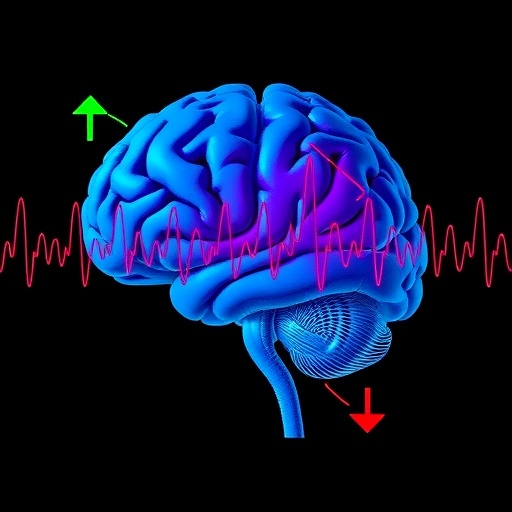
In the evolving landscape of neuroscience, the modulation of brain rhythms has emerged as a promising frontier for therapeutic interventions in neurological and psychiatric disorders. A groundbreaking study published in Translational Psychiatry presents an innovative approach leveraging frequency-tuned stimulation of the trigeminal nerve to influence hippocampal rhythms, offering fresh insights into non-invasive neuromodulation techniques.
The hippocampus, a critical brain structure involved in memory formation and spatial navigation, operates through complex rhythmic patterns. These oscillations, notably in the theta and gamma frequency bands, are pivotal for cognitive processes. Dysregulation of hippocampal rhythms has been implicated in various clinical conditions including epilepsy, depression, and Alzheimer’s disease. Addressing these aberrations via targeted neuromodulation could revolutionize therapeutic strategies.
Traditionally, neuromodulation methods such as deep brain stimulation have relied on invasive procedures with inherent risks. The study’s approach, utilizing trigeminal nerve stimulation (TNS), proposes a non-invasive mechanism to entrain hippocampal rhythms effectively. The trigeminal nerve, the largest cranial nerve, possesses widespread connections influencing a wide array of brain regions, including the hippocampus, making it an ideal target for therapeutic modulation.
Central to this research is the concept of frequency-tuning — optimizing stimulation parameters to align with endogenous brain rhythms for maximal efficacy. By calibrating TNS to specific frequencies corresponding to hippocampal oscillations, the study demonstrated the ability to selectively modulate these rhythms, enhancing their amplitude and coherence. This frequency-matched modulation signifies a leap toward personalized neuromodulation protocols anchored in neurophysiological principles.
Methodologically, the researchers applied varying frequency patterns of electrical stimulation to the trigeminal nerve in experimental models while monitoring hippocampal electrophysiological responses. The data revealed a robust entrainment of hippocampal activity to the externally delivered frequencies, underscoring the functional connectivity between peripheral nerve stimulation and central brain rhythms. These findings not only validate the trigeminal pathway as a conduit for neuromodulation but also elucidate the dynamics of rhythm propagation across neural circuits.
Further, the study explored the duration and intensity parameters to establish a therapeutic window wherein stimulation yields optimal rhythm enhancement without adverse effects. This nuanced understanding aids in the design of stimulation protocols that balance efficacy with safety, a critical consideration for translational application.
Crucially, the modulation of hippocampal rhythms via TNS exhibited potential behavioral correlates. Animals subjected to frequency-tuned TNS displayed improved performance in memory tasks, linking neurophysiological changes to functional outcomes. This translational relevance paves the way for future clinical trials targeting cognitive impairments through non-invasive nerve stimulation modalities.
The implications of these discoveries resonate beyond fundamental neuroscience, hinting at novel interventions for epilepsy management by stabilizing pathological hippocampal rhythms. Moreover, mood disorders characterized by disrupted neural synchrony might benefit from tailored frequency-tuned stimulation, potentially alleviating symptoms through normalization of neural oscillations.
By mapping the trigeminal nerve’s role in mediating hippocampal rhythm dynamics, this research introduces a paradigm shift in neuromodulation, emphasizing peripheral targets for central nervous system effects. This approach mitigates the invasiveness and complexity associated with current brain stimulation techniques, suggesting wider applicability and patient acceptability.
Importantly, the study incorporates advanced signal processing and electrophysiological recording technologies to delineate the specificity of frequency tuning. The precision achieved in matching stimulation frequencies with endogenous oscillations exemplifies the integration of engineering principles with neurobiology, heralding a new era of bioelectronic medicine.
The research team also highlights the potential for adaptive stimulation devices capable of real-time frequency adjustment based on ongoing neural activity, enhancing the personalization and responsiveness of therapy. Such closed-loop systems could dynamically entrain hippocampal rhythms, optimizing treatment efficacy in fluctuating clinical states.
While the findings are promising, the authors acknowledge limitations, including the need for extensive human trials to validate efficacy and safety in clinical populations. Ethical considerations around long-term neuromodulation and neural plasticity effects warrant comprehensive investigation to ensure responsible therapeutic deployment.
Moreover, the study opens avenues for exploring multi-site nerve stimulation strategies, combining trigeminal nerve modulation with other peripheral targets to synergistically influence broader brain networks involved in cognition and emotion. This holistic perspective could refine neuromodulation frameworks for complex neuropsychiatric conditions.
In essence, this pioneering work underscores the feasibility of using peripheral nerve stimulation, specifically tuned to intrinsic brain frequencies, to non-invasively regulate critical neural rhythms. Its translational potential represents a beacon of hope for millions suffering from neurological and psychiatric disorders with limited treatment options.
As the field advances, integrating computational modeling with empirical data might further enhance frequency tuning precision, optimizing stimulation paradigms tailored to individual neurophysiological profiles. This interdisciplinary synergy stands to redefine interventions across a spectrum of brain disorders.
In conclusion, frequency-tuned trigeminal nerve stimulation emerges as a versatile and innovative tool capable of modulating hippocampal rhythms with therapeutic implications. The journey from bench to bedside promises to transform neuromodulation, offering scalable, safe, and effective treatments through a finely calibrated interface between peripheral nerves and central brain circuits.
Cite Scienmag News
Glenn Wilkins. (May 27, 2026). Frequency-Tuned Trigeminal Stimulation Modulates Hippocampal Rhythms. Scienmag. https://scienmag.com/frequency-tuned-trigeminal-stimulation-modulates-hippocampal-rhythms/
Glenn Wilkins. "Frequency-Tuned Trigeminal Stimulation Modulates Hippocampal Rhythms." Scienmag, 27 May 2026, https://scienmag.com/frequency-tuned-trigeminal-stimulation-modulates-hippocampal-rhythms/. Accessed 4 September 2026.
Glenn Wilkins. "Frequency-Tuned Trigeminal Stimulation Modulates Hippocampal Rhythms." Scienmag. May 27, 2026. https://scienmag.com/frequency-tuned-trigeminal-stimulation-modulates-hippocampal-rhythms/


