


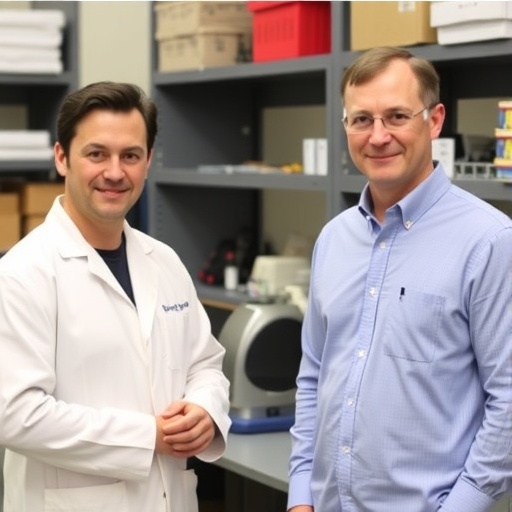
The Max Planck Institute for Polymer Research (MPIP) in Mainz has proudly welcomed the inaugural cohort of the Poly-ABROAD Visiting Student Program, a visionary international collaboration with the Macromolecules Innovation Institute at Virginia Polytechnic Institute and State University (Virginia Tech). This groundbreaking initiative embodies an ambitious agenda to fortify transatlantic connections in polymer and materials science by inviting six exceptional graduate and undergraduate researchers from Virginia Tech to immerse themselves in MPIP’s cutting-edge research environment for a period of three months, spanning from May to August. The program’s overarching mission is to foster cross-border scientific dialogue and to nurture the next generation of polymer scientists through profound international engagement.
The Poly-ABROAD program, an acronym for Polymer Science Advancing Biologically-Inspired Research Opportunities Across Disciplines, is secured through a prestigious grant from the U.S. National Science Foundation, ensuring rigorous support and recognition. This initiative harnesses the power of interdisciplinary collaboration, enabling early-career scientists to participate in pioneering projects at MPIP that range from fundamental polymer physics to applied materials engineering. Such projects include the design and synthesis of biocompatible hydrogels tailored for advanced medical applications, the creation of multifunctional polymer composites optimized for flexible electronic devices, and the development of sustainable polymeric materials exhibiting self-healing capabilities inspired by natural systems.
This collaborative approach reflects the complex, multifaceted nature of modern polymer research, wherein understanding soft matter behavior at molecular and supramolecular scales is crucial for transformative technological advances. MPs’ advanced spectroscopy platforms and expertise in interface research provide an unparalleled environment for probing the nuanced interactions dictating polymer structure-property relationships. The visiting students gain direct access to these specialized resources, enabling them to contribute meaningfully to projects focused on biopolymer nanocomposites designed for environmental remediation, particularly targeting water purification technologies.
The selection process for these visiting scholars reflects a rigorous standard, emphasizing academic excellence and prior research mastery in polymer science, chemistry, and materials engineering. Each student brings a unique perspective, drawn from their diverse research backgrounds at Virginia Tech, thus enriching the collaborative milieu at MPIP. This dynamic exchange exemplifies how integrating varied scientific cultures and methodologies can catalyze innovation, pushing the frontiers of knowledge beyond national boundaries.
John Matson, a Professor of Chemistry at Virginia Tech and a pivotal figure in inaugurating the Poly-ABROAD initiative, draws on his experience as a Humboldt Research Fellow at MPIP to underscore the value of an open, interdisciplinary research landscape. His collaborative vision, shared with co-leader Michael Schulz, who also benefited from research tenures at MPIP, coalesced into a program designed to provide immersive international experiences for rising scientists. Their goal is not only to advance polymer science but also to build robust, long-lasting scientific networks that transcend geography.
The integration of Poly-ABROAD participants into the prestigious Max Planck Graduate Center with the Johannes Gutenberg University Mainz (MPGC) further enhances the developmental impact of the program. The MPGC embodies a vibrant confluence of doctoral-level scientific inquiry, supported by the Max Planck Society and the Rhineland-Palatinate Ministry of Science and Health. It offers a highly structured curriculum designed to cultivate interdisciplinary skills, facilitate scientific networking, and provide access to state-of-the-art facilities. Such an environment primes participants for the multifaceted challenges inherent in leading-edge polymer and materials research.
The interdisciplinary framework of MPGC means that students not only engage with polymer science but also benefit from interactions with researchers focused on chemistry, physics, and engineering disciplines. This cross-pollination fosters holistic approaches to solving complex scientific problems, setting a standard for graduate education on a global scale. Science Minister Clemens Hoch of Rhineland-Palatinate highlights the MPGC’s role in reinforcing international scientific exchange, underscoring its strategic importance for fostering collaborations with leading institutions in the United States.
During their residency at MPIP, visiting researchers witness firsthand how exposure to international and multicultural scientific environments enhances creativity and accelerates scientific progress. Interaction with fellow doctoral candidates from diverse backgrounds facilitates an exchange of ideas that transcends academic topics, encompassing valuable intercultural competencies that are increasingly indispensable in today’s globalized research landscape. This cultural and intellectual engagement forms a critical component of professional development for early-career scientists.
The Poly-ABROAD program also strategically positions Mainz and the wider Rhineland-Palatinate region as prominent hubs for multidisciplinary research in polymer science, boosting their international visibility. By strengthening scientific ties with top American institutions, the initiative elevates the profile of German research while fostering reciprocal exchanges that promise to enrich polymer science globally. This model of collaboration serves as a blueprint for how localized expertise can integrate into global scientific networks.
Tanja Weil, Director of MPIP, emphasizes the transformative potential of the initiative. She highlights that Poly-ABROAD exemplifies how sustained international collaboration can propel both scientific innovation and the professional growth of young researchers. The program’s unique blend of research immersion and community building provides participants with invaluable insights into MPIP’s interdisciplinary ethos and the collaborative spirit epitomized by the Max Planck Graduate Center.
The research projects tackled during the program leverage cutting-edge methodologies to explore the interface between biology and polymer science. By investigating biologically inspired polymer networks and nanocomposites, researchers aim to unlock new functional properties such as enhanced mechanical resilience, stimuli-responsive behavior, and environmental sustainability. These efforts align with global scientific priorities surrounding healthcare innovation, flexible electronics, and ecological remediation, showcasing the broad societal relevance of polymer research.
Crucially, the program encourages the integration of emerging scientists into global scientific dialogues, bridging geographic, cultural, and disciplinary divides. This fosters a generation of researchers proficient in both technical excellence and international collaboration—qualities essential for addressing the complex, interdisciplinary challenges that characterize modern science and technology domains.
In summary, the Poly-ABROAD Visiting Student Program embodies a bold stride towards cultivating transnational partnerships in polymer science. By embedding promising early-career researchers within the rich scientific ecosystem of MPIP and the MPGC, the initiative promises to accelerate scientific discovery, broaden professional horizons, and fortify the global polymer science community for years to come.
News Publication Date: [Not provided]
Web References: https://mediasvc.eurekalert.org/Api/v1/Multimedia/aa5d199d-7229-4bca-972b-370d12d650f3/Rendition/low-res/Content/Public
Cite Scienmag News
Neil Sanderson. (May 27, 2026). Max Planck Institute for Polymer Research Partners with Virginia Tech to Launch International Visiting Student Program. Scienmag. https://scienmag.com/max-planck-institute-for-polymer-research-partners-with-virginia-tech-to-launch-international-visiting-student-program/
Neil Sanderson. "Max Planck Institute for Polymer Research Partners with Virginia Tech to Launch International Visiting Student Program." Scienmag, 27 May 2026, https://scienmag.com/max-planck-institute-for-polymer-research-partners-with-virginia-tech-to-launch-international-visiting-student-program/. Accessed 4 September 2026.
Neil Sanderson. "Max Planck Institute for Polymer Research Partners with Virginia Tech to Launch International Visiting Student Program." Scienmag. May 27, 2026. https://scienmag.com/max-planck-institute-for-polymer-research-partners-with-virginia-tech-to-launch-international-visiting-student-program/


