


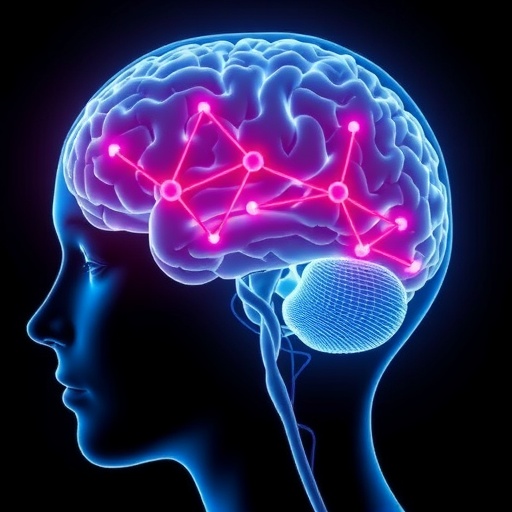
In a groundbreaking preclinical study, researchers at Northwestern Medicine have unveiled a novel angle on why women face greater risks of memory loss and Alzheimer’s disease as they age, particularly following menopause. The study zeroes in on a previously overlooked facet of brain biology—the extracellular matrix (ECM)—and its intricate relationship with estrogen, adding critical depth to our understanding of neurodegeneration linked to hormonal change.
Alzheimer’s disease (AD) disproportionately affects women, with approximately two-thirds of diagnosed cases occurring in females. Long-standing hypotheses have implicated estrogen decline after menopause as a potential driver behind this vulnerability, but the precise mechanisms remained elusive. This new inquiry sheds light on how estrogen deficiency disrupts the brain’s microenvironment, especially the ECM that forms the structural scaffold around neurons and glia, profoundly impacting memory circuits in aging females.
Unlike previous investigations predominantly focused on neurons and glial cells, this study directs attention to the ECM—a complex, heterogeneous network of proteins and polysaccharides occupying about 20% of brain volume. This space between cells is instrumental for synaptic plasticity, neural connectivity, and overall cellular homeostasis. By altering ECM properties, estrogen loss may degrade communication between brain cells, undermining critical cognitive functions.
Using genetically engineered mouse models lacking aromatase, the enzyme necessity for local estrogen synthesis, the investigators dissected the consequences of brain-specific estrogen depletion. They compared young and aged mice of both sexes, assessing memory, socio-affective behaviors, and gene expression patterns in the hippocampus—a region indispensable for learning and spatial memory. Their findings compellingly suggest that estrogen decline uniquely perturbs the ECM in aged females, correlating with diminished cognitive performance and behavioral changes.
Dr. Hong Zhao, the study’s lead author and Northwestern research professor, emphasized the sex-dependent sensitivity of the ECM to estrogen loss. “Our work reveals that older females experience pronounced alterations in the ECM when brain-derived estrogen declines, a change not observed in males. This sheds new light on why women might be intrinsically more susceptible to Alzheimer’s following menopause,” Zhao stated.
Further molecular analyses demonstrated that estrogen deficiency affects genes regulating ECM composition and remodeling enzymes. These molecular disruptions likely compromise the ECM’s supportive role, leading to an impaired neural milieu that hampers synaptic signaling and plasticity. Consequently, this structural impairment may set the stage for memory loss and mood disturbances prevalent in postmenopausal women.
The insight into ECM involvement marks a potential paradigm shift in Alzheimer’s therapeutics. While current pharmacological strategies like anti-amyloid antibodies target hallmark protein aggregates, their efficacy in halting cognitive decline remains contentious. The Northwestern team proposes complementing these with interventions aimed at restoring ECM integrity to foster a brain environment conducive to neuronal function and resilience.
Hormone replacement therapy (HRT) has been explored as a countermeasure to estrogen loss, but inconsistent clinical outcomes have clouded its utility. Variability in timing, hormone formulations, and study methodologies may explain mixed results. The findings from this study underscore the need for refined HRT approaches that specifically preserve ECM health, potentially offering enhanced neuroprotection without attendant risks.
The research underscores the vital interplay between endocrine regulation and neural microarchitecture. Estrogen from local brain synthesis plays a predominant role in females, contrasting with males where peripheral tissues also contribute. Hence, the loss of brain-derived estrogen in females disproportionately impacts ECM dynamics and associated cognitive faculties, illuminating a critical sex-specific vulnerability.
As this pioneering study unfolds, it opens new research avenues exploring biomarkers of ECM disruption as predictors of Alzheimer’s risk post-menopause. Moreover, it highlights the importance of maintaining hormonal balance and brain microenvironment integrity to mitigate age-related cognitive decline.
Taken together, the results advocate for a holistic view of brain aging in women, integrating hormonal, molecular, and cellular frameworks. Understanding how estrogen orchestrates ECM maintenance may yield transformative strategies to delay or prevent dementia, improving quality of life for millions.
The publication of this research in Aging Cell heralds an exciting advancement in neuroscience and endocrinology. By revealing the nuanced roles of estrogen in maintaining the extracellular matrix, scientists are poised to develop targeted therapies that address the root causes of female-specific cognitive vulnerabilities, potentially shifting the future landscape of Alzheimer’s prevention.
News Publication Date:
26-May-2026
Web References:
Not provided
References:
Not provided
Cite Scienmag News
Cassandra Pierce. (May 26, 2026). Estrogen Deficiency in Brain Tissue Tied to Memory Decline Following Menopause. Scienmag. https://scienmag.com/estrogen-deficiency-in-brain-tissue-tied-to-memory-decline-following-menopause/
Cassandra Pierce. "Estrogen Deficiency in Brain Tissue Tied to Memory Decline Following Menopause." Scienmag, 26 May 2026, https://scienmag.com/estrogen-deficiency-in-brain-tissue-tied-to-memory-decline-following-menopause/. Accessed 6 September 2026.
Cassandra Pierce. "Estrogen Deficiency in Brain Tissue Tied to Memory Decline Following Menopause." Scienmag. May 26, 2026. https://scienmag.com/estrogen-deficiency-in-brain-tissue-tied-to-memory-decline-following-menopause/


