


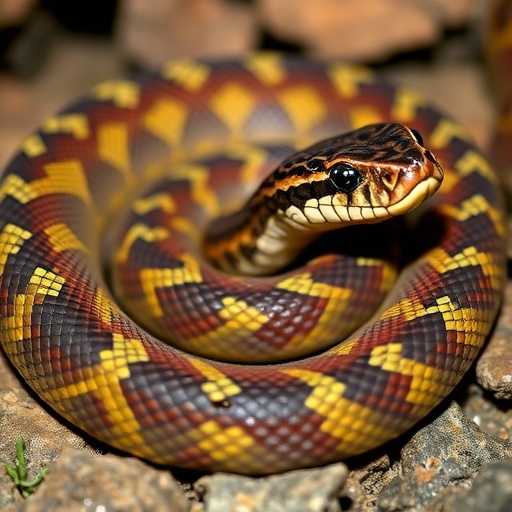
In a groundbreaking study sweeping through the southeastern United States, researchers have uncovered a complex and alarming panorama of pathogen prevalence among native wild snakes. This extensive health assessment, focusing on multiple infectious agents, offers an unprecedented multidimensional view of snake population health that is critical to conservation efforts and biosecurity management. Snakes, often overlooked despite their ecological importance, face existential threats not merely from habitat loss but increasingly from infectious diseases, with fungal pathogens such as Ophidiomyces ophidiicola (Oo), the causative agent of ophidiomycosis or snake fungal disease, standing out as principal culprits.
The research pivots on a meticulous survey that cohesively examined seven distinct pathogens in over 500 snakes across two wildlife refuges in South Carolina and Florida, encompassing 29 species. Integrating field captures, live animal sampling, blood collection, and rare postmortem analyses, this experimental study presents a robust dataset on pathogen distributions and coinfection dynamics in free-ranging snakes. Notably, this research expands the investigative lens beyond the fungal pathogen Oo, embracing a holistic approach to better delineate snake health trajectories previously uncharted in controlled and wild populations alike.
Among the most striking revelations is that while nearly 20% of snakes showed no detectable pathogens, a significant majority harbored at least one infectious agent. The bacterium Salmonella enterica emerged as the most prevalent, colonizing 63% of individuals sampled, a figure that underscores the bacterium’s ecological ubiquity and potential zoonotic threats. Meanwhile, Hepatozoon spp., a genus of tickborne parasites, was identified in 53% of snakes, demonstrating the intricate vector-host-pathogen interplay prevalent in these ecosystems.
In a surprising discovery, researchers documented Mycoplasma spp. infections in 18% of snakes, highlighting the emergence of an antibiotic-resistant pathogen never before reported in wild snakes in the United States. This finding has profound implications for disease management, as Mycoplasma infections can precipitate upper respiratory disease syndromes which substantially debilitate snake health and may catalyze further opportunistic infections.
Coinfections were pervasive, with 44% of snakes harboring multiple pathogens. The occurrence of dual, triple, and even quadruple infections details a pathogen landscape where immune system suppression from one infection may exacerbate vulnerability to others. This multifactorial disease burden complicates treatment and management efforts, emphasizing the necessity of integrative surveillance frameworks in wildlife disease ecology.
Species-specific analyses revealed a concerning susceptibility pattern: pygmy rattlesnakes were disproportionately afflicted with snake fungal disease, with 12 out of 34 rattlesnakes testing positive for Oo, many manifesting overt clinical symptoms. This contrasts sharply with eastern ribbon snakes and ring-necked snakes, which exhibited markedly lower infection incidences, suggesting interspecific variations in immune resilience, habitat overlap, or behavioral exposure to sources of infection.
The prevalence of Raillietiella orientalis (Ro), a parasitic crustacean known as snake lungworm, was similarly concentrated in rattlesnakes, found in 14 of 34 individuals sampled. This invasive parasite’s distribution was notably absent or minimal in other species, such as Florida green watersnakes, painting a nuanced picture of host-parasite coevolution and invasive species impacts. The presence of Ro in rattlesnakes appears linked to their dietary habits, particularly predation on lizards and frogs, which serve as reservoirs for this parasite.
Geographical disparities also emerged: snakes sampled in Georgia showed significantly higher Oo prevalence, whereas Ro infections were detected exclusively in Florida populations. This spatial heterogeneity may reflect environmental factors, host density, or vector availability that govern pathogen dynamics. Furthermore, physical symptoms like skin lesions correlated starkly with Oo infection status, with over 30% of snakes exhibiting lesions testing positive for the fungus versus a mere 2% among unaffected individuals, reinforcing lesion presence as a critical diagnostic indicator.
Despite these illuminating findings, the study acknowledges methodological limitations including sampling constraints confined geographically to a handful of counties and detection challenges for Ro, especially in live animals due to intermittent fecal shedding that hampers consistent diagnosis. Consequently, prevalence rates, particularly for Ro, are likely conservative estimates, underscoring the need for refined detection methodologies and extended spatial monitoring.
Crucially, the data have ramifications extending beyond conservation biology into invasive species management, particularly as non-native Burmese pythons and brown anoles, both established in Florida ecosystems, are recognized as competent hosts for Ro, potentially facilitating novel transmission pathways and amplifying ecological consequences. This highlights the intricate interplay between native and invasive species in pathogen spread and ecosystem health.
The integration of these findings provides foundational knowledge essential for preventing pathogen spillover in wild and captive snake populations, especially pertinent in wildlife translocation and rehabilitation scenarios where biosecurity measures are paramount. The researchers emphasize prudence in moving snakes across regions to forestall inadvertent pathogen introduction that could trigger cascading health crises within vulnerable populations.
By casting a wide net on snake pathogens and synergistically analyzing coinfection effects, this study elevates the understanding of reptilian disease ecology and frames a roadmap for targeted interventions. As global biodiversity faces unprecedented pressures from anthropogenic and biological threats, such empirical evidence is indispensable for informed stewardship of these enigmatic and vital reptilian guardians.
Cite Scienmag News
Margaret Porter. (May 26, 2026). Rattlesnakes Identified as Highly Susceptible to Fungal Diseases and Parasitic Lung Infections. Scienmag. https://scienmag.com/rattlesnakes-identified-as-highly-susceptible-to-fungal-diseases-and-parasitic-lung-infections/
Margaret Porter. "Rattlesnakes Identified as Highly Susceptible to Fungal Diseases and Parasitic Lung Infections." Scienmag, 26 May 2026, https://scienmag.com/rattlesnakes-identified-as-highly-susceptible-to-fungal-diseases-and-parasitic-lung-infections/. Accessed 6 September 2026.
Margaret Porter. "Rattlesnakes Identified as Highly Susceptible to Fungal Diseases and Parasitic Lung Infections." Scienmag. May 26, 2026. https://scienmag.com/rattlesnakes-identified-as-highly-susceptible-to-fungal-diseases-and-parasitic-lung-infections/


