


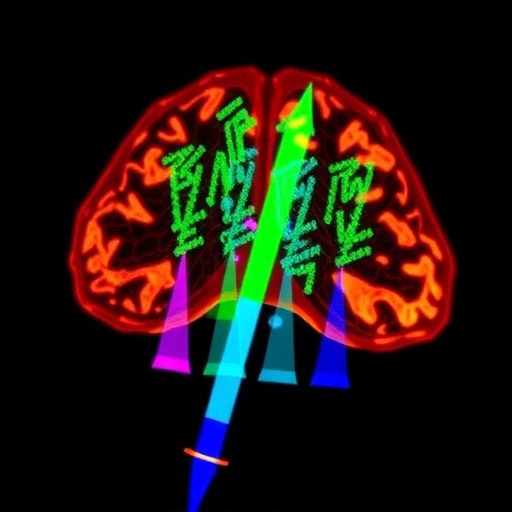
In a striking advancement bridging neurobiology and social behavior, a recent study published in Nature Communications unravels the enigmatic mechanisms by which GABAergic signaling in NG2 glial cells influences empathy-like responses in mammals. This groundbreaking research sheds light on how subtle neurochemical interactions within the brain can confer complex social behaviors, specifically under conditions of observational social defeat—a paradigm often used to model empathetic and stress responses in rodents.
Empathy, the capacity to perceive and resonate with the feelings of others, traditionally has been attributed to neuronal networks within the cerebral cortex and limbic system. However, the new findings pivot the focus toward an often-overlooked class of glial cells known as NG2 glia or oligodendrocyte precursor cells. Until recently, these glia were primarily recognized for their role in myelination and support of neuronal architecture. Jian and colleagues challenge this notion by demonstrating that NG2 cells partake actively in modulating social behaviors through neurotransmitter-mediated signaling pathways.
The study utilized a sophisticated observational social defeat model in mice, whereby a subject mouse witnesses the social defeat of a conspecific. This model robustly mimics aspects of social stress and is known to elicit behavioral changes reminiscent of empathy and social anxiety. Remarkably, during this paradigm, the researchers discovered an upregulation of GABAergic signaling within NG2 glia, indicating that these cells dynamically respond to the social environment and possibly modulate affective processing.
At the neurochemical level, GABA (gamma-Aminobutyric acid) serves as the primary inhibitory neurotransmitter in the mammalian central nervous system. The involvement of GABAergic signaling within NG2 glial cells underscores a novel intercellular communication pathway beyond the classical neuron-to-neuron synapse. Jian et al. employed cutting-edge techniques, including in vivo calcium imaging and optogenetics, to demonstrate that GABA receptor activation on NG2 cells modulates their activity and subsequent influence on neighboring neurons involved in emotional regulation.
The implications of these findings extend beyond understanding empathy-like behavior; they reveal a previously underappreciated glial mechanism that could influence susceptibility and resilience to social stressors. Through manipulations of GABA signaling pathways specifically within NG2 cells, the researchers were able to bidirectionally modulate the expression of observational fear and anxiety-like behaviors. These causal manipulations confirm the functional importance of NG2 glia in social behavior circuits.
Mechanistically, the study posits that NG2 cells, upon activation via GABAergic inputs during observation of social defeat, release factors that modulate synaptic plasticity and neuronal excitability. This glia-to-neuron signaling alters the neural ensembles implicated in empathy and stress processing, effectively tuning the observer’s emotional response to a witnessed negative social event. This finding enriches our understanding of how cellular diversity within the brain orchestrates complex social experiences.
From a clinical standpoint, these discoveries illuminate potential targets for intervention in psychiatric disorders characterized by impaired social cognition, such as autism spectrum disorder, social anxiety, and depression. Pharmacological modulation of GABA receptors on glial cells might provide a novel strategy to alleviate social dysfunction. Moreover, the study opens avenues for exploring how glial dysfunction could contribute to psychopathologies where empathy deficits are prominent.
The research methodology combined molecular genetics, behavioral neuroscience, and advanced imaging, enabling a multi-dimensional analysis of cellular and circuit-level processes. For instance, selective knockdown of GABA receptor subunits in NG2 cells was accomplished using CRISPR-Cas9 techniques alongside viral vector delivery, a testament to the precision of modern neurobiological tools. This approach ensured that observed behavioral phenotypes were attributable to specific glial modulation, thus avoiding confounding systemic effects.
Furthermore, the temporal dynamics of GABA signaling during social observation were elucidated with in vivo two-photon microscopy revealing rapid glial calcium transients corresponding with moments of witnessed social stress. Such real-time monitoring delineates the fine temporal scales at which glia contribute to emotional processing, challenging the long-held neuron-centric paradigm of behavioral neuroscience.
Additionally, the study explored downstream signaling cascades within NG2 glia following GABA receptor activation, identifying intracellular pathways involving cyclic AMP and calcium/calmodulin-dependent protein kinase that may mediate the release of neuromodulatory factors. Uncovering these molecular underpinnings deepens the mechanistic insight into how glial cells translate neurotransmitter signals into functional outputs impacting brain circuitry.
Importantly, these findings provoke a reevaluation of the broader role of glia in brain function. Rather than mere support cells, NG2 glia here emerge as active participants in shaping not only structural but also functional aspects of neural networks that underlie complex behaviors like empathy. This shift in perspective encourages the neuroscience community to investigate glial contributions across various cognitive and affective domains.
The implications for understanding social cognition in evolutionarily conserved systems are profound. Since empathy-like behaviors have adaptive significance for species survival and social organization, the cellular actors identified in this study offer a window into the evolutionary neurobiology of sociality. It sparks curiosity about how glial functions might have co-evolved to support intricate emotional and social processing in higher mammals, including humans.
Overall, this landmark study by Jian et al. marks a paradigm shift, implicating GABAergic NG2 glial signaling as a critical nexus where environmental, cellular, and molecular factors converge to mediate empathy-like behaviors under social stress. As neuroscience moves deeper into the cellular heterogeneity of the brain, the role of glia in modulating complex social-emotional phenomena is poised to become a fertile field for further discoveries and therapeutic innovation.
Cite Scienmag News
Cassandra Pierce. (May 25, 2026). GABA in NG2 Glia Drives Empathy-Like Behavior. Scienmag. https://scienmag.com/gaba-in-ng2-glia-drives-empathy-like-behavior/
Cassandra Pierce. "GABA in NG2 Glia Drives Empathy-Like Behavior." Scienmag, 25 May 2026, https://scienmag.com/gaba-in-ng2-glia-drives-empathy-like-behavior/. Accessed 3 September 2026.
Cassandra Pierce. "GABA in NG2 Glia Drives Empathy-Like Behavior." Scienmag. May 25, 2026. https://scienmag.com/gaba-in-ng2-glia-drives-empathy-like-behavior/


