

Tuesday, July 28, 2026
Science
No Result
View All Result
  • Login
  • HOME
  • SCIENCE NEWS
  • CONTACT US
  • HOME
  • SCIENCE NEWS
  • CONTACT US
No Result
View All Result
Scienmag
No Result
View All Result
Home Science News Technology and Engineering

Aortic arch surgery in piglets shows similar lung injury with or without distal perfusion

July 28, 2026
in Technology and Engineering
Reading Time: 2 mins read
0
Aortic arch surgery in piglets shows similar lung injury with or without distal perfusion

Aortic arch surgery in piglets shows similar lung injury with or without distal perfusion

65
SHARES
587
VIEWS
Share on FacebookShare on Twitter
ADVERTISEMENT

In complex aortic arch surgeries for very young patients, protecting the lungs is a central challenge. New research is exploring whether adjusting how blood is delivered during the operation can meaningfully change the degree of lung injury that follows. Using a controlled large-animal model, scientists compared two perfusion strategies designed to reduce systemic stress and preserve organ function during cardiothoracic procedures.

The study focused on neonatal and infant–relevant physiology in a piglet model. Investigators evaluated selective anterograde cerebral perfusion (SACP), a technique that directs oxygenated blood toward the brain in a forward direction during surgical periods when circulation is interrupted. Because lung vulnerability may rise from broader low-flow or inflammatory effects, the team also tested an enhanced approach.

In the second strategy, SACP was combined with distal perfusion (SACP + DP). Distal perfusion extends blood flow beyond the brain, supporting circulation to the lower body and potentially reducing exposure to hypoxic stress or reperfusion-related injury in the lungs. Both groups were managed with moderate hypothermia, a standard protective measure that lowers metabolic demand during surgery.

To determine whether adding distal perfusion improves pulmonary outcomes, researchers looked for indicators of lung injury after the procedure. These readouts allowed the team to assess whether the “more complete” perfusion route translated into measurable organ-level benefit.

Contrary to the expectation that broader perfusion would further protect fragile lung tissue, the results showed comparable lung injury between the SACP-only and SACP + DP conditions. In other words, the additional distal blood delivery did not lead to a detectable reduction in pulmonary impairment in this model.

The implication is clinically important: lung protection during aortic arch repair may depend more on the overall perfusion environment created by the base strategy—here, SACP with moderate hypothermia—than on simply extending distal flow. That finding reframes how clinicians might prioritize optimization efforts during surgery.

While piglet data cannot be directly equated to every human scenario, the work provides mechanistic guidance for the selection of protective perfusion protocols. It suggests that when choosing between these two strategies, the expected pulmonary advantage of distal perfusion may be smaller than previously hoped.

The study, published in Pediatric Research, underscores that “more perfusion” does not automatically mean “less injury.” Ongoing research will be needed to identify which patient-specific variables and physiologic endpoints determine whether distal perfusion offers benefit.

In this viral science news snapshot, the key takeaway is straightforward: in piglets undergoing aortic arch procedures, SACP with moderate hypothermia leads to lung injury levels similar to those seen when distal perfusion is added—challenging a widely intuitive assumption and refining the roadmap for safer pediatric surgery.

Subject of Research: Pulmonary impairment/ lung injury during neonatal and infant aortic arch surgery; comparison of perfusion strategies (SACP vs SACP + DP) with moderate hypothermia.

Article Title: Comparable lung injury with and without distal perfusion during aortic arch procedure in piglets.

Article References: Meier, S., Dieterlen, MT., Mühlfeld, C. et al. Comparable lung injury with and without distal perfusion during aortic arch procedure in piglets. Pediatr Res (2026). https://doi.org/10.1038/s41390-026-05128-8

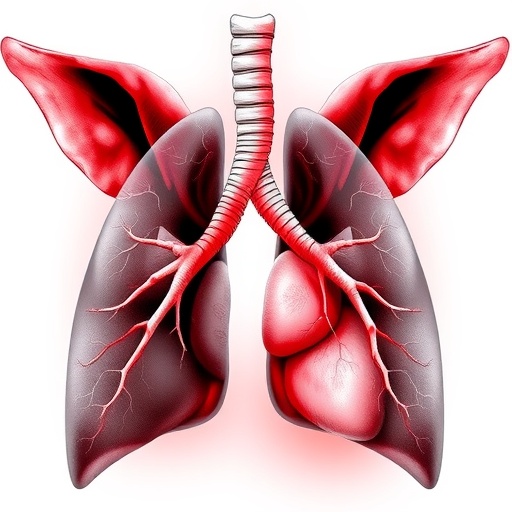
Image Credits: AI Generated

DOI: https://doi.org/10.1038/s41390-026-05128-8

Keywords: Not provided.

Tags: Aortic arch surgery in pigletsblood flow management during aortic arch repairdistal perfusion in cardiac surgeryhypothermic protection during surgerylarge-animal model in surgical researchlung injury preventionneonatal cardiothoracic surgeryorgan protection strategiespulmonary outcomes in neonatal surgeryreperfusion injury in lungsselective anterograde cerebral perfusionsystemic stress reduction techniques
Share26Tweet16
Previous Post

Genetic Links Between Fibromyalgia and Psychiatric and Medical Traits

Next Post

Traditional food program cuts heart failure hospitalizations in Navajo Nation

Related Posts

Ultrathin Multi-Gate Organic Electrochemical Transistors Enable Wearable Multi-Analyte Sensing
Technology and Engineering

Ultrathin Multi-Gate Organic Electrochemical Transistors Enable Wearable Multi-Analyte Sensing

July 28, 2026
Pusan National University Study Spotlighting Federated and Reinforcement Learning for NLP
Technology and Engineering

Pusan National University Study Spotlighting Federated and Reinforcement Learning for NLP

July 28, 2026
Study Evaluates Interrater Reliability of the Bayley-4 in Multidisciplinary Teams
Technology and Engineering

Study Evaluates Interrater Reliability of the Bayley-4 in Multidisciplinary Teams

July 28, 2026
Educating Children to Combat Stigma Linked to Long COVID
Technology and Engineering

Educating Children to Combat Stigma Linked to Long COVID

July 28, 2026
Milk’s Nutritional Profile Changes With Production Methods and Seasons
Technology and Engineering

Milk’s Nutritional Profile Changes With Production Methods and Seasons

July 28, 2026
AI and robotics speed search for improved gut microbiome therapies
Technology and Engineering

AI and robotics speed search for improved gut microbiome therapies

July 28, 2026
Next Post
Traditional food program cuts heart failure hospitalizations in Navajo Nation

Traditional food program cuts heart failure hospitalizations in Navajo Nation

  • Mothers who receive childcare support from maternal grandparents show more

    Mothers who receive childcare support from maternal grandparents show more parental warmth, finds NTU Singapore study

    27656 shares
    Share 11059 Tweet 6912
  • University of Seville Breaks 120-Year-Old Mystery, Revises a Key Einstein Concept

    1061 shares
    Share 424 Tweet 265
  • Bee body mass, pathogens and local climate influence heat tolerance

    682 shares
    Share 273 Tweet 171
  • Researchers record first-ever images and data of a shark experiencing a boat strike

    546 shares
    Share 218 Tweet 137
  • Groundbreaking Clinical Trial Reveals Lubiprostone Enhances Kidney Function

    531 shares
    Share 212 Tweet 133
Science

Embark on a thrilling journey of discovery with Scienmag.com—your ultimate source for cutting-edge breakthroughs. Immerse yourself in a world where curiosity knows no limits and tomorrow’s possibilities become today’s reality!

RECENT NEWS

  • China Issues Consensus on Precision Testing and Molecular Diagnosis for Pancreatic Cancer
  • Pediatrician Office Treatment for Childhood Obesity Proves Effective
  • Traditional food program cuts heart failure hospitalizations in Navajo Nation
  • Aortic arch surgery in piglets shows similar lung injury with or without distal perfusion

Categories

  • Agriculture
  • Anthropology
  • Archaeology
  • Athmospheric
  • Biology
  • Biotechnology
  • Blog
  • Bussines
  • Cancer
  • Chemistry
  • Climate
  • Earth Science
  • Editorial Policy
  • Marine
  • Mathematics
  • Medicine
  • Pediatry
  • Policy
  • Psychology & Psychiatry
  • Science Education
  • Social Science
  • Space
  • Technology and Engineering

Subscribe to Blog via Email

Enter your email address to subscribe to this blog and receive notifications of new posts by email.

Join 5,146 other subscribers

© 2025 Scienmag - Science Magazine

Welcome Back!

Login to your account below

Forgotten Password?

Retrieve your password

Please enter your username or email address to reset your password.

Log In
No Result
View All Result
  • HOME
  • SCIENCE NEWS
  • CONTACT US

© 2025 Scienmag - Science Magazine

Discover more from Science

Subscribe now to keep reading and get access to the full archive.

Continue reading
