


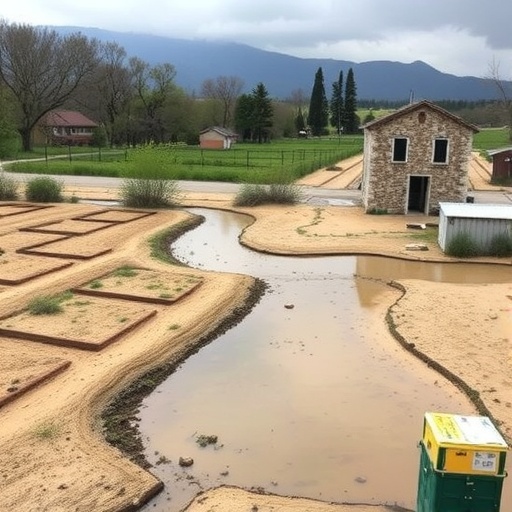
In an increasingly volatile climate, the phenomenon of rapid transitions from drought to flood—termed “weather whiplash”—is emerging as a critical and understudied driver of environmental instability. A recent study published in Nature Water by Sánchez-Murillo, Birkel, Gimeno, and colleagues (2026) uncovers the alarming acceleration of this cycle and highlights its profound implications on climate change governance worldwide. As the Earth’s climate system is pushed further from equilibrium, these abrupt swings between extreme hydrological states are intensifying, posing unprecedented challenges for water resource management, disaster preparedness, and policy frameworks aimed at climate resilience.
Weather whiplash represents an extreme form of climatic variability where the landscape rapidly oscillates from severe drought conditions to intense flooding within a short temporal window. This transition is not a mere curiosity but a destructive force that amplifies the damage caused by either event alone. For example, parched soils hardened during drought periods drastically reduce water infiltration when heavy rains arrive, thus increasing surface runoff and the risk of flash floods. The resulting floods not only devastate communities and infrastructure but also impede recovery from the preceding drought by eroding topsoil and disrupting agricultural cycles. These compounded impacts create complex, cascading crises that institutions often find difficult to address effectively.
The research employs an integrative approach combining hydrological modeling, remote sensing data, and climate projections to quantify the frequency and intensity of drought-to-flood transitions on a global scale. Findings reveal a significant uptick in the incidence of rapid weather whiplash events over recent decades, correlating strongly with anthropogenic warming and altered atmospheric circulation patterns. These shifts are particularly pronounced in regions already vulnerable due to existing water stress or climatic variability, such as parts of the American Southwest, the Mediterranean basin, and South Asia. Such geographic hotspots underscore the uneven distribution of climate impacts and the urgent need for regionalized response strategies.
Mechanistically, the study elucidates how rising temperatures exacerbate these hydrological extremes via multiple pathways. Increased evaporation rates during drought periods exacerbate soil moisture deficits, while warmer air masses carry more water vapor, intensifying precipitation events once they occur. This dual effect creates a paradoxical scenario: landscapes experience prolonged dryness followed by deluges so sudden and intense that natural and engineered drainage systems are overwhelmed. Notably, these transformations occur on timescales that severely limit effective adaptation, challenging the capabilities of existing water governance frameworks designed primarily for more gradual environmental changes.
Moreover, the findings expose significant governance failures in managing the rapid and multifaceted nature of weather whiplash. Traditional disaster risk management policies frequently operate in siloed domains, addressing drought and flood risks separately. However, this study advocates for integrated management approaches that recognize the interdependent nature of these hazards. The authors argue that resilience-building requires novel institutional designs capable of anticipating and flexibly responding to these swift environmental oscillations. Such frameworks must incorporate real-time monitoring, dynamic risk assessment, and cross-sectoral coordination between meteorological services, water agencies, urban planners, and emergency responders.
The research further explores the socio-economic dimensions of rapid drought-to-flood cycles, revealing how vulnerable communities disproportionately bear the brunt of these compound shocks. Marginalized populations often reside in hazard-prone areas and lack access to resources facilitating swift disaster response or recovery. Agricultural livelihoods suffer from interrupted growing seasons and soil degradation, compounding food security concerns. Urban areas face dual threats of water scarcity and infrastructural damage, jeopardizing public health and service delivery. These intersecting vulnerabilities necessitate equity-centered policy interventions that integrate climate justice principles into adaptive planning.
Technological advancements in climate monitoring and forecasting form a pivotal pillar of the study’s proposed solutions. The utilization of satellite remote sensing, coupled with machine learning algorithms, enhances the capacity to detect early signs of impending weather whiplash events. Improved predictive models enable proactive measures such as anticipatory reservoir management, floodplain adjustments, and targeted drought relief programs. The study stresses the importance of investing in robust data infrastructures to operationalize these capabilities globally, particularly in regions with limited technical capacity and infrastructure.
Climate models employed in the analysis project continued intensification of drought-to-flood whiplash frequency under most greenhouse gas emissions scenarios. Even with aggressive mitigation efforts, some degree of exacerbated variability is deemed unavoidable given the inertia built into climate and hydrological systems. This projection amplifies the urgency for adaptive governance mechanisms that can accommodate uncertainty and dynamically incorporate evolving scientific knowledge. The authors emphasize iterative policy frameworks that undergo continual refinement based on emerging data and stakeholder feedback.
In light of these insights, water security emerges as a fundamental priority. Sustaining freshwater availability amidst increasingly erratic precipitation patterns requires innovative management paradigms. Integrating green infrastructure solutions such as wetlands restoration, permeable surfaces, and urban green spaces can modulate surface runoff and enhance natural water storage. Simultaneously, enhancing groundwater recharge and improving water use efficiency are essential strategies to buffer against rapid swings in hydrological supply. These measures, however, hinge on robust institutional support and community engagement to realize their full potential.
The study also interrogates the broader ramifications of weather whiplash beyond hydrology, encompassing ecological and atmospheric feedback loops. Rapid alternations between drought and flood disrupt ecosystems’ phenology and resilience, undermining biodiversity and carbon sequestration functions. Such disturbances can destabilize regional climate patterns, potentially triggering further extremes in a self-reinforcing cycle. This complex interplay accentuates the interconnectedness of Earth system components and the necessity for holistic environmental stewardship grounded in an understanding of multi-scale interactions.
Critically, the authors call for a paradigm shift in climate governance that transcends conventional reactive modalities. They advocate for anticipatory governance models characterized by foresight, flexibility, and inclusiveness. Embedding scenario planning, participatory decision-making, and transdisciplinary collaboration into policy processes can enhance societal capacity to navigate the uncertainties wrought by climate extremes. Furthermore, fostering international cooperation to share knowledge, resources, and best practices can help distribute adaptive burdens more equitably and reinforce collective resilience.
The ethical dimensions of this governance transformation are also underscored. Addressing climate whiplash implicates questions of intergenerational justice, as current adaptation and mitigation choices determine the severity of impacts faced by future populations. The disproportionate effects on historically marginalized groups highlight the imperative for climate policies to be rooted in equity and human rights frameworks. By aligning climate resilience efforts with broader social and environmental justice objectives, societies can aspire toward sustainable and inclusive pathways forward.
Finally, the study’s revelations serve as an urgent call to action for the international scientific and policymaking communities. Rapid drought-to-flood weather whiplash signifies not a marginal risk but a fundamental challenge to climate adaptation architectures worldwide. As environmental extremes accelerate in scale and tempo, entrenched governance paradigms risk becoming obsolete, necessitating innovative approaches underpinned by cutting-edge science and ethical commitment. This study provides a foundational knowledge base and strategic roadmap essential for confronting this defining issue of the 21st century.
Beyond academia, the findings should resonate across all sectors involved in climate risk management, from municipal planners and emergency services to financial institutions and civil society organizations. Understanding the dynamics of weather whiplash is imperative for designing resilient infrastructure, securing food and water supplies, and safeguarding human well-being. Embracing this complex challenge requires concerted effort, informed leadership, and sustained investment in research and governance innovation.
The article by Sánchez-Murillo and colleagues marks a pivotal advancement in quantifying and contextualizing rapid drought-to-flood transitions within the broader climate crisis. Their multidisciplinary approach and comprehensive analysis pave the way for transformative thinking and action in climate resilience. As global climatic uncertainty intensifies, addressing the intricacies of weather whiplash emerges not only as a scientific imperative but also as a moral and practical necessity to protect vulnerable populations and ecosystems alike.
Cite Scienmag News
Violet Maxwell. (May 22, 2026). Rapid Drought-to-Flood Shifts Worsen Climate Governance. Scienmag. https://scienmag.com/rapid-drought-to-flood-shifts-worsen-climate-governance/
Violet Maxwell. "Rapid Drought-to-Flood Shifts Worsen Climate Governance." Scienmag, 22 May 2026, https://scienmag.com/rapid-drought-to-flood-shifts-worsen-climate-governance/. Accessed 3 September 2026.
Violet Maxwell. "Rapid Drought-to-Flood Shifts Worsen Climate Governance." Scienmag. May 22, 2026. https://scienmag.com/rapid-drought-to-flood-shifts-worsen-climate-governance/


