


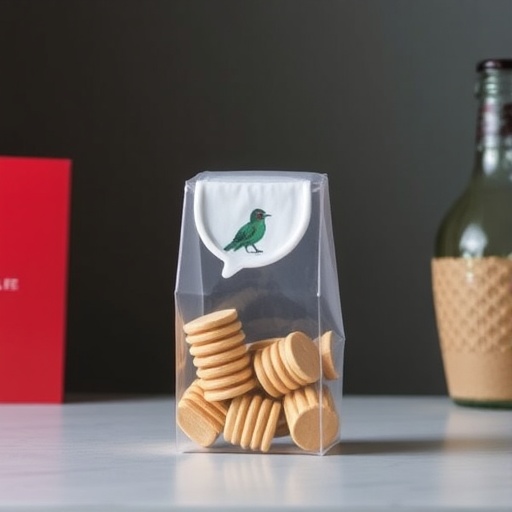
In a groundbreaking series of studies conducted by researchers at Bayes Business School (City, University of London) and Vienna University of Economics and Business, new light has been shed on the subtle yet powerful psychological impacts of transparent packaging on consumer behavior. This research, recently published in the International Journal of Research in Marketing, reveals that transparent packaging does more than merely show the product inside; it actively increases consumers’ psychological desire to own the product, thereby influencing purchasing decisions in a manner previously underestimated by marketers.
The research team undertook a comprehensive experimental investigation involving over 2,000 participants across seven distinct studies, encompassing a variety of product categories, from food items like cookies and gummy bears to everyday commodities like ground cinnamon and mugs. Their consistent findings suggest that transparency in packaging is a potent factor that can override traditional purchasing cues such as brand loyalty, price consideration, and product attractiveness.
At the core of this phenomenon lies the concept of psychological ownership—the feeling consumers experience as if the product were already theirs. Transparent packaging acts as a bridge, minimizing the physical and emotional distance between the shopper and the item. This heightened sense of ownership translates into stronger purchase intentions. The ability to glimpse the actual product creates a perceived reality for the consumer, enhancing emotional engagement and commitment before the transaction is even complete.
The researchers meticulously controlled for various packaging elements, including color and branding, demonstrating that preferences for transparent options were robust irrespective of these factors. For instance, participants consistently selected transparent packaging over opaque alternatives for both red and blue cookie packs, and for different brands of gummy bear pouches. This finding challenges conventional marketing wisdom that emphasizes exterior aesthetics and brand prominence as primary drivers of purchase choice.
Moreover, the impact of transparency was not limited by the nature of the product’s informativeness or visual appeal. Even when the contents displayed little to no additional information or did not appear visually enticing, such as a jar of ground cinnamon, transparent packaging still tipped the scales in favor of selection. This suggests a deep-rooted psychological dimension to the visual accessibility of products, one that transcends mere information transmission to evoke an intrinsic consumer desire.
An intriguing extension of this effect was noted when packaging included cut-out windows rather than being fully transparent. The study showed consumers reported similarly enhanced purchase intentions and ownership feelings for mugs placed in cardboard packaging with cut-out sections that revealed part of the product inside. This reveals the versatility of transparency effects across different packaging materials and formats, a critical insight for manufacturers seeking cost-effective alternatives to full transparency.
However, the influence of transparency has its limits. In the case of products like muesli, where participants assessed not just purchase intention but also attractiveness and product knowledge, psychological ownership emerged as the singular significant driver connected to transparency. This nuance highlights the complex interplay between sensory appeal and cognitive evaluation; transparent packaging mainly bolsters emotional connection rather than rational product assessment.
Further studies revealed that transparent packaging’s advantages diminish when the product inside lacks aesthetic appeal or when buyers are not purchasing for their own personal use. This attenuation suggests that the positive psychological effects of transparency rely heavily on the consumer’s personal desire and the visual desirability of the product, reinforcing that packaging strategies must consider target audience and product characteristics carefully.
From a practical standpoint, this research challenges the prevailing trend among retailers, many of whom continue to favor opaque packaging despite the clear benefits of transparency. Numerous enticing products both online and in physical stores remain shrouded in opaque wrapping, limiting their potential to psychologically engage shoppers and stimulate spontaneous buy decisions.
Professor Zachary Estes, one of the study’s lead authors, emphasized the significant commercial and theoretical implications of their findings. He noted that transparent packaging offers retailers a novel dimension to optimize product appeal and consumer connection by enhancing emotional ownership. This insight propels an innovative framework for understanding and designing packaging that not only protects but also actively promotes consumer engagement.
Underlying this paradigm is a broader shift in retail strategies toward experiential and emotionally resonant customer interactions. The perception of ownership created by transparency could be harnessed beyond food products, extending to electronics, cosmetics, and other consumer goods where tactile and visual familiarity are critical purchase influencers.
Retailers and brand managers would be well-served to reconsider packaging designs in light of this evidence, balancing the functional needs of product protection and branding with the psychological advantages of letting consumers literally and figuratively “see” the product they are about to buy. Transparent or windowed packaging could become a powerful tool in differentiating products in competitive markets, enhancing shelf presence, and driving incremental revenue.
In conclusion, these findings mark a pivotal step forward in marketing science, illuminating the profound albeit subtle role packaging transparency plays in shaping consumer behavior. By revealing how the mere visibility of products fosters psychological ownership and purchase intention, this research opens exciting pathways for future exploration into consumer psychology and retail innovation.
News Publication Date: 20-May-2026
Web References:
Research summary video
ScienceDirect article
References:
Marckhgott, E., Kamleitner, B., & Estes, Z. (2026). A window of opportunity: transparent packaging affects product preference via psychological ownership. International Journal of Research in Marketing.
Cite Scienmag News
Courtney Benton. (May 20, 2026). New Research Reveals Transparent Packaging Boosts Ownership Appeal. Scienmag. https://scienmag.com/new-research-reveals-transparent-packaging-boosts-ownership-appeal/
Courtney Benton. "New Research Reveals Transparent Packaging Boosts Ownership Appeal." Scienmag, 20 May 2026, https://scienmag.com/new-research-reveals-transparent-packaging-boosts-ownership-appeal/. Accessed 4 September 2026.
Courtney Benton. "New Research Reveals Transparent Packaging Boosts Ownership Appeal." Scienmag. May 20, 2026. https://scienmag.com/new-research-reveals-transparent-packaging-boosts-ownership-appeal/


