


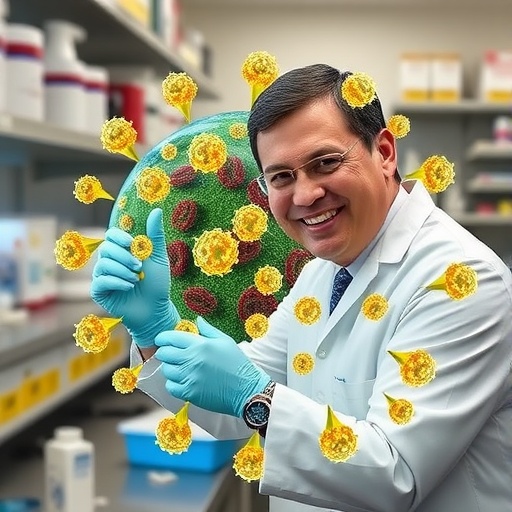
A recent breakthrough in antiviral and antibacterial research comes from an unexpected source: linseed oil, a common vegetable oil derived from flax seeds. Researchers at Florida International University (FIU) have demonstrated the potential of chemically modified linseed oil, specifically linseed oil polyols, in combating some of the most challenging infectious diseases, including HIV, SARS-CoV-2, and bacterial infections such as strep and staph. This discovery opens new avenues in the development of broad-spectrum antiviral and antibacterial agents derived from sustainable, plant-based materials.
The innovation centers on polyols derived from linseed oil, a renewable resource available in edible and industrial forms. The edible variant, commonly known as flaxseed oil, is widely accessible through various commercial outlets. FIU scientists have explored the chemical modification of this oil into polyols, which are hydroxyl-rich compounds capable of engaging in complex biochemical interactions. Their investigations reveal that these linseed oil polyols have remarkable inhibitory effects on viral and bacterial pathogens, highlighting their potential as a foundation for new preventive and therapeutic modalities.
The significance of this work is underscored by FIU’s recent award of U.S. Patent No. 12,440,467, entitled “Treatment and Prevention of Infections Using Vegetable Oil-Derived Polyols.” This patent builds upon previous research by the FIU team, who in 2022 patented a novel nanogel formulation using linseed oil polyols. This incremental progress reflects the growing understanding of how vegetable oil derivatives can serve in medical applications, particularly in addressing infections resistant to conventional treatments.
Lead investigator Assistant Professor Arti Vashist from the FIU Herbert Wertheim College of Medicine emphasized the novelty of their approach. Prior to this research, linseed oil polyols had not been independently evaluated for their antiviral properties. Through rigorous biochemical assays and computational modeling, her team demonstrated that these compounds exhibit strong affinity for viral surface proteins, effectively blocking viruses such as HIV and SARS-CoV-2 from binding to and entering human cells. This mechanism mirrors the action of current antiviral drugs yet offers the advantage of a plant-derived, biodegradable source.
One of the compelling attributes of the linseed oil polyol compound is its origin from a sustainable, inexpensive, and widely available source. The plant-based nature of linseed oil ensures a scalable and environmentally friendly production process. In addition, the polyol’s biodegradability means it can be safely metabolized or broken down in biological systems, lowering potential toxicity issues commonly seen with synthetic antivirals. This combination of efficacy, safety, and environmental sustainability positions linseed oil polyols as attractive candidates for mass medical deployment.
Computational docking studies conducted by Vashist’s group illuminated how the polyol molecules bind to key viral epitopes critical for infection. These binding sites overlap with targets of existing antiviral drugs, confirming that the polyols’ inhibitory action is both specific and effective. By impeding viral entry, the compound not only halts infection at an early stage but also potentially reduces the emergence of drug-resistant viral strains by offering a novel mode of intervention.
Beyond its antiviral virtues, the linseed oil polyol compound exhibits remarkable versatility in formulation. According to Vashist, it can be integrated into various pharmaceutical delivery systems, including pills, lozenges, aerosols, tablets, and sterile solutions. This facilitates administration tailored to different clinical scenarios and patient needs. Moreover, the compound’s non-toxic profile toward healthy human cells suggests it could be used adjunctively with existing therapies to broaden their antimicrobial spectrum without adding significant adverse effects.
Another notable feature is the compound’s ability to enhance nanocarriers crossing the blood-brain barrier, a notoriously difficult obstacle in drug delivery. This property opens promising prospects for treating neurological infections, tumors, and other central nervous system disorders traditionally refractory to pharmaceutical intervention. Additionally, the inherent fluorescent qualities of the polyol enable real-time imaging in vivo, allowing researchers to track drug distribution and verify targeted delivery, which is critical for advancing precision medicine.
The FIU research team comprises multiple contributors, including Medicine researchers Hitendra Chand, Madhavan Nair, and Andrea Raymond, alongside Prem Chapagain from FIU’s College of Arts, Sciences & Education. Their collective expertise has propelled the development of this cutting-edge biotechnology, supported by funding from the National Institutes of Health (NIH). Among various projects, Vashist recently secured an NIH R03 grant from the National Institute on Aging aimed at investigating linseed oil polyol-based nanogels as therapeutic agents for Alzheimer’s disease, indicating the compound’s wide-ranging potential beyond infectious diseases.
The timing of this innovation is critical given the persistent global health challenges posed by COVID-19, HIV, and increasing antimicrobial resistance. The development of a low-cost, environmentally sustainable, and broad-spectrum treatment derived from an everyday vegetable oil could revolutionize infection control worldwide. Vashist envisions commercial production and distribution to pharmaceutical companies, effectively bridging the gap between laboratory discovery and clinical application.
In conclusion, the discovery and patenting of linseed oil-derived polyols as antiviral and antibacterial agents represent a monumental stride in green biomedical technology. Their unique combination of efficacy, sustainability, and versatility not only promises to enhance current treatment paradigms but also sets a precedent for utilizing renewable natural products in cutting-edge medical innovation. As research progresses, these compounds could form the cornerstone of next-generation therapeutics aimed at safeguarding global health.
Keywords
linseed oil, polyols, antiviral compounds, SARS-CoV-2, HIV, nanogel, biodegradable polyol, drug delivery, blood-brain barrier, infectious diseases, antiviral therapy, green technology
Cite Scienmag News
Kristina Jarvis. (May 20, 2026). FIU Patent Develops Innovative Virus-Fighting Technology Inspired by Linseed Oil. Scienmag. https://scienmag.com/fiu-patent-develops-innovative-virus-fighting-technology-inspired-by-linseed-oil/
Kristina Jarvis. "FIU Patent Develops Innovative Virus-Fighting Technology Inspired by Linseed Oil." Scienmag, 20 May 2026, https://scienmag.com/fiu-patent-develops-innovative-virus-fighting-technology-inspired-by-linseed-oil/. Accessed 4 September 2026.
Kristina Jarvis. "FIU Patent Develops Innovative Virus-Fighting Technology Inspired by Linseed Oil." Scienmag. May 20, 2026. https://scienmag.com/fiu-patent-develops-innovative-virus-fighting-technology-inspired-by-linseed-oil/


