


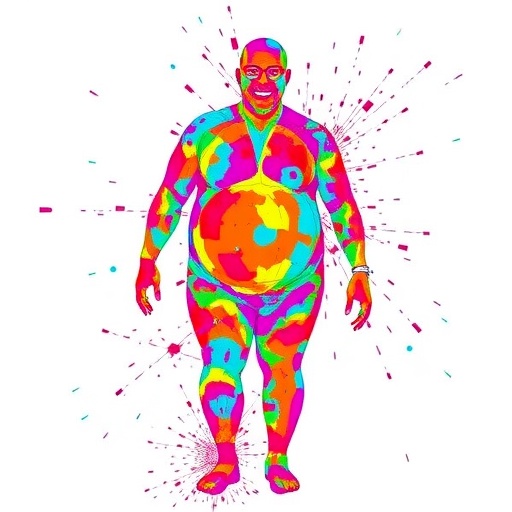
In a groundbreaking advancement at the intersection of artificial intelligence and biomedical research, scientists at Helmholtz Munich in collaboration with the Ludwig Maximilians University Munich (LMU) and other institutions have unveiled a novel AI-driven framework capable of mapping disease-induced cellular alterations throughout the entire mouse body. Known as MouseMapper, this innovative platform leverages deep-learning algorithms to decode the complex biological changes induced by obesity with unprecedented resolution and scale. This comprehensive study, recently published in the prestigious journal Nature, illuminates the systemic impact of obesity beyond metabolic dysregulation, revealing hidden nerve damage and inflammation across multiple organ systems.
Obesity has long been recognized as a multifaceted disease that disrupts not only fat accumulation but also touches every physiological system from immunity to neural networks. Traditional research methods have been constrained by the limited scope of tissue analysis, generally focusing on isolated organs without capturing the full syndrome’s complexity. MouseMapper transcends these barriers by enabling seamless, high-resolution examination of entire organisms, linking molecular, cellular, and tissue-level changes within a single analytical framework.
At the core of MouseMapper is a foundation-model-based suite of deep neural networks designed to segment and analyze whole-body biological imaging datasets. This system can identify 31 different organs and tissue types while simultaneously mapping nerve fibers and immune cell populations with cellular precision. Unlike conventional machine learning tools, MouseMapper exhibits remarkable generalizability, allowing it to adapt to diverse datasets beyond its initial training regime. Such flexibility positions it as a versatile tool for investigating a wide range of systemic diseases.
The researchers employed fluorescent markers targeting nerves and immune cells in mice, followed by advanced tissue-clearing protocols to render the entire body transparent without compromising biomarker integrity. This was coupled with light-sheet microscopy—a state-of-the-art imaging modality capable of capturing three-dimensional volumetric data at cellular resolution. Through this approach, the team generated exhaustive datasets containing tens of millions of cellular structures, encompassing organs from adipose tissue to peripheral nerves.
MouseMapper automated the segmentation and quantitative analysis of these massive datasets, enabling an unbiased survey of inflammation and nerve remodeling throughout the mouse anatomy. In studying obesity, it uncovered widespread alterations in immune-cell clustering and a striking degenerative reorganization of the trigeminal nerve—a critical facial nerve responsible for sensory and motor functions. Obese mice displayed significantly diminished nerve branching and endings in this region, correlating with reduced sensory responsiveness in behavioral assays.
To investigate molecular underpinnings of these structural changes, the team examined the trigeminal ganglion, the neuronal hub containing sensory neuron cell bodies. Spatial proteomics analyses revealed distinct signatures of nerve remodeling and local inflammation. Remarkably, parallel molecular alterations were identified in human trigeminal tissue samples from individuals with obesity, strongly suggesting evolutionary conservation of obesity-induced neural pathologies across species.
This discovery opens new vistas into the concealed neuronal dysfunctions linked to metabolic disease, highlighting the critical need to adopt holistic investigative approaches capable of capturing disease dynamics at the organismal level. By revealing how obesity systematically remodels the nervous and immune systems, MouseMapper not only enriches our understanding of disease pathophysiology but also provides an invaluable resource for identifying new therapeutic targets.
Beyond shedding light on obesity, the implications of MouseMapper’s integrated analytical capabilities extend to a broad spectrum of complex diseases, including diabetes, cancer, neurodegenerative conditions, and autoimmune disorders. Its ability to generate unbiased, comprehensive maps of disease-related “hotspots” marks a paradigm shift from reductionist, organ-centric studies to systemic, multi-organ investigations that reflect the inherent complexity of biological systems.
Importantly, the research team has made these detailed whole-body datasets publicly accessible, fostering transparency and enabling scientists worldwide to interrogate obesity-associated cellular and structural changes across diverse tissues. This open-science approach accelerates collaborative discovery and amplifies the impact of their innovations.
Looking forward, Prof. Ali Ertürk, the project’s lead and Director of the Institute for Biological Intelligence at Helmholtz Munich, envisions an ambitious future where MouseMapper evolves into a foundational tool for creating digital twins of organisms. These virtual models, rendered at cellular resolution and infused with real-world biological data, promise to revolutionize disease modeling, drug development, and personalized medicine by permitting in silico experimentation that can anticipate and modulate disease trajectories with minimal reliance on physical trials.
This pioneering research thus sets the stage for a new era of intelligent biomedical exploration where artificial intelligence and high-resolution imaging converge to unravel the intricacies of systemic disease, transforming how scientists and clinicians understand, diagnose, and treat complex medical conditions in an interconnected physiological context.
News Publication Date: 20-May-2026
Web References: DOI link to original publication
References: Kaltenecker et al., 2026: A deep-learning framework reveals whole-body perturbations at cell level. Nature. DOI: 10.1038/s41586-026-10535-2
Keywords
Obesity, Artificial Intelligence, Metabolism, Neural Remodeling, Immune System, Deep Learning, Whole-body Imaging, Light-sheet Microscopy, Tissue Clearing, Trigeminal Nerve, Spatial Proteomics, Digital Twins
Cite Scienmag News
Daisy Hatcher. (May 20, 2026). AI-Powered Atlas Uncovers Extensive Whole-Body Damage Linked to Obesity. Scienmag. https://scienmag.com/ai-powered-atlas-uncovers-extensive-whole-body-damage-linked-to-obesity/
Daisy Hatcher. "AI-Powered Atlas Uncovers Extensive Whole-Body Damage Linked to Obesity." Scienmag, 20 May 2026, https://scienmag.com/ai-powered-atlas-uncovers-extensive-whole-body-damage-linked-to-obesity/. Accessed 3 September 2026.
Daisy Hatcher. "AI-Powered Atlas Uncovers Extensive Whole-Body Damage Linked to Obesity." Scienmag. May 20, 2026. https://scienmag.com/ai-powered-atlas-uncovers-extensive-whole-body-damage-linked-to-obesity/


