


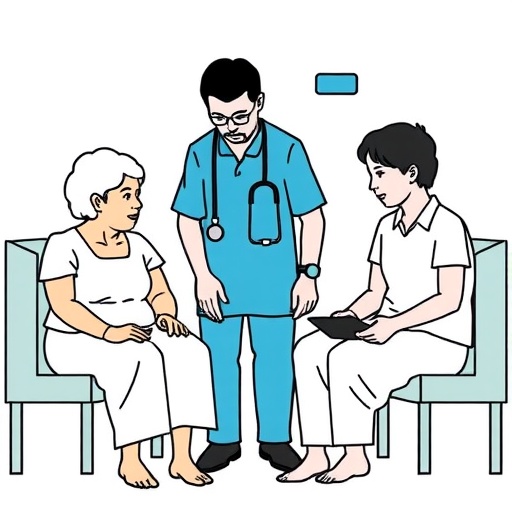
In a groundbreaking study published in Nature Communications, researchers have unveiled the profound impact of nurse care management on hospital utilization among patients suffering from multimorbidity—a condition characterized by the coexistence of multiple chronic diseases within a single individual. This innovative research bridges critical gaps in healthcare service delivery by investigating how structured nursing interventions can modulate hospitalization rates, healthcare costs, and overall patient outcomes in this complex population.
Multimorbid patients represent a burgeoning demographic within healthcare systems worldwide. Their management is notoriously challenging due to the intertwined effects of multiple chronic conditions, the complications arising from polypharmacy, and the fragmented nature of traditional healthcare models. Hospital admissions and readmissions remain alarmingly high in this group, highlighting the need for innovative care strategies that move beyond episodic treatment to proactive, integrated management.
The study, conducted by Shadmi, Tonkikh, Low, and colleagues, rigorously evaluated nurse-led care management programs in comparison to standard care pathways through a controlled trial complemented by an exploratory cohort component. The dual approach facilitated a robust analysis of both the efficacy and real-world applicability of nurse-driven care coordination. By employing a comparative-controlled design, the researchers ensured that variations in patient outcomes could be confidently attributed to the intervention.
Central to the nurse care management intervention was the personalization of care plans tailored to each patient’s unique constellation of chronic conditions. Nurses assumed a pivotal role in medication reconciliation, symptom monitoring, and facilitating communication between disparate healthcare providers. This comprehensive coordination emphasized timely follow-ups, risk stratification, and empowerment of patients through education, aiming to preempt clinical deterioration that traditionally necessitates hospitalization.
Advanced analytical methods were utilized to dissect hospital utilization metrics, including admission frequency, length of stay, and emergency department visits. The study’s sample encompassed a diverse population of multimorbid individuals, ensuring that findings are generalizable across age groups, socioeconomic statuses, and disease profiles. This methodological rigor lends significant weight to the conclusions drawn regarding the efficacy of nurse care management.
One of the most salient findings was a statistically significant reduction in hospital admissions among patients under nurse care management compared to controls. This effect was particularly pronounced among patients with high disease burden and frequent previous hospitalizations, suggesting that the intervention effectively mitigates risk factors predisposing to acute exacerbations. The decreased reliance on inpatient services not only improves patient quality of life but also alleviates systemic pressures on overstretched hospital infrastructures.
Moreover, the study highlighted a meaningful decline in emergency department utilization, a proxy for unplanned and often preventable acute healthcare crises. Through enhancing patient self-management skills and fostering early intervention during symptom flare-ups, nurse care managers act as a buffer, intercepting potential emergencies before they escalate to hospitalization. This proactive model signals a paradigm shift in chronic disease management.
Importantly, the intervention’s success hinged on the integration of evidence-based protocols into nursing practice. By leveraging standardized assessment tools, risk stratification algorithms, and clinical decision-support systems, the nursing workforce was empowered to deliver high-impact care with precision and consistency. This highlights the intersection of clinical expertise and technological facilitation as a cornerstone of modern healthcare innovation.
Patient-centric communication emerged as another critical factor underpinning positive outcomes. Through motivational interviewing techniques, health literacy enhancement, and culturally sensitive education, nurse care managers fostered trust and adherence to therapeutic regimens. This relational aspect underscores nursing’s unique capacity to bridge biomedical science and the psychosocial dimensions of health.
The exploratory cohort analysis further elucidated longitudinal trends in healthcare utilization and clinical status, affirming the sustainability of intervention benefits beyond the initial trial period. These data suggest that nurse care management may engender durable improvements in health trajectories for multimorbid populations, challenging assumptions about the inevitability of progressive decline in these patients.
Financial implications were also addressed, with evidence indicating potential cost savings resultant from reduced hospital stays and emergency department visits. While initial staff training and program implementation constitute upfront investments, the downstream economic benefits manifested by decreased acute care reliance could justify widespread adoption. Health policy makers are thus presented with compelling data to support restructuring care delivery models in favor of nurse-led management approaches.
The study’s findings resonate amidst growing global recognition of the imperative to innovate chronic disease care. Multimorbidity presents a complex tapestry of challenges that defy simplistic solutions. By positioning nurses as central agents in orchestrating integrated care pathways, this research charts a viable course toward ameliorating the personal and systemic burdens of multimorbidity.
Future research directives include exploring scalability in varied healthcare settings, optimizing nurse-to-patient ratios, and integrating digital health technologies to amplify intervention reach. Additionally, qualitative inquiries into patient and provider experiences could deepen understanding of implementation facilitators and barriers, refining program design further.
In conclusion, this landmark study delivers compelling evidence that nurse care management significantly reduces hospital utilization in multimorbid patients, transforming theoretical care models into actionable realities. It amplifies the call for healthcare systems worldwide to reconceptualize chronic disease management—not merely as a set of isolated clinical encounters but as continuous, coordinated, and personalized care driven by skilled nursing professionals. As multimorbidity prevalence escalates, such interventions will undoubtedly be critical to sustainable healthcare futures.
Cite Scienmag News
Ophelia Keating. (May 15, 2026). Nurse Care Reduces Hospital Use in Multimorbid Patients. Scienmag. https://scienmag.com/nurse-care-reduces-hospital-use-in-multimorbid-patients/
Ophelia Keating. "Nurse Care Reduces Hospital Use in Multimorbid Patients." Scienmag, 15 May 2026, https://scienmag.com/nurse-care-reduces-hospital-use-in-multimorbid-patients/. Accessed 4 September 2026.
Ophelia Keating. "Nurse Care Reduces Hospital Use in Multimorbid Patients." Scienmag. May 15, 2026. https://scienmag.com/nurse-care-reduces-hospital-use-in-multimorbid-patients/


