


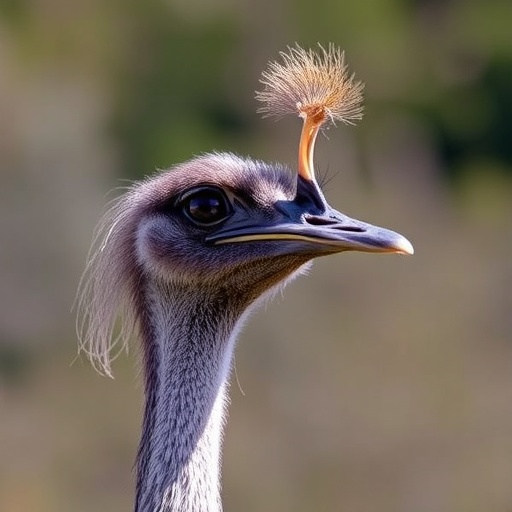
In the ever-intriguing world of avian biology, a subtle molecular mechanism turns out to hold the key to one of nature’s most spectacular differences—flight. Researchers at Kyushu University in Japan have uncovered the developmental underpinnings that determine whether a bird develops a keel, the breastbone structure essential for flight muscle attachment. Published in Nature Communications on April 29, 2026, this study reveals how slight variations in embryonic signaling pathways lead to profound anatomical diversity in birds.
Flightless birds like the emu stand in stark contrast to aerial acrobats like the eagle and the modest flying chicken. While wings and feathers are obvious contributors to flight capability, it is the keel—a blade-like ridge running down the center of the sternum—that anchors powerful flight muscles, enabling sustained wing flapping necessary for powered flight. In species incapable of flight, this keel is either underdeveloped or absent, a fact that puzzled evolutionary biologists for decades.
Using a comparative developmental approach, the Kyushu University team closely examined embryonic stages of both chickens and emus. The chicken, a relatively poor flier but unequivocally a flying bird, retains a prominent keel. The emu, a large flightless bird native to Australia, provides an ideal contrast given its well-characterized embryonic timeline and lack of keel development. By mapping the progression of sternum formation, researchers pinpointed crucial divergences in the behavior of sternal progenitor cells, which are undifferentiated cells destined to become parts of the breastbone.
Initial embryonic phases showed striking similarity between the two species, with sternal progenitor cells forming bilaterally and converging centrally around the same developmental timeline. However, by developmental stage 34—a milestone approximately one-third into the incubation period—distinct trajectories emerged. In chickens, the progenitor cells extended their proliferative activity, pushing the keel’s outward and downward growth. Conversely, in emus, these same cells prematurely ceased division, maturing quickly into cartilage and halting keel development entirely.
This developmental dichotomy is orchestrated by the Transforming Growth Factor beta (TGF-β) signaling pathway, a fundamental molecular cascade regulating cell growth and differentiation. In both species studied, TGF-β maintains activity until stage 34. Post this stage, its fate diverges: in emus, TGF-β signaling abruptly shuts down, leading to the premature maturation of sternal progenitors. Chickens exhibit a prolonged activation through stage 36, effectively extending the window for cellular proliferation essential to building a fully formed keel.
This variation exemplifies heterochrony—a phenomenon where subtle shifts in the timing of developmental events yield significant morphological differences. Yuji Atsuta, the lead corresponding author, eloquently describes this as a “developmental time switch” linking evolutionary anatomy to molecular timing mechanisms. Despite sharing a common ancestor approximately 100 million years ago, chickens and emus display stark skeletal distinctions mediated by mere shifts in the duration of a single signaling pathway’s activity.
Beyond illuminating avian evolution, these findings carry profound biomedical implications. Human congenital chest deformities such as pectus excavatum—a sunken sternum condition affecting cardiac and respiratory function—may stem from dysregulated proliferation of sternal progenitor cells. Understanding the role of TGF-β in controlling breastbone development opens new avenues for targeted therapies and regenerative medicine approaches to correct or prevent such malformations.
Further exploratory efforts by the Kyushu researchers aim to decode the genomic enhancer elements governing TGF-β signaling duration. These enhancer sequences, integral noncoding regions of DNA, modulate gene expression kinetics and intensity, thereby shaping developmental timing nuances. Unraveling this regulatory landscape promises deeper insight into how genetic variations translate into evolutionary anatomy and functional diversity.
The study also pays homage to cultural contexts and everyday encounters with avian biology. Seung June Kwon, the study’s first author, humorously reflects on the unnoticed yet critical nature of the keel while enjoying Korean samgye-tang, a chicken soup delicacy. This intersection of molecular science and daily life exemplifies how fundamental research touches diverse realms, from evolution to cuisine.
Skeletal diversity acts as a cornerstone for locomotion strategies and lifestyle adaptation across the animal kingdom. Appreciating the molecular basis of such diversity offers rich perspectives not only on how birds conquered the skies but also on broader principles of developmental biology. The subtle modulation of signaling pathways like TGF-β illustrates nature’s skill in engineering complexity through elegant, time-dependent genetic regulation.
By dissecting the mechanisms behind keel morphogenesis, the Kyushu University team contributes a vital chapter to evolutionary developmental biology, emphasizing the significance of timing in shaping form and function. Their work reiterates that evolutionary innovations can emerge not solely from changes in genetic code, but from tweaks in the orchestration of developmental processes.
As the researchers continue to investigate the interplay between genetic enhancers and molecular signaling cascades, they pave the way for a refined understanding of vertebrate skeletal evolution. Such knowledge could ultimately inform bioengineering, conservation biology, and medical interventions, highlighting the far-reaching impacts embedded within a bird’s breastbone.
Cite Scienmag News
Gavin Prescott. (May 14, 2026). Why Emus Can’t Fly: Unlocking the Mystery Hidden in Bird Embryos. Scienmag. https://scienmag.com/why-emus-cant-fly-unlocking-the-mystery-hidden-in-bird-embryos/
Gavin Prescott. "Why Emus Can’t Fly: Unlocking the Mystery Hidden in Bird Embryos." Scienmag, 14 May 2026, https://scienmag.com/why-emus-cant-fly-unlocking-the-mystery-hidden-in-bird-embryos/. Accessed 4 September 2026.
Gavin Prescott. "Why Emus Can’t Fly: Unlocking the Mystery Hidden in Bird Embryos." Scienmag. May 14, 2026. https://scienmag.com/why-emus-cant-fly-unlocking-the-mystery-hidden-in-bird-embryos/


