


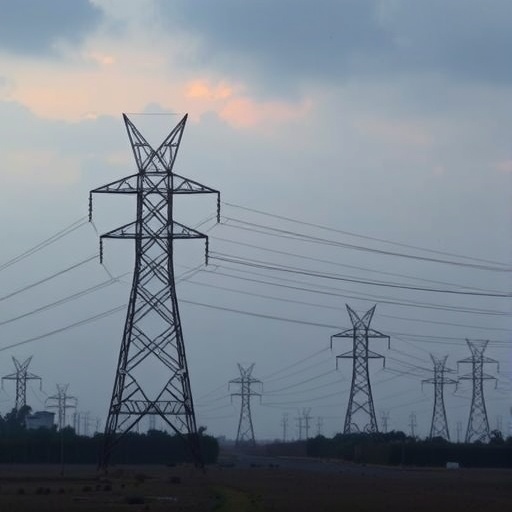
As the global energy landscape undergoes a transformative shift toward cleaner and more sustainable sources, India’s power sector finds itself at a critical crossroads. A recent study led by Jindal, Shrimali, Gallice, and colleagues, published in Communications Earth & Environment in 2026, sheds light on the intricate and uneven financial repercussions wrought by the energy transition across India’s diverse power market. This sweeping analysis not only underscores the complexity of this transition but also highlights the economic vulnerabilities embedded within one of the world’s fastest-growing energy economies.
India’s energy sector is undergoing a significant metamorphosis driven by ambitious government policies and global climate commitments aimed at reducing carbon emissions and promoting renewable energy uptake. However, the transition away from coal-dominated power generation toward renewables like solar and wind does not produce uniform economic outcomes. Instead, disparate financial impacts have emerged, revealing fault lines in the country’s energy infrastructure and investment landscape. The study meticulously details the distribution of risks and rewards, cautioning that the journey to a sustainable energy future may exacerbate existing inequalities without careful policy calibration.
Central to the study’s findings is the identification of ‘energy-transition risks’ — multifaceted challenges including stranded assets, shifting market dynamics, and policy uncertainties — which fundamentally reshape financial flows in the power sector. These risks disproportionately affect coal-reliant power generators, most acutely in regions and states where coal-fired plants still dominate the energy mix. The rapid pace of renewable energy installations, coupled with advancements in battery storage technologies, threatens to render many coal assets economically unviable before the completion of their expected lifecycles. This phenomenon introduces a seismic shift in investment intelligence, altering bank lending practices, insurance models, and equity valuations within the power sector.
Moreover, the research highlights how regulatory frameworks and state-level policy heterogeneity amplify these uneven impacts. States with aggressive renewable adoption programs see accelerated financial shifts, whereas regions that continue heavy coal dependence face escalating fiscal risks. For instance, certain industrial states reliant on coal-generated electricity confront onerous decisions about infrastructure reinvestment and job transitions, complicating the socio-economic landscape. The authors argue that these divergent regional experiences necessitate tailored transition strategies rather than one-size-fits-all approaches, emphasizing the importance of nuanced policymaking sensitive to local contexts.
Advanced econometric modeling and scenario analysis form the backbone of this comprehensive study. By integrating granular datasets on plant-level operational metrics, financial disclosures, and projected policy milestones, the authors construct robust simulations projecting potential outcomes for different actors within the power sector. This rigorous methodology enables the anticipation of risk cascades that span from utility companies and private investors to state governments and consumer groups. The projected scenarios elucidate how energy transition policies can create financial winners and losers, underscoring the critical need for strategic risk management tools.
One striking insight is the critical role of market reforms in mitigating uneven impacts. The research emphasizes that market liberalization, competitive pricing structures, and transparent regulatory environments can significantly insulate certain players from heightened risks. For example, power purchase agreements that factor in renewable energy integration and adaptive tariff structures can alleviate the pressure on legacy coal assets, reducing the probability of default and credit losses. However, the uneven implementation of such reforms across India perpetuates the uneven distribution of financial impacts, entrenching disparities.
Another dimension explored is the interplay between technological innovation and financial risk. Technologies such as grid-scale battery storage, digital demand response systems, and advanced forecasting models alter the economic calculus of power generation facilities. Renewable energy systems coupled with smart grid infrastructure demonstrate higher resilience to volatile market conditions and changing policy regimes. Conversely, coal-fired plants, burdened by higher fixed costs and regulatory scrutiny related to emissions, face declining asset valuation and heightened liquidity challenges. This dynamic accentuates the importance of embracing innovation to reduce transition risks and create more stable investment environments.
The human and social dimensions of the transition also come into focus. The study cautions that financial shocks within coal-heavy regions might trigger socioeconomic disruptions including job losses, regional economic declines, and strain on social safety nets. Addressing these impacts requires integrated strategies that encompass retraining programs, economic diversification efforts, and equitable access to new energy job opportunities. The authors advocate for just transition frameworks that align financial risk mitigation with social justice imperatives, ensuring that the benefits of clean energy reach all segments of Indian society.
Furthermore, the paper draws attention to the role of international finance and climate investments. Global investors are increasingly factoring in environmental, social, and governance (ESG) criteria in their funding decisions, often leading to divestment from carbon-intensive assets. This shifting capital landscape interacts dynamically with domestic energy markets, influencing both the cost of capital and the pace of infrastructure modernization. The researchers suggest that India’s policymakers must navigate these global-finance dynamics with strategic foresight to attract sustainable investment flows that support an equitable energy transition.
Importantly, the study acknowledges the unpredictability embedded in the energy transition journey. Rapid technological breakthroughs, unforeseen policy shifts, or varying levels of stakeholder engagement can dramatically alter financial risk landscapes. This calls for flexible and adaptive governance mechanisms that can respond swiftly to emerging challenges. Building robust risk assessment frameworks, real-time data monitoring systems, and multi-stakeholder consultation processes are recommended to maintain balance between ambition and pragmatism.
The implications of this research resonate beyond India as well, given the country’s pivotal role in shaping global energy trajectories. Its immense scale, demographic dynamism, and geopolitical positioning make it a case study for other emerging economies grappling with similar challenges. The uneven financial impacts highlighted in this paper serve as a cautionary tale and learning opportunity for policymakers worldwide aiming to design just, resilient transitions that minimize economic disruptions while advancing sustainability goals.
In conclusion, the comprehensive analysis conducted by Jindal et al. uncovers the layered and often uneven financial consequences of India’s energy transition. The study serves as a critical resource for investors, policymakers, utilities, and civil society, charting a path that balances environmental imperatives with economic stability. Recognizing and addressing the uneven financial impacts of energy-transition risks not only safeguards economic health but also fosters a more inclusive and sustainable energy future for India and beyond.
This pioneering research underscores the necessity of aligning financial risk management with technological innovation, regulatory reform, and social equity considerations. As India charges forward in its pursuit of a low-carbon future, understanding the intricate economics revealed by this study will be fundamental to shaping policies that are both effective and just. The transition’s success hinges on navigating complexities with foresight and empathy, ensuring that no community or stakeholder is left behind in the unfolding energy revolution.
Cite Scienmag News
Faith Mcneil. (May 13, 2026). Uneven Financial Risks in India’s Power Transition. Scienmag. https://scienmag.com/uneven-financial-risks-in-indias-power-transition/
Faith Mcneil. "Uneven Financial Risks in India’s Power Transition." Scienmag, 13 May 2026, https://scienmag.com/uneven-financial-risks-in-indias-power-transition/. Accessed 7 September 2026.
Faith Mcneil. "Uneven Financial Risks in India’s Power Transition." Scienmag. May 13, 2026. https://scienmag.com/uneven-financial-risks-in-indias-power-transition/


