


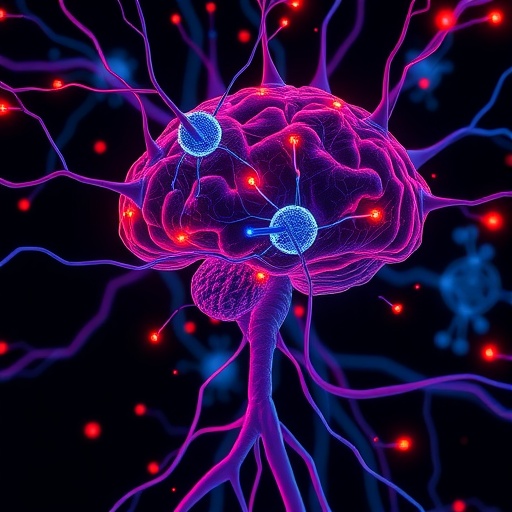
In a groundbreaking study set to redefine the neuropsychiatric landscape, researchers have unveiled an innovative framework linking molecular signaling to complex brain network dysfunctions in major depressive disorder (MDD). Published in Translational Psychiatry, this study pioneers a novel approach by integrating neurotransmitter architectures with connectome-based biomarkers, offering new vistas in understanding and potentially treating depression.
Decades of neuroscience have underscored the complexity of MDD, a condition often marked by persistent low mood, cognitive impairments, and somatic symptoms. While neurotransmitters such as serotonin, dopamine, and glutamate have been individually implicated in the pathophysiology of depression, the intricate interactions between these molecular players and the brain’s macroscale networks have remained elusive until now. Lv and colleagues bridge this gap, compellingly demonstrating how the spatial organization of neurotransmitter systems can guide network-level biomarkers derived from brain connectomics.
At the core of the study lies the concept of the connectome—the comprehensive map of neural connections within the brain. The researchers employed cutting-edge neuroimaging techniques combined with molecular mapping data to chart how specific neurotransmitter distributions correspond to functional network dynamics in individuals with MDD. This dual-level integration provides a promising avenue for identifying robust biomarkers that transcend purely symptomatic diagnosis, moving towards biologically grounded classifications.
The implications of this study hinge on its methodological novelty. By leveraging high-resolution positron emission tomography (PET) imaging to detail neurotransmitter receptor distributions, researchers correlated these molecular patterns with resting-state functional magnetic resonance imaging (fMRI) data. The coupling between receptor architectures and network connectivity metrics revealed distinct dysregulations in canonical brain networks responsible for mood regulation, executive function, and reward processing, which have been traditionally implicated in depression.
Interestingly, the study surfaces the heterogeneity within MDD patient populations by revealing subgroup-specific connectome alterations guided by distinct neurotransmitter system disruptions. For example, dopamine-associated networks exhibited significant connectivity deficits linked to anhedonia symptoms, whereas serotonin-centric networks correlated with affective instability. This stratification is a vital step toward personalized medicine, offering pathways for tailored pharmacological and neuromodulation therapies.
From a technical perspective, Lv et al. utilized advanced graph theoretical analyses to quantify network properties such as modularity, centrality, and efficiency, mapping these against neurochemical topographies. Their approach enables a multidimensional characterization of brain dysfunctions in MDD—combining molecular neurobiology with systems neuroscience on an unprecedented scale. The precision of these biomarkers may enhance early diagnosis and monitor therapeutic responses more effectively than current clinical tools.
Moreover, the study discusses potential mechanisms underlying the neurotransmitter-driven network disruptions. Altered receptor densities and signaling efficacy potentially provoke aberrant synaptic plasticity and impaired neural circuit modulation, which underlie depressive symptomatology. This integrative perspective highlights the dynamic reciprocity between molecular and network-level pathology, emphasizing the brain’s complexity in health and disease.
An exciting translational avenue emerges from the findings: these biomarkers could inform the development of circuit-targeted interventions such as transcranial magnetic stimulation (TMS) or deep brain stimulation (DBS), tailored according to an individual’s molecular connectomic profile. By aligning neuromodulation parameters with the neurotransmitter-guided network fingerprints, treatment efficacy and specificity may be markedly enhanced, signaling a new era of precision psychiatry.
The study also underscores the need for longitudinal research to elucidate causal relationships and temporal dynamics within this molecular-connectome framework. While cross-sectional data offer potent snapshots of dysfunction, tracking these biomarkers over disease progression and treatment courses will further cement their clinical utility.
Crucially, the authors advocate for integrating multi-omics data, including transcriptomics and proteomics, into connectomic analyses, expanding the biological granularity and interpretability of psychiatric disorders. Such integrative neuroscience promises to unravel the multifactorial etiologies of depression, moving beyond monoamine-centric models toward a holistic understanding of brain dysfunction.
This research exemplifies the power of big data and interdisciplinary collaboration in psychiatry, combining neuroimaging, molecular neuroscience, computational modeling, and clinical expertise. It sets a new standard for biomarker discovery, moving towards network-informed molecular psychiatry that could revolutionize diagnosis, prognosis, and personalized treatment strategies in major depressive disorder.
In summary, Lv and colleagues’ study represents a watershed moment in depression research. By bridging neurotransmitter molecular architecture with connectome biomarker networks, they not only expand our mechanistic understanding of MDD but also pave the way for innovative, individualized therapeutic paradigms. This integrative biomarker framework may ultimately alter the clinical management of depression, embodying a bold step toward deciphering the brain’s molecular connectome in psychiatric illness.
Beyond its scientific merits, this pathway embodies hope for millions suffering from major depressive disorder, promising more precise diagnostics, effective treatments, and improved patient outcomes. As the field advances, such integrative models will be essential in translating complex neuroscience into tangible clinical impact, establishing a new frontier in mental health care.
Cite Scienmag News
Glenn Wilkins. (May 13, 2026). Neurotransmitter Networks Reveal Depression Biomarkers. Scienmag. https://scienmag.com/neurotransmitter-networks-reveal-depression-biomarkers/
Glenn Wilkins. "Neurotransmitter Networks Reveal Depression Biomarkers." Scienmag, 13 May 2026, https://scienmag.com/neurotransmitter-networks-reveal-depression-biomarkers/. Accessed 5 September 2026.
Glenn Wilkins. "Neurotransmitter Networks Reveal Depression Biomarkers." Scienmag. May 13, 2026. https://scienmag.com/neurotransmitter-networks-reveal-depression-biomarkers/


