


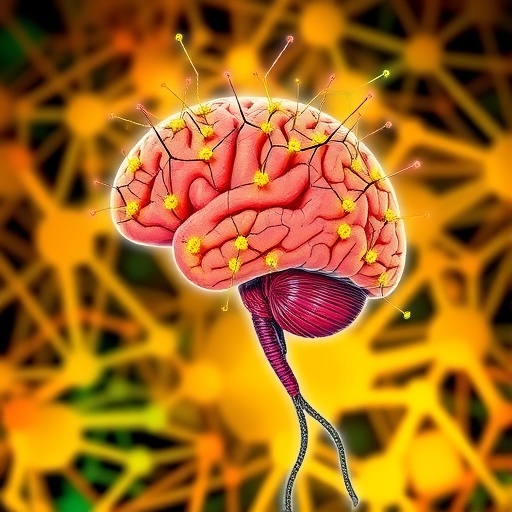
In an ambitious exploration of the human brain’s intricate neurochemical web, a groundbreaking study has unveiled the complex architecture of histamine pathways and their profound implications across cognition and psychiatric disorders. Published in Nature Mental Health this May, the comprehensive mapping effort led by Martins, Veronese, van Wamelen, and colleagues marks a pivotal leap in our understanding of histaminergic signaling and its versatile roles within the central nervous system.
Histamine, classically recognized for its participation in allergic responses, assumes a far more nuanced and critical role in the brain than previously appreciated. The study leverages cutting-edge neuroimaging alongside molecular analyses to chart histamine’s diverse neural networks, transcending traditional anatomical boundaries. By integrating data across multiple brain regions, the researchers have decoded histamine’s multifaceted interactions and their contextual modulation during cognitive processes.
Central to this discovery is the revelation that histamine acts as a neuromodulator influencing synaptic plasticity, alertness, and memory encoding. Employing advanced connectomic approaches, the team delineated histaminergic projections originating primarily from the tuberomammillary nucleus within the hypothalamus extending widely throughout the cortex, hippocampus, and limbic structures. These widespread projections suggest histamine’s pervasive influence on neuronal excitability and circuit dynamics underpinning cognitive functions.
The study’s meticulous layering of functional and structural datasets highlights regional specialization in histamine receptor expression and downstream signaling cascades. Notably, histamine receptor subtypes H1, H2, and H3 demonstrate distinct localization patterns correlating with cognitive and emotional regulation domains. Such receptor heterogeneity underscores the pathway’s adaptability in modulating a spectrum of behaviors from attention modulation to emotional resilience.
Importantly, the investigative team interrogated histaminergic dysregulation in psychiatric disorders, uncovering distinct histamine pathway alterations linked to schizophrenia, bipolar disorder, and major depressive disorder. For instance, disrupted H3 receptor density in the prefrontal cortex was correlated with impaired executive function and working memory deficits observed in schizophrenia. Meanwhile, altered histaminergic signaling in limbic areas appeared to contribute to mood instability in bipolar patients, unveiling a potential biochemical substrate for affective dysregulation.
The integration of transcriptomic profiles with neuroimaging data augmented the mechanistic insights, revealing histamine’s cross-talk with other neurotransmitter systems such as dopamine, serotonin, and glutamate. This biochemical interplay likely orchestrates the delicate homeostasis required for precise cognitive functioning and emotional balance, emphasizing histamine’s role as a central node within broad neuromodulatory networks.
Moreover, the researchers employed computational modeling to simulate histamine pathway dynamics under various physiological and pathological conditions. These in silico experiments predicted how histaminergic tone modulation could recalibrate neural circuits, offering promising avenues for therapeutic intervention. The ability to model these pathways marks a significant advance in precision psychiatry, enabling targeted modulation of histamine receptors as a strategy to normalize aberrant brain activity.
The implications of these findings extend beyond psychiatry into neurodegenerative diseases, where histaminergic deficits may underlie cognitive decline observed in conditions like Alzheimer’s and Parkinson’s disease. By mapping histamine’s influence on synaptic integrity and neuroinflammation, the study paves the way for novel biomarker development and disease-modifying strategies that harness histamine signaling pathways.
Beyond the clinical impact, this work enriches the fundamental neurobiology landscape by challenging the paradigm that centers solely on traditional neurotransmitters such as dopamine and serotonin. It advocates for a more inclusive view recognizing the essential contributions of histamine to brain function, expanding the horizon for neuroscience research and drug discovery.
Technologically, the fusion of multi-modal imaging, single-cell analyses, and system-level computational models exemplifies the cutting-edge approaches required to deconvolute the brain’s complexity. The histamine pathway map generated by Martins and colleagues serves as a conceptual and practical template for future investigations into other neglected neuromodulatory systems.
This comprehensive study also underscores the value of integrating large-scale datasets across molecular, cellular, and systems neuroscience. Such interdisciplinary endeavors not only yield holistic insights but also democratize data that can propel innovative research globally. The authors emphasize open science principles to foster collaborative exploitation of their histamine network atlas.
In light of these advances, the potential for histaminergic drugs to revolutionize treatment paradigms for cognitive and psychiatric disorders is increasingly tangible. Existing pharmaceuticals targeting histamine receptors may be repurposed or refined with enhanced specificity informed by the newfound anatomical and functional maps. This precision toolkit promises reduced side effects and improved efficacy for patients.
The research team also highlights future directions centered on longitudinal studies tracking histamine pathway changes across development, aging, and disease progression. Understanding temporal dynamics will be critical to designing timely interventions that harness neuroplasticity and promote recovery in affected individuals.
Ultimately, the meticulous mapping of histamine pathways represents a milestone in brain science, opening a portal to decipher the chemical language that shapes our thoughts, behaviors, and mental health. As researchers and clinicians alike delve into this enriched landscape, the promise of translating these discoveries into real-world therapies beckons on the horizon—heralding a new era of holistic brain health informed by the subtleties of histaminergic signaling.
Cite Scienmag News
Cassandra Pierce. (May 13, 2026). Mapping Histamine Networks in Brain and Disorders. Scienmag. https://scienmag.com/mapping-histamine-networks-in-brain-and-disorders/
Cassandra Pierce. "Mapping Histamine Networks in Brain and Disorders." Scienmag, 13 May 2026, https://scienmag.com/mapping-histamine-networks-in-brain-and-disorders/. Accessed 3 September 2026.
Cassandra Pierce. "Mapping Histamine Networks in Brain and Disorders." Scienmag. May 13, 2026. https://scienmag.com/mapping-histamine-networks-in-brain-and-disorders/


