


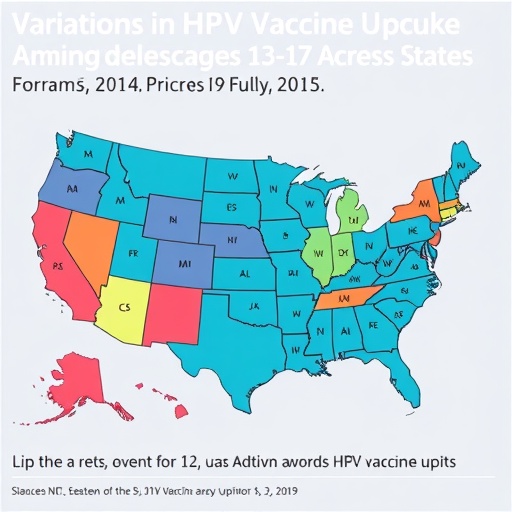
In a comprehensive new cross-sectional study published in JAMA Pediatrics, researchers reveal striking disparities in the uptake of the human papillomavirus (HPV) vaccine among adolescents across the United States. Even after adjusting for crucial sociodemographic variables, the data demonstrate substantial state-level variation in vaccination rates, a finding that holds profound implications for public health policy and preventive medicine. This research sheds light on the uneven landscape of HPV vaccine adoption, underscoring regional inequities that could perpetuate disparities in HPV-related cancers.
HPV, a pervasive virus responsible for the majority of cervical cancers and a significant proportion of other anogenital and oropharyngeal malignancies, has been at the forefront of vaccination efforts aimed at reducing the burden of virus-induced cancers. The vaccine, generally recommended for adolescents prior to exposure to HPV, is one of the most effective preventive interventions available in clinical medicine. However, despite national recommendations and proven efficacy, vaccination rates remain inconsistent, prompting an urgent need to dissect the underlying factors influencing these rates.
The study meticulously compared vaccination odds among adolescents in various U.S. states, using Alabama as the reference point. The empirical evidence pointed to a cluster of Northeastern states, notably Massachusetts, Rhode Island, and New Hampshire, exhibiting dramatically higher vaccination odds. This pattern highlights not only regional success stories in preventive medicine but also the potential impact of state health policies, access to healthcare services, and public health campaigns.
Conversely, several Southern states—including Mississippi, Georgia, Oklahoma, Kentucky, and West Virginia—were identified as lagging notably behind in HPV vaccine uptake. This lower vaccination rate may be attributable to a complex interplay of factors such as socioeconomic challenges, healthcare access limitations, political environments, cultural perceptions, and state-specific legislative frameworks regarding vaccine mandates. The persistence of these low-uptake pockets raises alarm for public health officials trying to combat HPV-related morbidity and mortality in these regions.
Scientific discourse emphasizes that sociodemographic factors can often confound health interventions, but this study’s adjustment for such variables ensures that the detected state-level variance transcends these influences. This strengthens the argument for tailored, state-centric approaches to vaccination strategies that take into consideration localized barriers and facilitators of vaccine utilization. The research thereby advocates for differentiated public health policy rather than a one-size-fits-all model.
At a molecular and clinical level, the significant variation in HPV vaccine coverage has ramifications beyond basic immunization statistics. Given that HPV vaccines protect against high-risk viral strains known for oncogenic potential, regions with lower immunization rates risk sustained transmission and subsequently higher incidences of HPV-associated cancers. These cancers not only present challenges in treatment outcomes but also impose substantial long-term socioeconomic burdens on affected populations and healthcare systems.
Exploring the epidemiological backbone of this vaccination unevenness necessitates understanding the sociopolitical and healthcare infrastructure frameworks within individual states. For instance, the presence or absence of school vaccination mandates, state-funded immunization programs, and access to pediatric preventive healthcare play pivotal roles. In states with proactive legislative measures and robust healthcare outreach, vaccination coverage tends to surge, exemplifying the powerful role of policy in health promotion.
The research’s findings resonated strongly with broader demographic analytics, indicating that adolescents in states with comprehensive health policies and higher healthcare investment enjoy better preventive care outcomes. These states often implement multifaceted strategies including education, community engagement, and provider incentives, fostering higher vaccine uptake. This contrasts sharply with states facing systemic challenges such as healthcare provider shortages, vaccine hesitancy, and fragmented public health infrastructures.
Further complicating the landscape is the intertwined effect of vaccine misinformation and political polarization, factors that can disproportionately affect certain regions’ public health initiatives. HPV vaccine acceptance is sometimes hindered by social and cultural skepticism fueled by misinformation surrounding vaccine safety and morality, phenomena more prevalent in some states than others. This highlights the necessity for targeted communication strategies that address local concerns with scientific rigor and cultural sensitivity.
This study, by rigorously adjusting for confounding variables and deploying a state-level comparative framework, presents a valuable epidemiological insight into adolescent vaccination patterns. It firmly positions state health policy environment as a crucial determinant in vaccine coverage disparities, shifting part of the responsibility for low vaccination rates away from individual or purely demographic factors toward systemic and policy-driven causes.
For clinicians and public health officials, the implications are manifold. Designing effective interventions requires comprehensive understanding of local barriers, strategic allocation of resources, and coordinated policy efforts that prioritize equitable access to vaccines. Additionally, this analysis provides crucial evidence to inform legislative advocacy, underlining the beneficial impact of vaccine mandates and educational programs on adolescent health outcomes.
Ultimately, the uneven HPV vaccine uptake across the U.S. reflects broader societal and healthcare inequities that demand urgent, sustained attention. Bridging these gaps is essential to leverage the full preventive power of HPV vaccines and reduce avoidable cancer risk in vulnerable adolescent populations. This research serves as a clarion call to the medical and policy communities to intensify their efforts in promoting vaccination equity.
As this research underscores, the role of coordinated, evidence-based state policies in enhancing adolescent vaccination rates cannot be overstated. The promising results from several Northeastern states exemplify what can be achieved with decisive public health strategy, offering a roadmap for lagging regions to emulate. Continuous surveillance, research, and community engagement will be vital to convert these insights into tangible improvements in vaccine coverage nationwide.
The study stands as a compelling reminder that medical advances such as effective vaccinations require more than scientific breakthroughs alone—they necessitate equitable implementation, responsive policy frameworks, and societal commitment to public health protection. Addressing state-level disparities in HPV vaccine uptake thus represents a crucial frontier in adolescent preventive medicine and cancer control.
News Publication Date:
Not specified in the provided content.
Web References:
Not provided.
References:
Not provided.
Cite Scienmag News
Kristina Jarvis. (May 11, 2026). Variations in HPV Vaccine Uptake Among Adolescents Aged 13 to 17 Across States. Scienmag. https://scienmag.com/variations-in-hpv-vaccine-uptake-among-adolescents-aged-13-to-17-across-states/
Kristina Jarvis. "Variations in HPV Vaccine Uptake Among Adolescents Aged 13 to 17 Across States." Scienmag, 11 May 2026, https://scienmag.com/variations-in-hpv-vaccine-uptake-among-adolescents-aged-13-to-17-across-states/. Accessed 5 September 2026.
Kristina Jarvis. "Variations in HPV Vaccine Uptake Among Adolescents Aged 13 to 17 Across States." Scienmag. May 11, 2026. https://scienmag.com/variations-in-hpv-vaccine-uptake-among-adolescents-aged-13-to-17-across-states/


