


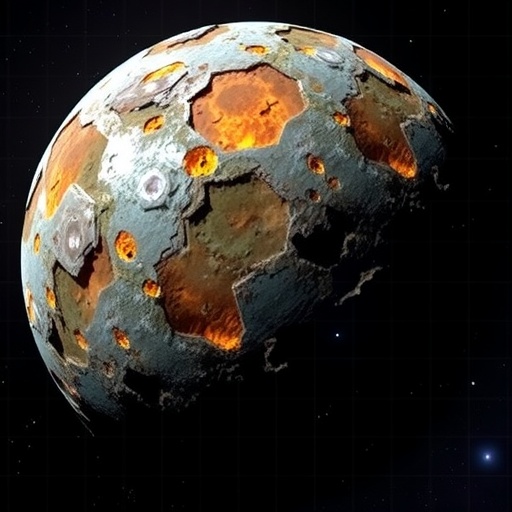
In the expanding frontier of space exploration, asteroid sample return missions have emerged as pivotal endeavors, offering profound insights into the origins and evolution of our Solar System. Recent analyses and mission outcomes underscore the critical role these projects play in unraveling the complex history encoded in small celestial bodies orbiting our Sun. As humanity continues to push the boundaries of interplanetary science, the retrieval and study of asteroid materials stand to revolutionize our understanding of planetary formation, composition, and the potential precursors to life on Earth.
Asteroids, often characterized as remnants from the early Solar System, provide a direct link to primordial materials dating back over 4.5 billion years. Unlike planets and moons, whose surfaces have been extensively altered by geological and atmospheric processes, asteroids preserve relatively unmodified geological records. This makes them exceptionally valuable for researchers aiming to decode the initial conditions of Solar System development. The technological advancements in spacecraft design, sample acquisition techniques, and analytical instrumentation now allow unprecedented access to these bodies’ complex geochemical and mineralogical profiles.
One of the fundamental scientific motivations behind asteroid sample return missions is the elucidation of the Solar System’s formation timeline. The variations in isotopic abundances and mineral constituents within asteroid grains provide clues about the differentiation of the protoplanetary disk and subsequent accretion processes. Sample analyses can help validate and refine models of nebular condensation, planetary migration, and collisional history, which have previously relied heavily on remote sensing data and meteorite studies tethered to Earth-based collection biases.
In addition to establishing temporal frameworks, the detailed study of returned asteroid samples offers insights into the diversity of organic compounds present in the early Solar System. Many carbonaceous asteroids are rich repositories of complex organic molecules, some of which are considered the essential building blocks of life. By conducting high-precision laboratory experiments—ranging from mass spectrometry to spectroscopic characterization—scientists can probe the synthesis pathways and preservation mechanisms of prebiotic molecules in space environments. These findings have profound implications not only for astrobiology but also for understanding the delivery of life’s precursors to the terrestrial planets.
Technically, the execution of asteroid sample return missions represents a convergence of cutting-edge autonomous navigation, microgravity surface interaction, and contamination control. Spacecraft must perform delicate maneuvers to rendezvous with—and subsequently collect material from—small, low-gravity bodies where surface cohesion and regolith properties are poorly constrained prior to arrival. Innovations such as touch-and-go sampling mechanisms, precision thrusters, and onboard hazard avoidance systems are critical for successful operations. Furthermore, stringent planetary protection protocols ensure that pristine extraterrestrial materials are isolated from terrestrial contaminants, preserving their scientific integrity.
The return phase of these missions also poses unique challenges. Transporting samples back through Earth’s atmosphere necessitates robust and resilient containment systems capable of maintaining vacuum or inert environments and preventing biological or chemical contamination. Once on Earth, the samples enter controlled laboratories where ultra-clean techniques and instrumentation facilitate their systemic examination. These analyses provide comprehensive data on elemental composition, isotopic ratios, morphology, and crystalline structure, which collectively build an unparalleled profile of extraterrestrial materials.
Beyond pure scientific returns, asteroid sample retrieval missions hold strategic importance for future space exploration and resource utilization. Understanding asteroid composition at granular levels informs not only theories of planetary science but also practical applications such as in situ resource utilization (ISRU). The identification of volatile compounds like water ice or metals essential for construction and fuel production could pave the way for sustainable human presence in space, leveraging asteroids as orbital refueling stations or material depots.
Notably, missions such as Japan’s Hayabusa2 and NASA’s OSIRIS-REx have demonstrated the feasibility and high scientific yield of such sample return campaigns. The Hayabusa2 mission’s collection of material from the carbonaceous asteroid Ryugu has already transformed our perspectives on organic material distribution in space. Similarly, OSIRIS-REx’s ongoing mission to gather specimens from Bennu aims to address lingering questions about asteroid taxonomy, surface processes, and potential threat assessments related to Earth impact risks.
As research progresses, interdisciplinary collaborations spanning planetary geology, analytical chemistry, materials science, and aerospace engineering will be imperative to maximize the knowledge extracted from returned samples. Advances in imaging technologies, such as synchrotron radiation and electron microscopy, enable nanoscale investigations of samples, revealing intricate details about cosmic dust aggregation, bombardment histories, and solar irradiation effects. These multifaceted approaches bridge gaps between microscopic structures and macroscopic celestial phenomena.
The long-term vision for asteroid sample return missions extends beyond individual bodies to systematic surveys of diverse asteroid classes and families, enhancing statistical models of Solar System heterogeneity. Such comprehensive datasets will refine our understanding of planetary differentiation processes, volatile distribution gradients, and the interrelationship between small-body populations and planetary formation pathways. Ultimately, the synthesis of these findings could illuminate the grand narrative of planetary system evolution, applicable not only within our Solar System but also for exoplanetary systems.
Public engagement and educational impacts of asteroid sample returns amplify their significance. The tangible retrieval of material from space captures global imagination, inspiring new generations of scientists and engineers. This public enthusiasm fosters support for increased funding and international cooperation, which are crucial for sustaining ambitious exploration programs amidst shifting geopolitical landscapes. As the data applications expand, they also stimulate innovation in computational modeling, remote sensing, and materials analysis frameworks.
From a philosophical perspective, the exploration and study of asteroids challenge humanity’s understanding of its place in the cosmos. These missions confront fundamental questions about the uniqueness of Earth’s environment and the universality of life-supporting chemistries in the universe. Each fragment returned from a distant stoneaceous world acts as a time capsule, potentially bridging cosmic history with our planetary genesis and the origins of life itself. This cosmic narrative broadens our comprehension of natural history and cosmic interconnectedness.
The coming decade promises a surge in asteroid sample return initiatives, propelled by international collaborations and private sector investments alike. Emerging missions are targeting an array of asteroid types, including metallic, silicate-rich, and binary systems, each contributing unique scientific value. The integration of artificial intelligence and machine learning technologies into mission design and data interpretation promises to accelerate discovery and optimize mission outcomes.
In conclusion, asteroid sample return missions represent a cornerstone of contemporary planetary science, offering unmatched opportunities to unlock the secrets held within the smallest bodies orbiting our Sun. These missions encapsulate the union of cutting-edge technology, sophisticated scientific inquiry, and profound human curiosity. By continuously refining our capabilities to collect and analyze these extraterrestrial materials, we deepen our understanding of the Solar System’s past, present, and potential future. The knowledge harvested from these missions will reverberate across scientific disciplines, catalyzing transformative breakthroughs and shaping humanity’s ongoing journey into the cosmic frontier.
Cite Scienmag News
Grant Pearson. (May 11, 2026). Asteroid Sample Returns Unlock Solar System Secrets. Scienmag. https://scienmag.com/asteroid-sample-returns-unlock-solar-system-secrets/
Grant Pearson. "Asteroid Sample Returns Unlock Solar System Secrets." Scienmag, 11 May 2026, https://scienmag.com/asteroid-sample-returns-unlock-solar-system-secrets/. Accessed 4 September 2026.
Grant Pearson. "Asteroid Sample Returns Unlock Solar System Secrets." Scienmag. May 11, 2026. https://scienmag.com/asteroid-sample-returns-unlock-solar-system-secrets/


