

In a groundbreaking study emerging from Duke University School of Medicine, researchers have uncovered a pivotal role for ascites fluid in ovarian cancer progression, transforming the way scientists understand this common symptom’s function within advanced disease stages. Ascites, the abnormal accumulation of fluid in the abdominal cavity experienced by the vast majority of women suffering from advanced ovarian cancer, has long been considered a mere byproduct—an uncomfortable clinical manifestation—but not a participant in disease pathology. This study decisively challenges that paradigm by demonstrating that ascites actively confers a survival advantage to ovarian cancer cells, ultimately facilitating their evasion of ferroptosis, a specific and lethal form of cell death.
Ferroptosis is an iron-dependent mechanism characterized by the oxidative destruction of cellular membranes through lipid peroxidation. Cancer cells that metastasize within the peritoneal cavity are particularly vulnerable to this form of oxidative damage, given their reliance on free-floating survival and colonization in lipid-rich environments. The research team, led by senior investigator Jen-Tsan Chi, PhD, investigated the interaction between ascites fluid and cancer cell susceptibility to ferroptosis by exposing ovarian cancer cell lines and patient-derived tumor cells to real patient ascites samples. Astonishingly, they found that even minimal contact—ascites concentrations as low as 2%—significantly bolstered cancer cells’ resistance to ferroptosis-inducing agents.
Delving deeper into the biochemical components underpinning this protective effect, graduate student Yasaman Setayeshpour spearheaded analyses to isolate the active constituents of ascitic fluid responsible for mediating ferroptosis resistance. By systematically removing lipids, proteins, and small molecules from ascites, the team revealed that the lipid fraction was uniquely critical. The absence of lipids completely abolished the fluid’s protective properties, pinpointing fatty acids and complex lipids as key substrates facilitating cancer cell survival. This outcome underscores a previously underappreciated interaction between tumor microenvironmental lipids and cancer cell oxidative defense mechanisms.
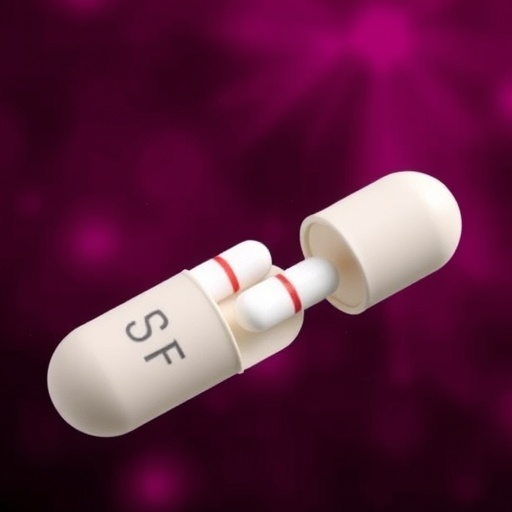
A particularly compelling facet of the study was the identification of an old cholesterol-lowering drug, bezafibrate, as a novel agent capable of interfering with this lipid-mediated protection. Bezafibrate, traditionally prescribed to manage hypertriglyceridemia, modulates lipid metabolism through activation of peroxisome proliferator-activated receptors (PPARs), thereby altering systemic and cellular lipid profiles. When administered in conjunction with ascites exposure, bezafibrate disrupted the lipid-driven resistance to ferroptosis in ovarian cancer cells. However, the drug neither induced ferroptosis independently nor affected tumor growth absent the ascitic environment, emphasizing the crucial interplay between cancer cells and their extracellular milieu.
This revelation that manipulating the tumor microenvironment’s biochemical landscape can sensitize metastatic ovarian cancer cells to ferroptosis opens promising therapeutic avenues. Ovarian cancer’s lethality partly stems from its diffuse spread within the peritoneal cavity and the protective niche ascites provides during dissemination. By targeting the lipid components within ascites, researchers propose a strategy for rendering cancer cells vulnerable to ferroptosis-based therapies, potentially enhancing the efficacy of existing treatment regimens. This approach diverges from conventional cancer treatments that primarily focus on cancer cells themselves, highlighting the microenvironment as a dynamic participant in disease progression.
Moreover, the broader clinical implications of these findings transcend ovarian cancer. Other malignancies known to colonize the abdominal cavity, including colorectal and pancreatic cancers, may exploit similar mechanisms involving ascitic or peritoneal fluid composition to circumvent ferroptotic cell death. Dr. Chi emphasizes that understanding how tumor-surrounding fluids influence metastatic resilience reshapes the conceptual framework of cancer biology: these fluids are not inert bystanders but active contributors to tumor evolution and therapy resistance.
The study utilized a multifaceted methodological approach—combining in vitro experimental models, patient-derived tumor cells, lipidomics, and pharmacological interventions—to dissect the biochemical nature of ascitic fluid’s protective capacities. Experimental paradigms involved exposing malignant cells to varying ascitic fluid concentrations while administering ferroptosis inducers to quantify survival differentials. Lipid fractionation and depletion were performed to confirm the indispensability of ascites lipids. Additionally, in vivo mouse models were employed to assess the therapeutic potential of bezafibrate within biologically relevant contexts, though bezafibrate alone did not retard tumor growth, highlighting the necessity of precise environmental targeting.
Intriguingly, ascites appears to selectively protect ovarian cancer cells exclusively against ferroptosis, without conferring resistance to other cell death modalities such as apoptosis or necrosis. This selectivity suggests highly specialized mechanisms at play, possibly through ascites-driven metabolic reprogramming that adjusts iron homeostasis and lipid storage, thereby fortifying membranes against oxidative rupture. Such metabolic plasticity epitomizes the adaptive capabilities of metastatic cancer cells within hostile environments engineered by host-derived fluids.
Despite the promising insights, the authors clarify that current findings do not establish bezafibrate or similar agents as standalone treatments for ovarian cancer. Rather, their research points to combinatorial strategies that exploit tumor-environment interdependence, potentially in synergy with ferroptosis-inducing chemotherapy or targeted therapies. Ongoing work will be essential to delineate the precise molecular cascades by which ascitic lipids interface with ferroptotic pathways and to translate these mechanisms into viable clinical interventions.
This investigation, supported by the Ovarian Cancer Research Alliance, the Department of Defense, and Taiwan’s National Science and Technology Council, elucidates a novel role for the tumor microenvironment in ovarian cancer’s clinical challenge. By shifting the focus to extracellular lipids within ascites, the research offers a compelling example of how established drugs may be repurposed to undermine cancer’s defensive niches and enhance therapeutic outcomes. The study’s publication in Nature Communications signals the high impact and translational potential of these findings, inviting further exploration into microenvironment-focused oncology.
In summation, this pioneering study redefines ascites not merely as a clinical symptom but as an active agent in ovarian cancer progression. Through detailed mechanistic insights into lipid-mediated ferroptosis evasion, it opens a frontier in understanding and eventually disrupting metastatic survival strategies within the peritoneal cavity. As researchers delve deeper into tumor microenvironment complexities, strategies targeting the metabolic interplay between cancer cells and surrounding fluids may form the next wave of effective treatments against notoriously resilient cancers like ovarian carcinoma.
Subject of Research: Human tissue samples
Article Title: Ascites protects against ferroptosis and enables the peritoneal growth of ovarian cancer
News Publication Date: 11-May-2026
Web References: http://dx.doi.org/10.1038/s41467-026-72116-1
Image Credits: Duke University School of Medicine/Mark Dolejs
Keywords: Ovarian cancer, tumor microenvironments, ferroptosis, ascites, lipid metabolism, bezafibrate, peritoneal metastasis, cancer cell survival, cholesterol drugs, lipid-lowering therapy, tumor microenvironment, cancer therapy


