


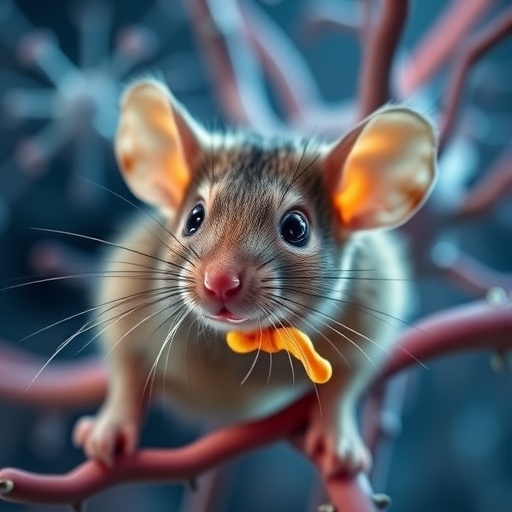
In a groundbreaking study set to redefine our understanding of the gut-brain axis, researchers have unveiled a novel mechanism by which liver-innervating vagal sensory neurons influence anxiety-like behaviors in mice. This pioneering work, spearheaded by Lee, S., Hwang, J., and Jo, YH., leverages the precision of optogenetics to activate specific neuronal populations, revealing a hitherto unexplored neurobiological pathway with profound implications for psychiatric research. Published in Translational Psychiatry in 2026, this research illuminates the intimate connections between peripheral organ sensory inputs and central nervous system-mediated emotional regulation.
The vagus nerve, often described as a critical communication superhighway between visceral organs and the brain, has been extensively studied for its role in modulating physiological states and emotional behavior. However, the focus has primarily centered on afferents originating from the gut and heart. Lee and colleagues deviate from the conventional narrative by directing their attention to the liver, an organ traditionally viewed through a metabolic lens rather than as a player in neuropsychiatric dynamics. Using optogenetics—a cutting-edge technique that employs light to control neurons genetically modified to express light-sensitive ion channels—the team selectively activated vagal afferents innervating the liver, thereby dissecting their specific contributions to anxiety-like behavior in murine models.
Their experiments begin with meticulous viral vector delivery to express channelrhodopsin-2 (ChR2) in liver-projecting sensory neurons of the nodose ganglion, the key hub of vagal sensory neurons. Upon photostimulation, this genetic modification allows precise temporal control over neuronal firing, circumventing the non-specificity of pharmacological or electrical stimulation methods. The researchers observed a significant escalation in anxiety-like phenotypes as assessed by classical behavioral paradigms such as the elevated plus maze and open field test. These behavioral assays, established gold standards for measuring anxiety in rodents, revealed reduced exploration of open and elevated spaces, indicating heightened anxiety states consequent to vagal activation.
Digging deeper into the central circuitry, histological analyses and neuronal tracing techniques revealed enhanced activity in brain regions strongly implicated in anxiety regulation, including the nucleus tractus solitarius (NTS), amygdala, and hypothalamus. The NTS, as the primary brainstem recipient of vagal afferents, showed increased c-Fos immunoreactivity—a proxy for neuronal activation—confirming functional connectivity between liver-sensing vagal neurons and central nodes of emotional processing. Furthermore, the amygdala, the brain’s emotional epicenter, exhibited altered neurotransmitter expression profiles, suggesting that peripheral visceral signals can modulate synaptic plasticity and neuronal excitability related to anxiety.
This discovery poses fascinating questions about the evolutionary significance of liver-brain communication. The liver, as a metabolic hub, constantly monitors nutrient status and systemic inflammation. The presence of sensory vagal afferents capable of relaying metabolic stress or toxic insult information to the brain introduces an elegant feedback system where peripheral state directly informs emotional behaviors. Such a mechanism might serve to adapt behavior during metabolic compromise—heightening vigilance or anxiety to promote caution, thus enhancing survival.
Importantly, this research offers innovative perspectives on anxiety disorders, which affect millions worldwide and are often resistant to traditional treatments. The identification of organ-specific neural pathways that modulate emotional states paves the way for novel therapeutic avenues. Targeting the liver sensory vagal network via pharmacological agents, or employing neuromodulation techniques such as transcutaneous vagus nerve stimulation (tVNS) refined to isolate hepatic pathways, could yield bespoke interventions with improved efficacy and fewer side effects.
The study’s methodology itself is a testament to interdisciplinary ingenuity, combining genetic engineering, advanced neuroanatomical tracing, behavioral neuroscience, and optogenetic technology. The precision afforded by optogenetics lends an unprecedented causal framework, distinguishing mere correlation from direct functional involvement. Moreover, this approach sets a paradigm for future inquiries into other visceral-organ-specific vagal circuits and their roles in neuropsychiatric conditions.
While the study yields compelling evidence in mice, questions remain about the translational potential to humans. Anatomical and functional conservation of liver-vagal pathways needs verification in clinical settings. Moreover, the complexity of human anxiety disorders, with multifactorial etiologies including psychological, environmental, and genetic factors, necessitates cautious extrapolation. Nevertheless, this foundational work provides a clear mechanistic substrate upon which translational research can build.
Additionally, the research highlights the promise of integrating peripheral sensory biology with central neural mechanisms, bridging the gap that often divides neuroscience and hepatic physiology. Future studies might investigate how metabolic diseases like non-alcoholic fatty liver disease or hepatitis influence anxiety through these vagal pathways, offering insights into the psychosomatic links between liver health and mental well-being.
The implications extend to personalized medicine; understanding individual variability in vagal sensory neuron responsiveness or receptor expression could inform tailored treatments. Moreover, given the liver’s role in detoxification, the interaction between environmental toxins, liver sensory input, and behavior merits exploration. This could revolutionize how environmental factors are considered in neuropsychiatric disorders.
In sum, Lee, Hwang, and Jo’s research elucidates a sophisticated biological dialogue between the liver and brain, mediated by vagal sensory neurons, which directly modulates anxiety-like behavior. This discovery not only deepens our comprehension of fundamental neurobiological processes but also heralds new horizons for innovative treatments in anxiety and stress-related disorders. By decoding the organ-to-brain signaling pathways that shape emotional experiences, science edges closer to holistic approaches that unify bodily health with mental resilience.
This landmark study reaffirms the vagus nerve’s crucial role as a bidirectional communication conduit and invites the scientific community to rethink peripheral sensory inputs beyond traditional cardiac and gastrointestinal contexts. As the field moves forward, harnessing such neural circuits promises transformative impacts on neuroscience, psychiatry, and integrative medicine, potentially alleviating the burden of anxiety disorders through targeted modulation of the liver’s sensory signals.
The future of neuropsychiatric therapeutics may well hinge on these peripherally-originating neuronal pathways, underscoring an integrative vision of brain-body crosstalk that transcends reductionist models. This visionary research, marrying technology and biology, illuminates the nuanced symphony by which internal bodily states sculpt emotional landscapes, beckoning a new era where mental health care comprehensively incorporates visceral organ signaling mechanisms to optimize patient outcomes.
Cite Scienmag News
Glenn Wilkins. (May 11, 2026). Activating Liver Vagal Neurons Boosts Anxiety in Mice. Scienmag. https://scienmag.com/activating-liver-vagal-neurons-boosts-anxiety-in-mice/
Glenn Wilkins. "Activating Liver Vagal Neurons Boosts Anxiety in Mice." Scienmag, 11 May 2026, https://scienmag.com/activating-liver-vagal-neurons-boosts-anxiety-in-mice/. Accessed 3 September 2026.
Glenn Wilkins. "Activating Liver Vagal Neurons Boosts Anxiety in Mice." Scienmag. May 11, 2026. https://scienmag.com/activating-liver-vagal-neurons-boosts-anxiety-in-mice/


