


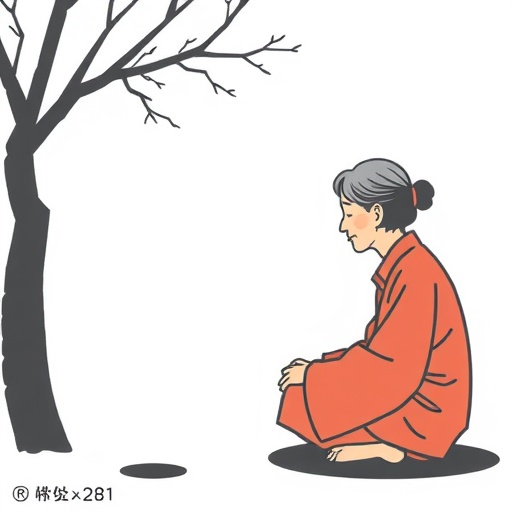
Loneliness among older adults has emerged as an urgent public health issue across the globe, but new research from China offers unprecedented national insight into the prevalence and underlying risk factors fueling this silent epidemic. A recent landmark study published in BMC Geriatrics in 2026, conducted by Yu, Liu, Zhang, and colleagues, provides the first comprehensive, nationally representative analysis that quantifies the extent of loneliness among China’s elderly population and deciphers the complex socio-demographic and health-related variables contributing to their isolation.
The research taps into a vast, representative dataset that reflects the diverse cultural and socioeconomic landscape of China’s aging demographic. By utilizing robust epidemiological methodologies, the study transcends regional limitations of earlier investigations, painting a broad and nuanced portrait of loneliness that integrates geographical, economic, familial, and health dimensions. This development is pivotal as China faces a rapidly growing population segment over 60 years old, making the social and mental well-being of older adults a critical societal priority.
One of the most striking revelations from the study is the significant prevalence of loneliness among Chinese older adults. Despite the traditionally strong family-centered culture in China, where multigenerational households used to be the norm, modern societal shifts have disrupted these patterns, fostering increasing social disconnection. The researchers found that a considerable percentage of individuals aged 60 and above reported frequent feelings of loneliness, underlining a troubling trend that parallels global aging challenges but is uniquely intensified by China’s swift urbanization and demographic transitions.
Methodologically, the authors employed advanced statistical tools to dissect how diverse variables interact to influence loneliness. Demographic factors such as age, gender, urban or rural residency, living arrangements, and education level were intricately analyzed alongside health indices including chronic disease burden, functional disability, and mental health status. This multifactorial approach allowed the researchers to isolate key risk factors, providing actionable insights for policymakers aiming to craft targeted interventions.
Remarkably, the study highlights that older adults in rural regions, often perceived as communal, experience higher loneliness levels compared to their urban counterparts. This counters common assumptions and signals a looming crisis in rural social infrastructures, where younger generations migrate to cities for economic reasons, leaving older adults physically and emotionally isolated. The diminished availability of social networks and support systems in these rural areas emerges as a powerful determinant of loneliness.
Mental health variables emerge as a critical determinant in the study’s framework. The prevalence of depressive symptoms correlated strongly with self-reported loneliness, suggesting a bidirectional relationship that perpetuates psychological distress and social withdrawal. This dynamic is compounded by limited access to mental health services, stigma associated with psychological conditions, and a lack of awareness regarding the importance of social connectedness for well-being among older populations.
Economic insecurity also manifested as a potent driver of loneliness. The findings illustrate that older adults experiencing financial hardship tend to have diminished opportunities for social interaction and engagement in community activities. This economic dimension intersects with health vulnerabilities, further exacerbating feelings of isolation and helplessness. The study underscores that addressing economic disparities could be integral to mitigating loneliness and enhancing quality of life.
The family structure holds complex implications. Older adults living alone or without a spouse report far higher loneliness rates, underscoring the critical role of intimate relationships in buffering against isolation. Yet, the data reveal that even those living with family members are not immune, particularly in households where intergenerational communication and emotional exchanges are limited. This novel insight challenges policymakers and social planners to rethink strategies centered solely on physical proximity.
Notably, the researchers drew attention to the role of technological adoption as a potential mitigating factor yet also a double-edged sword. While digital communication platforms could theoretically maintain social ties across distances, the study found that many older adults face barriers such as limited digital literacy and access. This digital divide exacerbates loneliness for some, highlighting the urgent need for inclusive technological education tailored for elderly users.
The urbanization wave sweeping across China plays a dual role. On one hand, urban centers provide better healthcare, social services, and recreational opportunities that can foster social engagement. On the other hand, urban life is often characterized by higher anonymity and weaker social bonds compared to traditional community models. The study carefully navigates these contradictions and suggests strengthening community-based programs to create social cohesion in modern urban environments.
Importantly, cultural expectations and norms around aging influence perceptions and experiences of loneliness. The researchers explore how traditional Confucian values emphasizing filial piety are undergoing change, potentially eroding social norms that historically safeguarded older adults’ social integration. The gradual shift toward individualism may contribute to the perceived decrease in social support, inspiring debates about cultural preservation versus modernization in the context of elder care.
The implications of this epidemiological analysis stretch beyond descriptive statistics and risk profiling. The authors advocate for multifaceted intervention strategies encompassing community engagement, mental health care reform, socioeconomic support, digital inclusion initiatives, and culturally sensitive public health messaging. The study’s granular insights serve as a blueprint for evidence-based policies designed to foster social connectedness and improve health outcomes for the elderly.
Future research directions proposed include longitudinal tracking of loneliness trajectories to understand causality and the effects of changing socio-political environments on elder well-being. The integration of qualitative data could also enrich understanding of personal loneliness experiences, enhancing the design of intervention programs that resonate on a human level. The interdisciplinary approach adopted by this team sets a new standard for aging research in China and beyond.
The study’s national scope and methodological rigor represent a critical step in global aging research, contributing valuable data to comparative studies exploring loneliness across cultures and welfare systems. International collaborations inspired by findings such as these can pave the way for innovative, culturally competent solutions that address the universal yet locally nuanced challenge of elder loneliness.
In summary, this pioneering study unravels the prevalence and multifactorial risk factors of loneliness among China’s older adults with unprecedented depth. By illuminating how demographic, health, economic, technological, and cultural factors converge to shape loneliness, the research provides a clarion call for comprehensive, coordinated action to alleviate one of the most insidious threats to healthy aging. As the world confronts population aging on an unprecedented scale, such insightful scholarship is essential to crafting resilient societies where older adults can thrive socially, emotionally, and physically.
Cite Scienmag News
Ophelia Keating. (May 8, 2026). Loneliness Among Older Chinese Adults: Key Risk Factors. Scienmag. https://scienmag.com/loneliness-among-older-chinese-adults-key-risk-factors/
Ophelia Keating. "Loneliness Among Older Chinese Adults: Key Risk Factors." Scienmag, 8 May 2026, https://scienmag.com/loneliness-among-older-chinese-adults-key-risk-factors/. Accessed 4 September 2026.
Ophelia Keating. "Loneliness Among Older Chinese Adults: Key Risk Factors." Scienmag. May 8, 2026. https://scienmag.com/loneliness-among-older-chinese-adults-key-risk-factors/


