


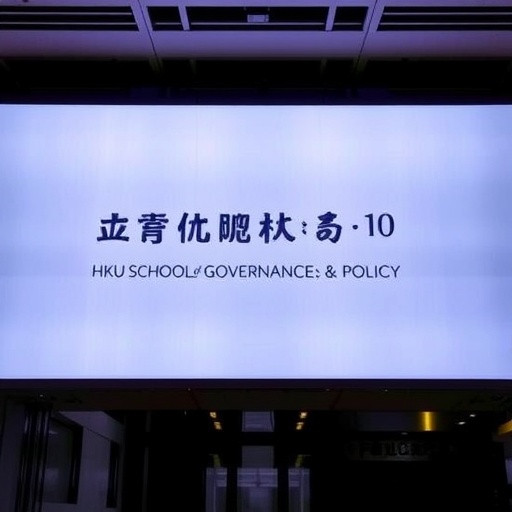
The University of Hong Kong (HKU) recently marked a significant milestone with the conclusion of the Inaugural Week for its newly established School of Governance and Policy (SGP). This momentous event, held over three days and culminating on April 29, 2024, signaled the launch of an institution dedicated to addressing the most pressing and intricate challenges in regional and global governance. With participation from over 900 attendees, including distinguished academics, a 2024 Nobel Laureate, former political leaders, and pioneering experts across various sectors, the week positioned the SGP as a forthcoming intellectual powerhouse for governance innovation.
Professor Xiang Zhang, President and Vice-Chancellor of HKU, articulated the school’s vision by emphasizing governance as more than administrative mechanics; it is a profound responsibility that requires integrating historical insights, ethical considerations, and a deep understanding of humanity’s complexities. In an era defined by rapid technological advancements, Zhang stressed the crucial role of humanities-infused leadership, capable of ensuring that societal progress is both responsible and inclusive. This philosophical foundation sets the stage for the SGP’s pursuit of impactful policy development anchored in humanistic values.
At the helm of the School of Governance and Policy, Professor Kenneth Wong detailed the institution’s strategic trajectory, underscoring its interdisciplinary approach and unique positioning at the intersection of public, private, and nonprofit sectors. The school’s research agenda is centered on five core pillars: global governance, urban policy, leadership, and two additional areas that intertwine policy innovation with practical impact. Guided by an illustrious International Advisory Board comprising Nobel Laureates James J. Heckman and James Robinson, as well as former heads of state such as Dr. Yukio Hatoyama and Mr. Phongthep Thepkanjana, the SGP is set to pilot pioneering academic programs, including a Master of Governance and Policy slated for launch in September 2026.
One of the most innovative facets of the SGP’s mission is to serve as Asia’s premier hub for evidence-based policymaking in a multipolar world, fostering collaborative solutions that bridge nations and cultures. Professor Wong outlined how the school aims to leverage transdisciplinary research methodologies, combining quantitative social sciences with qualitative ethnographic insights. This approach is designed to cultivate policy frameworks that are adaptable to the region’s diverse and rapidly evolving socio-political landscapes, making research outputs not only theoretically robust but pragmatically relevant.
The intellectual rigor of the SGP was epitomized in the keynote address by Professor James Robinson, a Nobel Laureate in Economics in 2024, who highlighted the transformative importance of East Asian development experiences. Robinson offered a nuanced critique of traditional social science dogma by illuminating how cultural particularities redefine policy effectiveness. His remarks underscored the emerging frontier in governance research, which calls for culturally sensitive models that extend beyond Western-centric paradigms to better understand social, economic, and institutional dynamics in Asia.
A pivotal highlight of the week was the inauguration of the Global Leaders Series, inaugurated by Dr. Yukio Hatoyama, a respected former Prime Minister of Japan and newly appointed honorary professor within the SGP. Hatoyama’s discourse on “The Future of Sino-Japanese Relations Amid a Cracking World Order” delved into the geopolitical fissures challenging East Asia. He advocated for revitalized diplomatic efforts to halt escalating tensions and promote regional stability, positioning East Asia’s peace as a critical linchpin for global security architectures in an increasingly fragmented international system.
The C-suite and academic collaboration extended to prominent intellectuals such as Professor Joseph Liow of the Lee Kuan Yew School of Public Policy (NUS), Professor Lan Xue from Schwarzman College at Tsinghua University, and Professor Carole Roan Gresenz of Georgetown University’s McCourt School of Public Policy. Their participation in panel discussions bridged multi-institutional perspectives on governance, offering a comprehensive dialogue on the challenges facing policy leadership, including urbanization pressures, climate change governance, and the digital transformation of public institutions.
Through its robust programming and thought leadership, the SGP aims to cultivate a new generation of governance scholars and practitioners equipped to navigate complex geopolitical realities and emerging governance paradigms. The school’s interdisciplinary Master of Governance and Policy is structured to combine theory with pragmatism, integrating policy design, ethics, data analytics, and leadership training to prepare students for future policy environments demanding agility and forward-thinking solutions.
The launch of Executive Leadership Hubs and specialized policy institutes for undergraduates further broadens the SGP’s influence by extending governance education beyond conventional academic silos. These initiatives are designed to foster experiential learning and field-based policy innovation, encouraging experiential and participatory governance models that reflect contemporary societal shifts and technology-enabled governance practices.
As the Inaugural Week concluded, the founding visionaries reiterated their commitment to the SGP’s dual mission: to function as a crucible for policy innovation at the nexus of academic inquiry and real-world application, and to contribute to the sustainable advancement of global society through enlightened leadership. HKU’s initiative stands as a testament to the evolving challenges and opportunities in governance, setting a precedent for other institutions seeking to balance tradition and innovation in policy sciences.
The School of Governance and Policy at HKU is poised to become a transformative force in Asia and beyond, a beacon for policy innovation that respects cultural complexity and prioritizes human welfare in the face of technological and geopolitical upheavals. By fostering collaborative networks across academia, government, and industry, the SGP embodies a holistic governance ecosystem that seeks sustainable solutions to the global challenges of the 21st century.
For further details on the School of Governance and Policy’s programs, research initiatives, and upcoming events, interested parties can visit the official website at https://sgp.hku.hk.
Cite Scienmag News
Courtney Benton. (May 7, 2026). HKU School of Governance and Policy Concludes Landmark Inaugural Week, Pioneering Next-Gen Leadership and Innovative Governance Inspired by Human Progress. Scienmag. https://scienmag.com/hku-school-of-governance-and-policy-concludes-landmark-inaugural-week-pioneering-next-gen-leadership-and-innovative-governance-inspired-by-human-progress/
Courtney Benton. "HKU School of Governance and Policy Concludes Landmark Inaugural Week, Pioneering Next-Gen Leadership and Innovative Governance Inspired by Human Progress." Scienmag, 7 May 2026, https://scienmag.com/hku-school-of-governance-and-policy-concludes-landmark-inaugural-week-pioneering-next-gen-leadership-and-innovative-governance-inspired-by-human-progress/. Accessed 6 September 2026.
Courtney Benton. "HKU School of Governance and Policy Concludes Landmark Inaugural Week, Pioneering Next-Gen Leadership and Innovative Governance Inspired by Human Progress." Scienmag. May 7, 2026. https://scienmag.com/hku-school-of-governance-and-policy-concludes-landmark-inaugural-week-pioneering-next-gen-leadership-and-innovative-governance-inspired-by-human-progress/


