


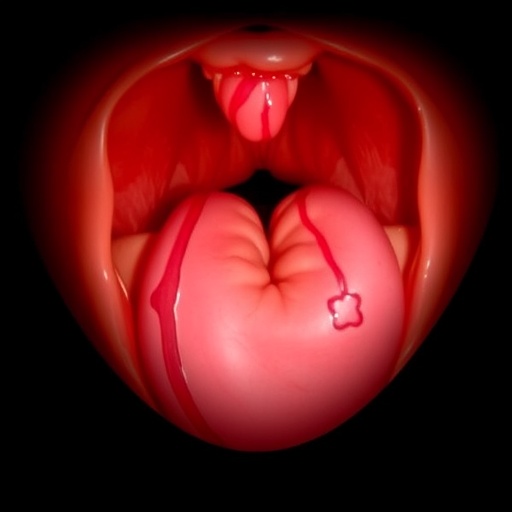
In a groundbreaking study emerging from China’s National Center for Children’s Health, researchers have unveiled critical insights into congenital H-type tracheoesophageal fistula (H-TEF), a rare but significant developmental anomaly. This condition, characterized by an abnormal connection between the trachea and esophagus without esophageal atresia, poses diagnostic and therapeutic challenges that have long intrigued pediatric surgeons and pulmonologists alike. The comprehensive analysis presented in the latest issue of Pediatric Research marks a pivotal advancement in understanding this complex malformation, with implications that extend far beyond the confines of a single medical center.
Congenital H-TEF, due to its subtle and often ambiguous clinical presentation, frequently eludes early diagnosis, complicating management and outcome optimization. The Chinese team’s extensive experience, reflected in their detailed patient cohort, sheds light on the nuanced clinical characteristics that typify this anomaly. Unlike other forms of tracheoesophageal fistulas, H-TEF patients often escape the immediate neonatal crisis detection, leading to delayed recognition often manifesting as recurrent respiratory infections or feeding difficulties. This underscores the necessity for heightened clinical vigilance and refined diagnostic protocols.
The diagnostic approach outlined in the study integrates advanced imaging modalities with traditional clinical evaluations to enhance detection accuracy. Bronchoscopy and esophagography, cornerstone techniques in fistula identification, were employed alongside emerging radiological tools, facilitating a more precise anatomical delineation. Notably, the utilization of three-dimensional computed tomography (3D-CT) reconstructions allowed the surgical teams to map fistula trajectories comprehensively, minimizing intraoperative surprises and augmenting surgical planning efficiency.
Therapeutic management primarily hinges on surgical correction, a domain where the National Center’s expertise has yielded commendable success. The research discusses a range of surgical techniques tailored to fistula morphology and patient-specific variables. Minimally invasive thoracoscopic approaches have gained preeminence, reducing operative morbidity and accelerating postoperative recovery. The nuanced decision-making process balancing open versus minimally invasive surgery highlights the center’s commitment to patient-centered, precision-based care.
Outcome assessment conducted in this large patient cohort reveals encouraging trends, with significant improvements in respiratory function and nutritional status post-intervention. However, the study candidly addresses the spectrum of postoperative complications encountered, including recurrent laryngeal nerve injury and stricture formation. These insights reinforce the imperative for meticulous perioperative care and long-term surveillance in this vulnerable population.
The multicentric collaboration within China has undoubtedly enriched this study, providing a robust dataset that combines clinical heterogeneity with standardized treatment protocols. This synergy has allowed for the extraction of patterns and prognostic indicators that were previously obscured in smaller case series. It also emphasizes the role of centralized, specialized care units in managing rare congenital anomalies with complex anatomical and physiological ramifications.
Moreover, the work explores the embryological underpinnings of H-TEF, connecting developmental aberrations in foregut partitioning with clinical manifestations. This embryological perspective deepens the scientific community’s grasp of the condition, potentially laying the groundwork for prenatal diagnostic advancements and even in utero interventions in the future. Understanding these morphogenetic disruptions will be critical in refining risk stratification and tailoring early therapeutic strategies.
Interdisciplinary coordination emerges as a recurrent theme in the paper, with pediatric surgeons, pulmonologists, radiologists, and intensivists collaborating closely to optimize patient trajectories from diagnosis through rehabilitation. The authors advocate for multidisciplinary clinics dedicated to congenital airway anomalies, where consolidated expertise can be imparted efficiently to patients and families, enhancing overall care quality and psychosocial outcomes.
The detailed clinical pathways elucidated in this research underscore the need for vigilance in differentiating H-TEF from other causes of chronic cough, choking episodes, and recurrent pneumonia in pediatric populations. Misdiagnosis or delayed diagnosis not only prolongs suffering but can result in irreversible pulmonary damage. Hence, the study emphasizes the incorporation of H-TEF in differential diagnoses, especially in patients unresponsive to conventional respiratory treatments.
Technological advancements represented by video-assisted thoracic surgery (VATS), coupled with enhanced endoscopic visualization, have revolutionized the surgical landscape for H-TEF. The Chinese team’s refined protocols demonstrate reduced operative times and hospital stays without compromising surgical efficacy. These surgical innovations herald a new era in pediatric thoracic surgery, where precision and minimal invasiveness converge to improve outcomes and decrease healthcare burdens.
Investigating the genetic landscape related to congenital H-type fistula, the research hints at potential hereditary components, although definitive genetic markers remain elusive. Future research directions proposed include genomic and epigenomic studies to unravel molecular pathways implicated in fistula formation. Confirming genetic predispositions could transform screening paradigms and open avenues for preventive strategies, representing a frontier yet to be fully explored.
The psychosocial dimension of living with congenital H-TEF and its treatment sequelae also receives thoughtful attention. Chronic illness in childhood demands comprehensive support systems addressing not only physical health but also emotional and developmental needs. The study highlights the necessity of integrating psychological counseling and rehabilitation services into routine care, fostering resilience in affected children and their families.
This impressive body of work from the National Center for Children’s Health solidifies the institution’s position as a beacon of expertise in congenital airway anomalies. By disseminating their findings globally, the researchers contribute to a broader understanding that can inspire improved standards of care worldwide. Their meticulous documentation, paired with innovative diagnostic and therapeutic strategies, sets a new benchmark for managing this intriguing yet challenging congenital defect.
In conclusion, the study presents a holistic, technically rich exploration of congenital H-TEF, knitting together clinical acumen, surgical mastery, and embryological insight. The comprehensive nature of their work lays a foundation for future research and clinical innovation. As the medical community continues to grapple with congenital anomalies, such collaborative and methodologically sophisticated studies offer hope for earlier diagnosis, safer interventions, and markedly enhanced patient outcomes on a global scale.
Cite Scienmag News
Denise Maddox. (May 7, 2026). Insights into Congenital H-Type Tracheoesophageal Fistula. Scienmag. https://scienmag.com/insights-into-congenital-h-type-tracheoesophageal-fistula/
Denise Maddox. "Insights into Congenital H-Type Tracheoesophageal Fistula." Scienmag, 7 May 2026, https://scienmag.com/insights-into-congenital-h-type-tracheoesophageal-fistula/. Accessed 5 September 2026.
Denise Maddox. "Insights into Congenital H-Type Tracheoesophageal Fistula." Scienmag. May 7, 2026. https://scienmag.com/insights-into-congenital-h-type-tracheoesophageal-fistula/


